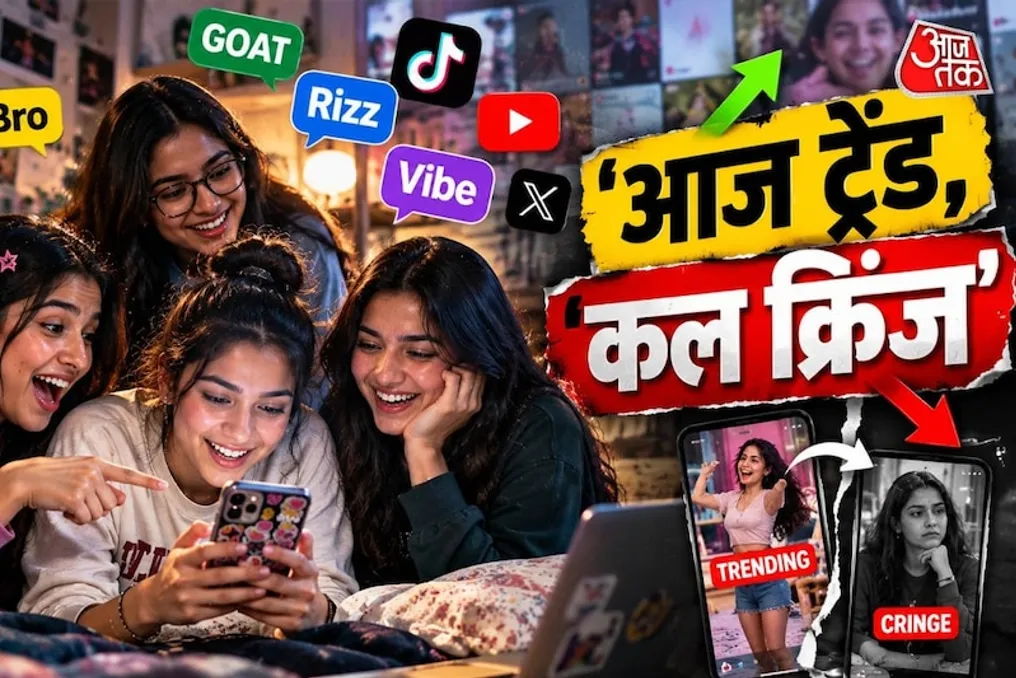
Reasons for the Rapid Language Change of Generation Z: The Influence of the Internet and Social Media
Read more
Aaj Tak
www.aajtak.in

Reasons for the Rapid Language Change of Generation Z: The Influence of the Internet and Social Media

Over time, communication styles inevitably change, and this shift occurs not only in speech itself but also in the culture being shaped by the new generation. Generation Z demonstrates constant evolution in its communication style, regularly introducing new lexical units and ways of speaking into everyday language. It is noteworthy that words popular among youth today begin to be perceived as outdated after some time.

Previously, using terms like 'rez' or 'aura' as compliments might have caused misunderstanding among many people who rarely used them in daily life. However, these words have now become an integral part of Generation Z's online and everyday communication. Interestingly, a trend that is popular today quickly becomes archaic, creating the feeling that these words have been used for a long time or are obsolete.

The main reason cited for the rapid changes in Generation Z's language is the internet and social media. Previously, a new colloquial term might remain limited to a circle of friends, school, university, or a specific neighborhood. Today, however, any new phrase can spread to millions of people in a short time thanks to short videos, funny photos, clips, or viral posts on social networks.

The faster a word spreads, the more actively it is used. When a word starts being used too frequently, it becomes difficult to keep it fresh or amusing.

This is why colloquial expressions among Generation Z do not remain relevant for long. When a word first appears, it seems new and interesting. But as companies, celebrities, and all social media users start using it, its uniqueness decreases. After this, some young people begin to consider the word old-fashioned or artificial, and a new term takes its place.

New words are not formed only from dictionaries. Funny images, short videos, online gaming groups, and various internet communities contribute to the popularization of new words and speech styles. Sometimes a phrase from a movie or series becomes part of daily conversation, sometimes a word is born from a funny photo, and sometimes a small prank on social media becomes so popular that people start using it in conversation.

Nevertheless, the change of colloquial words is not a new phenomenon. Every generation has used its unique words and mannerisms at one time or another. The difference is that the internet has significantly increased the speed of these changes compared to past eras. Although new words appeared in the past, their rate of spread was not as high as it is now. For Generation Z, language is not just a means of communication but also a part of internet culture.

Moreover, Generation Z may use a word not in its literal meaning. The meaning of a word can change depending on the context, manner of pronunciation, and situation; they do not always use the word in its most precise sense. Thus, Generation Z's language is not only a history of creating new words but also a result of the influence of internet culture, memes, entertainment, and changing communication among friends. What seems to you today as a new or strange colloquial word might seem old in a few months, and something new will take its place. Perhaps this is the most distinctive feature of Generation Z's language—it never stays still but constantly transforms.
Similar stories

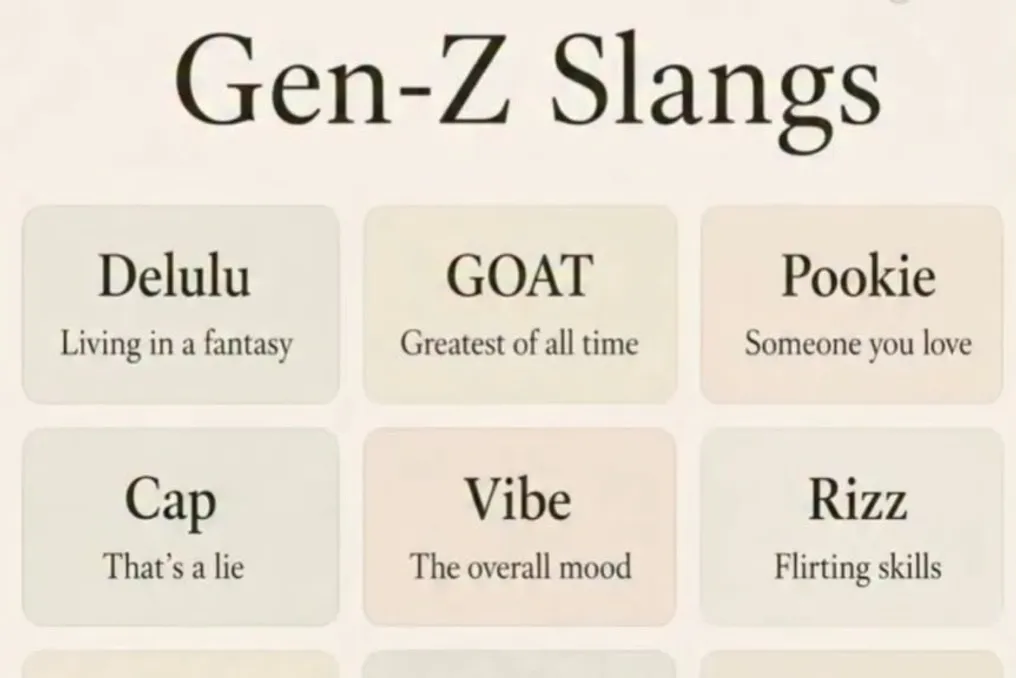
When and how to use new Gen Z slang words: From Rizz to Mogging
Read more
www.aajtak.in

When and how to use new Gen Z slang words: From Rizz to Mogging

The communication of Generation Z features numerous new words that may be unfamiliar to those hearing them for the first time. Internet culture, memes, music, and social media have significantly altered the language of this generation. Slang expressions such as Rizz, Drip, No Cap, Ate, and Left No Crumbs have moved beyond being purely online terms and have become part of casual conversations among friends. These words are characterized by their ability to convey a complete reaction using just a few words instead of long explanations.

Rizz: When it comes to charm

The word Rizz is used to describe someone's ability to flirt or attract attention. If a person can impress a conversational partner without much effort, they are said to have 'Rizz'. For example, the phrase 'He made her laugh in two minutes, he has Rizz' means it applies to charisma, confidence, or flirting skills.

Drip: When the look is flawless

Drip is used to describe stylish and fashionable clothing or a person's overall appearance. If an outfit looks very impressive, one might say: 'Look at his Drip.' This expression is primarily used in the context of fashion, clothing, and personal style, for instance: 'His Drip today is fire.'

No Cap means absolute truth, stated without hesitation or embellishment. When Gen Z says 'No Cap,' it implies that what is being said is sincere, without lies, doubt, or exaggeration. It is used to emphasize the truthfulness of one's statement or to present something completely openly. For example: 'No Cap, I saw the best movie of my life.'

Ate: When someone exceeded expectations

If someone performs, showcases an outfit, gives a speech, or accomplishes something exceptionally brilliantly, Gen Z might say: 'She ate.' Here, 'Ate' does not mean 'to eat,' but rather signifies performing something at the highest level. Example: 'She performed so well on stage, she ate!'

Left No Crumbs is a stronger form of 'Ate.' It means that a person handled something so wonderfully that there were no flaws in their work. (In other words, they succeeded completely). Example: 'Her look on the red carpet? She ate and left no crumbs.'

Mogging: When someone overshadows everyone else

The word Mogging is used when one person significantly surpasses another in comparison regarding appearance, physique, style, or overall charisma. In social media, this is often seen in internet battles and comparisons based on looks. For example: 'He outshines everyone in this photo.'

Skibidi: Random internet atmosphere

Skibidi does not have one fixed meaning. It became popular through internet memes and is most often used to humorously describe some random, strange, or chaotic situation. If a friend suddenly behaves very unusually, you might ask: 'What was that Skibidi moment?' This sounds more natural in informal, meme-style conversations.

The main rule of slang is context

The enjoyment of Gen Z slang lies not only in memorizing these words but also in knowing how to apply them in the appropriate context. It is not necessary to insert Rizz, Drip, or Ate into every conversation. Although the popularity of these words originated from internet culture, their correct usage is only possible when they organically fit the situation. Thus, Gen Z is not just changing its vocabulary; it is transforming the very approach to expressing thoughts.

Popular