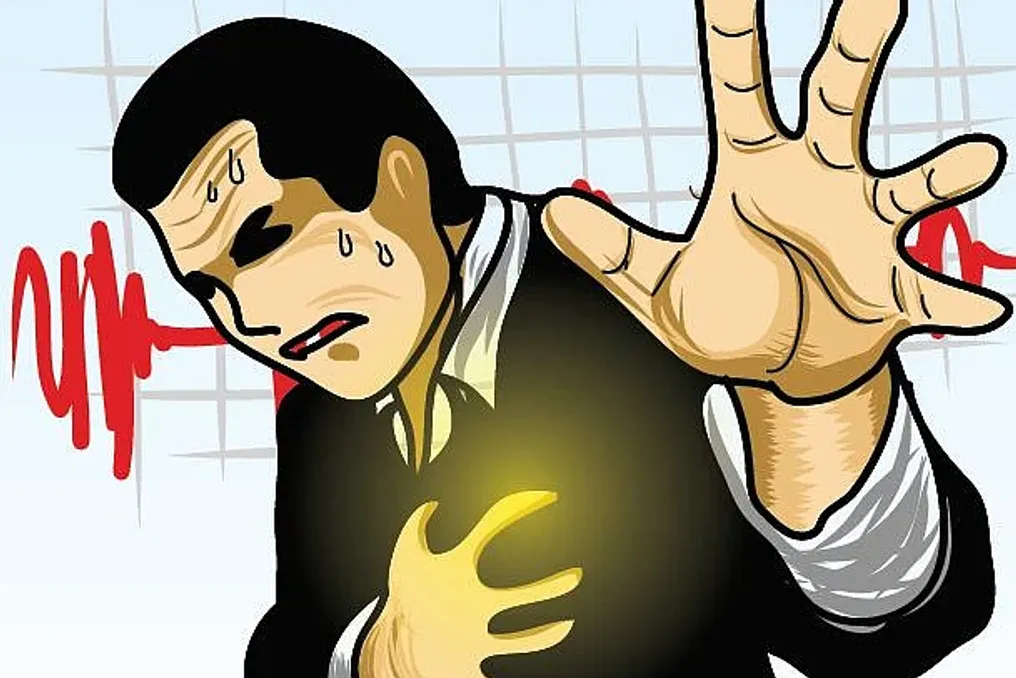
Even if a person regularly visits the gym, exercises every week, and maintains a healthy weight, they can still suffer from serious heart problems without knowing it. Cardiologists from the UAE warn that activity alone does not guarantee protection against heart disease for people in their thirties and forties.
Dr. Yogiswari Vellor Satyanarayanan, a cardiology specialist at Medcare Royal Speciality Hospital, notes that physical fitness is not equivalent to the absence of cardiovascular risk. She emphasized that issues such as high blood pressure, diabetes, and cholesterol can remain unnoticed for years, and hereditary conditions also increase risk, even with regular training.
According to Dr. Satyanarayanan, conditions like familial hypercholesterolemia and high levels of lipoprotein(a), or Lp(a), can increase the probability of heart disease without obvious symptoms. Therefore, knowing personal risk factors and undergoing timely examinations helps detect problems before a serious cardiac event occurs.
Dr. Gesham Tayel, a consultant cardiologist at International Modern Hospital, reported seeing more and more patients in their 30s and 40s with severe coronary artery diseases. He noted a surprising fact: some of these patients look completely healthy, exercise, and have a normal weight, believing they are not at risk.
He recalled cases where patients sought hospital care after the first episode of chest pain and were shocked by the discovery of severe blockages requiring urgent treatment. These individuals often frequented the gym and thought it was too early for heart disease. The important takeaway, in his opinion, is that physical fitness does not always mean healthy arteries.
Risk factors that doctors find in such patients include family history, smoking or vaping, diabetes, high blood pressure, chronic stress, poor sleep, and hereditary cholesterol problems.
Dr. Tayel also explained that routine cholesterol tests do not always provide a complete picture. A person may have seemingly normal cholesterol levels but still have elevated Lp(a)—a hereditary risk factor associated with heart attacks and strokes. He added that the ApoB level can help doctors assess the amount of harmful cholesterol particles in the blood. For certain patients, a coronary calcium scan can detect early plaque buildup in the arteries, even if other tests look reassuring.
Dr. Austin Mohan Komaranchat, Head of Department and Interventional Cardiologist at NMC Specialty Hospital, Al Ain, believes that one of the main problems is the lack of screening among many young adults. He stated that he observes people in their 30s and 40s who exercise, look fit, and feel perfectly healthy, yet have significant coronary diseases. Although physical activity is extremely important, it does not provide complete protection against genetic risks, high blood pressure, or high cholesterol.
Dr. Komaranchat pointed out that blood pressure is an area often ignored; some young people do not measure it regularly, while others discover an increase but do not take it seriously. There is also a fear among some patients that after starting blood pressure medication, they will be forced to take it lifelong, which could lead to years of uncontrolled pressure and arterial damage.
He also advised not to stop at what has been achieved just because cholesterol levels have dropped; the key question is whether they have reached the optimal level for the patient's individual risk. Another useful test for selected patients is the assessment of coronary artery calcification. Dr. Austin mentioned that over the past year, about 30–40 patients in his practice had abnormal calcium readings despite reassuring results from stress tests and echocardiography.
He explained that the stress test and calcium scan answer different questions, and a reassuring stress test does not rule out the development of plaques in the coronary arteries. The danger becomes apparent when heart disease leads to cardiac arrest.
Dr. Mohammed Albiali Suleiman, Consultant Interventional Cardiologist at Medcare Hospital Sharjah, recalled a case of treating a 70-year-old patient whose condition worsened and led to cardiac arrest. He noted that prompt attention and CPR procedures in the hospital helped save the patient's life by restoring spontaneous circulation. Afterward, doctors cleared the blockage in the heart, and the patient began to recover well with gradual improvement in heart function during subsequent monitoring.
Dr. Yogiswari clarified that a heart attack does not always start with severe chest pain. Some patients may feel pressure or heaviness in the chest, while others experience shortness of breath, sweating, nausea, dizziness, or discomfort radiating to the arm, shoulder, back, neck, or jaw. Some people mistakenly attribute these signs to heartburn, stress, or ordinary fatigue. She also added that women may experience less typical symptoms, such as unusual tiredness, weakness, rapid heartbeat, or dizziness.
The main message from the doctors is not that every person aged 30 or 40 needs complex cardiac tests. Instead, they should know their blood pressure, cholesterol, and blood sugar levels, understand their family history, and discuss personal risks with a doctor.