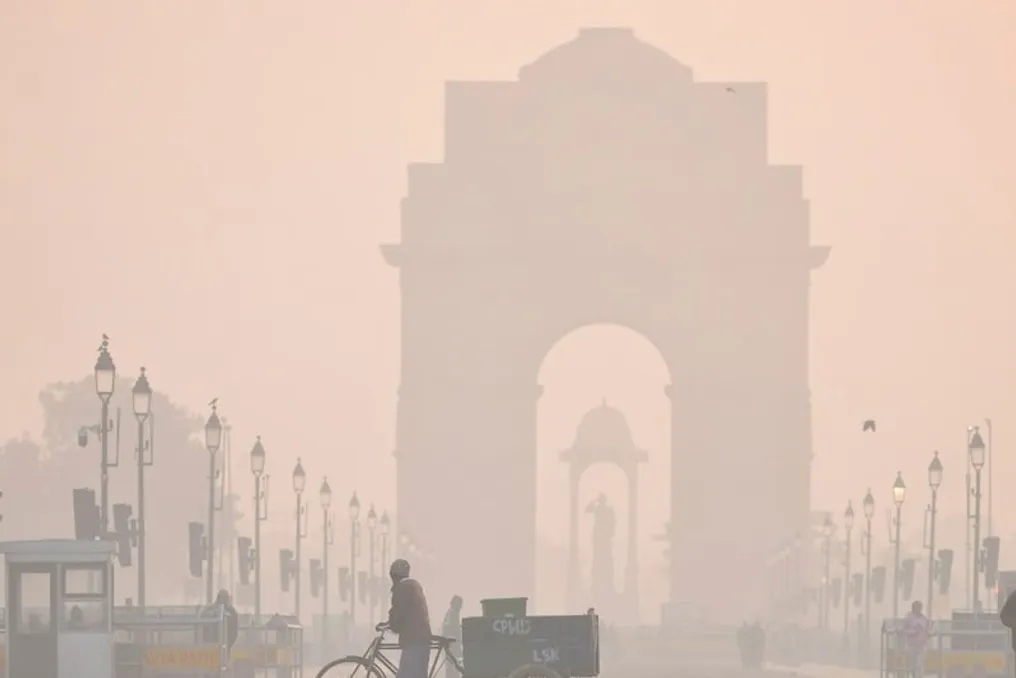
To combat air pollution, which intensifies during the winter period in the Delhi-NCR region, the CAQM has released an updated GRAP plan that has come into immediate effect. According to this plan, restrictions will be implemented in stages depending on the rise in the Air Quality Index (AQI).
The main objective of the new GRAP is to apply predetermined measures incrementally at different AQI levels, rather than resorting to sudden reactive measures after air quality deteriorates. Thus, in Delhi-NCR, the level of restrictions will increase as the atmospheric condition worsens.
Under the new GRAP, four stages have been established based on AQI indicators:
Stage-1: With an AQI between 201 and 300, the air is considered 'poor,' and initial restrictive measures are introduced to control pollution.
Stage-2: With an AQI between 301 and 400, when the air becomes 'very poor,' a stricter regime is enforced, including additional bans on transport, dust, and construction activities.
Stage-3: If air quality reaches the 'severe' category (AQI from 401 to 450), even stricter limitations are imposed on construction and other polluting activities.
Stage-4: An AQI level above 450 is classified as 'severe plus,' and the strictest restrictions are implemented in Delhi-NCR during this period.
The revised GRAP outlines 48 action points. The distribution of these measures is as follows: 25 actions for Stage-1, 8 for Stage-2, 10 for Stage-3, and 5 for Stage-4. A 'Citizen Charter' has also been issued for each stage, informing the public about what to do and what to avoid at different pollution levels.
Increased Control Over Parking and Transport
GRAP includes increasing parking fees to reduce the use of private vehicles as pollution rises. During severe GRAP stages, parking fees in designated areas may be increased, aiming to encourage citizens to use public transport.
Impact on Education
In case of severe deterioration in Delhi, as well as Gurugram, Faridabad, Ghaziabad, and Gautam Buddha Nagar, a hybrid learning format may be introduced for students up to the fifth grade. This will allow children to attend school or study online depending on necessity.
If the AQI exceeds 450 and Stage-4 is activated, the hybrid learning format may be extended to students in grades 6-9 and 11.
Office Operations and Strict Truck Control
In the event of extremely high pollution levels, a decision may be made for 50 percent of employees in government, municipal, and private offices to work, while the rest must work remotely (Work From Home). This is expected to help reduce the number of private and commercial vehicles on the roads.
When the strictest phase of GRAP, Stage-4 (with AQI above 450), is activated, a strict entry restriction for trucks will be imposed in Delhi. Only vehicles running on clean fuel and meeting BS-6 standards will be allowed. Control will also be tightened over heavy trucks running on BS-4 and older diesel fuel. Furthermore, restrictions on construction and demolition work will become even stricter compared to Stage-3.
Despite this, some relaxations were provided in Stage-3 for essential public works, such as repairing potholes and emergency maintenance, which can continue according to established rules and pollution control measures.
Advice on Sports Events
CAQM also mentioned its advisory note from September 10, which recommended postponing physical sports tournaments scheduled for November and December in the NCR to other dates, taking into account air quality conditions. Special attention is being paid to the health of schoolchildren when planning such events.