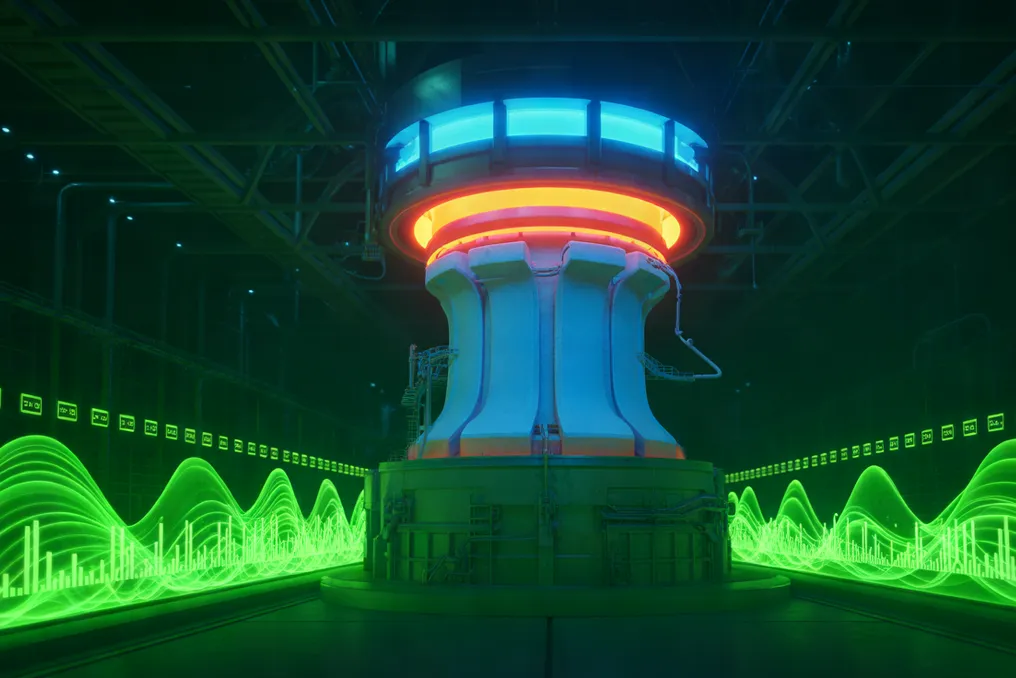
Hertha Metals has successfully closed its Series A funding round, raising $133.65 million. The financing was co-led by Khosla Ventures and Doerr Capital. The round also included a $65 million investment from the U.S. Government. CEV, Pear Ventures, and Gates Frontier also participated.
The investments were made through the Industrial Base Analysis and Sustainment program. Participants also included Niterra SUISO no MORI Fund, Toyota Ventures, and Siemens Financial Services. Hertha will use the funds to build the new Hertha Chalyx facility.
This new complex is designed to produce 10,000 tons of high-purity iron and magnet-grade iron. It will operate in parallel with the company's existing Pi100 pilot plant. Together, these sites will create an integrated innovation complex for iron and steel production.
Currently, the United States imports almost all the high-purity iron needed for producing permanent rare-earth magnets. This creates a deficit in domestic magnet production. Neodymium-iron-boron magnets contain approximately 70% high-purity iron by weight.
These magnets are used in fields such as aerospace, defense, electric vehicles, and other technologies. The goal of Hertha Chalyx is to ensure the domestic production of this vital material. The new facility could potentially link American mining and production raw materials within a single supply chain.
The company is also preparing to support growing domestic magnet production. It is currently qualifying as a supplier for major rare-earth magnet manufacturers in the U.S. Hertha operates a 360 tons per year demonstration plant in Conroe, Texas.
Hertha has developed the Flex-HERSTM process, which aims to replace traditional blast furnace production. This technology uses a single continuous reactor instead of multiple production stages and can process various types of iron ore. Natural gas or hydrogen can be used as a reductant.
According to Hertha, its process allows for a 25% reduction in production costs compared to conventional blast furnaces. Furthermore, when using natural gas, the company reports a 50% reduction in emissions. Using hydrogen, according to the company, can reduce emissions by up to 98%. These figures are based on the claimed performance of Hertha's technology. This approach also reduces dependence on the coal-intensive process for iron production. Hertha aims to combine lower costs with reduced emissions and local sourcing.
CEO and founder Dr. Laureen Meroueh stated that the company is building an internal supply chain for critical materials. She also emphasized the need for cost-competitive steel and iron production. The company plans to begin construction of Chalyx this year.
Hertha's latest funding supports broader efforts to expand domestic iron and steel production. The company expects Chalyx to strengthen its production capabilities. The project also aligns with the goals of the IBAS program.
Hertha's technology could benefit several industries requiring advanced iron and steel materials, including aerospace, defense, electric vehicles, and data centers. The company also anticipates that its high-purity iron will support rare-earth magnet production. Local production could provide manufacturers with an additional source of critical raw materials. Doerr's partner, Ryan Panchadsaram, noted that Hertha's technology is capable of producing critical materials at a lower cost. He also highlighted its potential to reduce emissions and support local manufacturing. Khosla Ventures partner Rajesh Swaminathan noted that Hertha continues to execute its technology development strategy. He also pointed out the company's focus on domestic iron and steel production. Hertha will now proceed with the construction of the Chalyx facility.