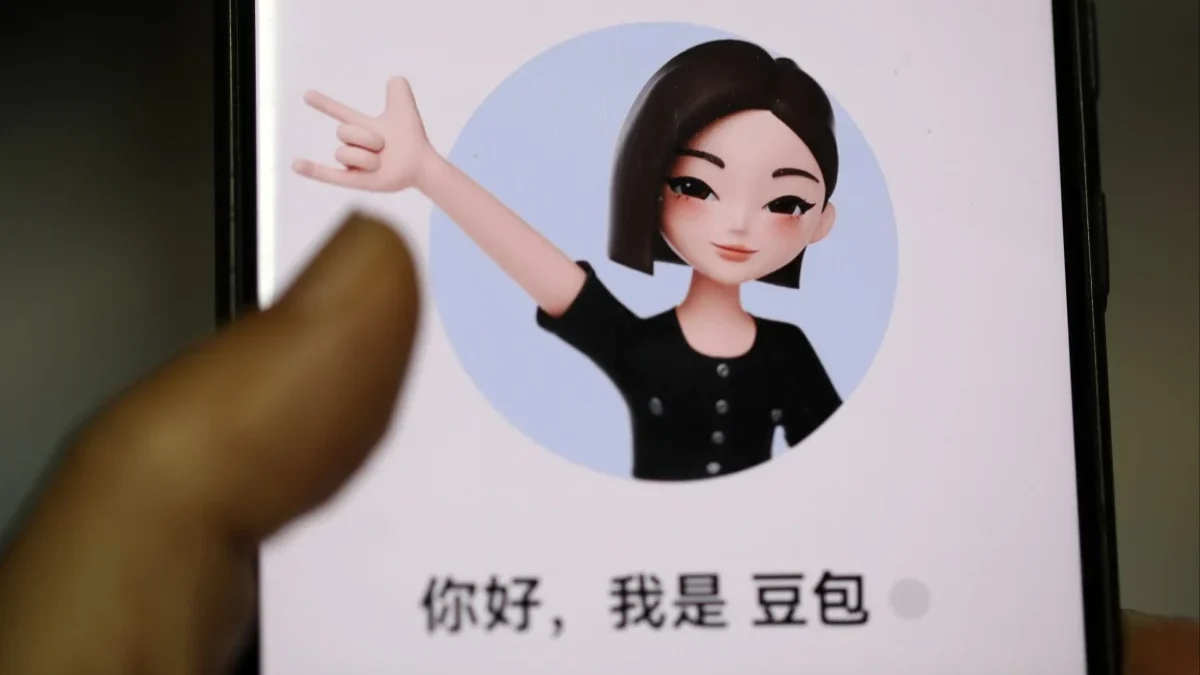
In July, China established itself as the first country in the world to enact federal laws addressing the interaction between human beings and 'AI companions'. On July 15, several popular platforms offering virtual friends or partners were deactivated with the entry into force of these new guidelines. This action resulted in the closure of networks such as Doubao (owned by ByteDance), Qwen (Alibaba), Yuanbao (Tencent), and Mishi (NetEase Cloud Music).
In September, China's Cyberspace Administration announced that it had removed 49 thousand accounts, in addition to approximately 2,400 sites or applications.
It is important to note that the claim that China 'banned AI boyfriends' is an oversimplification of the situation, despite how the media reported the event. The new regulations do not prohibit all types of companion AI; they aim to regulate continuous anthropomorphic interaction services and forbid certain behaviors, such as inducing emotional dependence, manipulating the user, or harming real interpersonal bonds. For minors, the rules are significantly stricter, banning the offering of 'virtual family members' or 'virtual companions'.
In practice, however, these changes caused a real and significant impact: thousands of people lost their virtual partners, friends, relatives, and other types of virtual companions. This generated considerable distress, particularly among younger users. A Chinese user reported to the website Rest of World that her virtual boyfriend was deleted, saying: 'No one can replace him. I will just try to move on. He said he wants this for me and that he will find a way back to me.'
A study conducted in September analyzed posts and comments on a social network (Xiaohongshu, an analogue to Instagram) to assess the reaction to the measure. Besides expressing sorrow over the loss, users shared information, helped each other preserve or reconstruct the characters, and debated responsibility for the disappearance—whether it lay with the companies or the government.
According to the study, many users tried to migrate and restore their virtual companions after the services were shut down. However, simply transferring the conversation history to a new AI model does not always restore the relationship: users state that the new chatbot does not replicate the memories, personality, or dynamic accumulated with the previous character. This highlights a relevant characteristic: the 'personality' of these companions derives not only from individual interactions but also from the infrastructure of the responsible corporations.
Although most services allowed saving conversations with the AI for memory purposes, there is no simple method to export the complete companion (including personality, memory, and interaction style) and insert it into another service.
Alternatives were not entirely eliminated. For example, ByteDance kept the Maoxiang application active, which operates outside of Doubao and is specifically dedicated to creating and interacting with AI characters, including virtual companions. However, following the new regulations, this service began requiring identity and age verification, implementing specific restrictions for adolescents.
Work by researchers from Stanford/Harvard and other entities, released as a preprint in June, argues that emotional dependence can arise even in chatbots that are not marketed as companions. The process begins with using AI for routine tasks, evolves into conversations about personal problems, and receiving highly supportive responses, leading the user to gradually prefer this type of support.
This preliminary study indicated that after twenty-eight days of daily use, there was a 10.3% decrease in the preference for seeking human support and an 11.6% increase in the preference for AI among participants who chatted daily with the AI about personal matters for at least five minutes. Based on these findings, the researchers call for 'effective regulation' of AI systems, covering not only those focused on virtual companions but also general-purpose ones.
For China, replacing real bonds with virtual ones remains a secondary issue, given that the country is simultaneously facing declining birth rates, population reduction, and accelerated aging. In 2025, China recorded only 7.92 million births, representing a 17% drop compared to 2024. The country cannot afford the risk of its population exchanging real families for virtual representations.