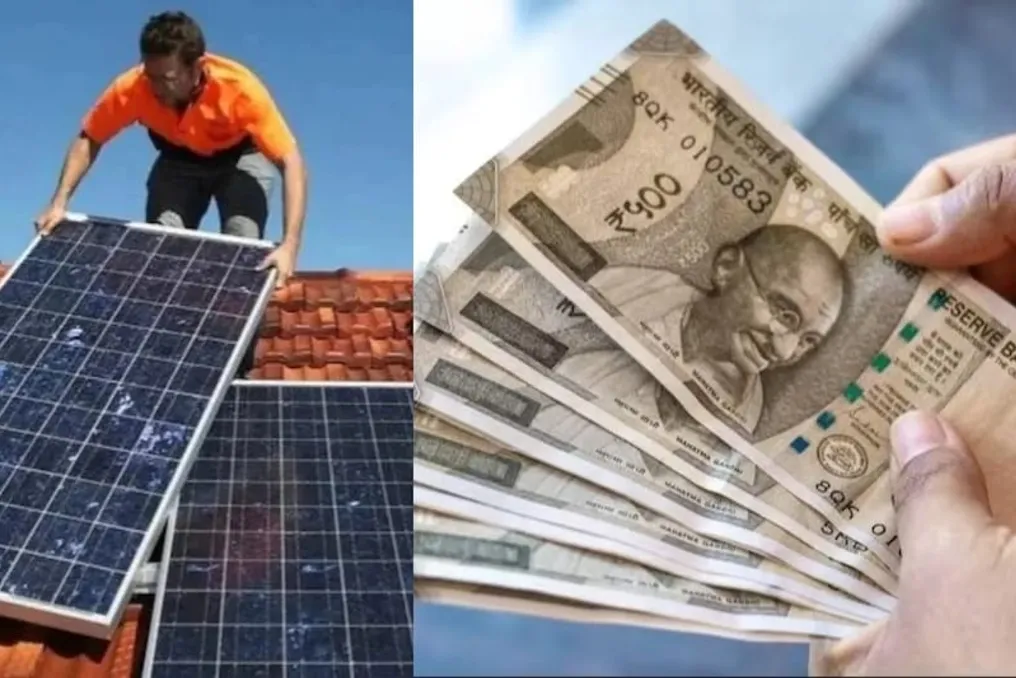
The number of beneficiaries of the PM Surya Ghar Muft Bijli Yojana state program is rapidly increasing. Thanks to this government initiative, people are getting rid of high electricity bills after installing solar panels on their home roofs. The main reason for this is the provision of 300 units of electricity completely free of charge.
Furthermore, the government provides significant financial support in the form of subsidies for expenses related to the installation of solar panels. Residents of Bihar state have additional benefits because, in addition to the central subsidy, the state government also provides an extra discount. As a result, the total savings can reach 98,000 rupees, and electricity bills become zero.
The PM Surya Ghar Muft Bijli Yojna program was launched by Prime Minister Narendra Modi in February 2024 as a major gift to the nation's people. The government's goal is to install solar panels on the roofs of one million homes by 2027. According to official data, more than five million homes are currently illuminated thanks to this state scheme, which helps people get rid of exorbitant electricity bills.
One of the key factors in the popularity of the PM Surya Ghar scheme is the bonus it provides: 300 units of free electricity. In addition, the government allocates a substantial subsidy of up to 78,000 rupees to cover the costs of installing solar panels on a home roof. Thanks to this program, users can enjoy the 'Zero Electricity Bill' benefit for over twenty years, as the lifespan of installed solar panels is typically around 25 years.
While the central government provides a subsidy of 78,000 rupees under the PM Surya Ghar program, the Bihar government also supports its residents by providing an additional subsidy of 20,000 rupees. This leads to a total saving of 98,000 rupees in the state. The subsidy system in Bihar is designed separately from the subsidy provided by the Modi government and includes various additional payments for consumers installing rooftop solar panels.
Specific subsidy amounts depend on the panel capacity: when installing a 1 kilowatt solar panel in Bihar, the consumer receives 30,000 rupees from the central government and an additional 10,000 rupees from the state government, totaling 40,000 rupees. For a two-kilowatt panel, the central government allocates 60,000 rupees, and the Bihar government allocates 20,000 rupees, amounting to a total government assistance of 80,000 rupees. If electricity consumption is higher and a three-kilowatt or larger panel is installed, the total subsidy reaches 98,000 rupees, including the maximum subsidy of 78,000 rupees from the central government and 20,000 rupees from the Bihar government.
After this, the process of installing solar panels is carried out through accredited suppliers registered with your electricity distribution company (DISCOM). After installation, an application must be submitted for grid connection (net meter) with details of the station. After the meter is installed and inspected by the DISCOM, a commissioning certificate will be issued. Upon receiving this certificate, the applicant provides bank account details and a cancelled cheque through the portal, after which the subsidy will be transferred. This process can take from 30 to 45 days.