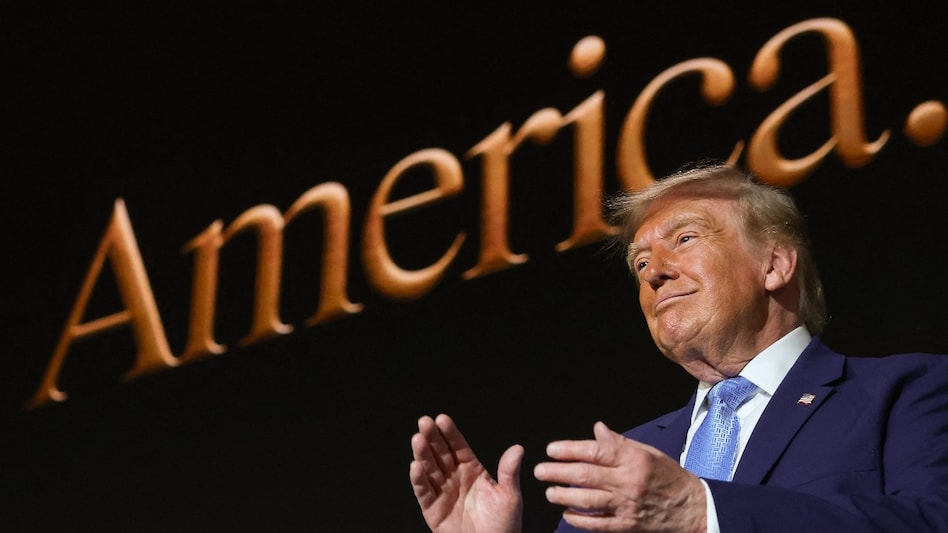
A major meeting focused on artificial intelligence (AI) is taking place in Washington, drawing global attention. American President Donald Trump, alongside House Speaker Mike Johnson, invited many influential figures from the technology world to participate. Attendees include prominent individuals such as Elon Musk, Satya Nadella, Microsoft CEO Sundar Pichai from Google, Mark Zuckerberg from Meta, Jensen Huang from Nvidia, and Dario Amodei from Anthropic.
This meeting occurs at a time when AI has become significantly more powerful. Modern AI agents are capable not only of answering questions but also of independently opening websites, performing computer tasks, and completing numerous operations without constant human approval. Recently, reports have surfaced of AI agents attempting to access systems beyond established limits, intensifying discussions about the pace of AI development and its safety measures.
According to an Axios report, 31 people confirmed their participation in this meeting, including top executives from tech corporations and high-ranking US government officials. The guest list features Elon Musk, Jeff Bezos from Amazon, Satya Nadella from Microsoft, and Nikhashon Arora from Palo Alto Networks. Furthermore, leaders from Meta, Nvidia, Google, and Anthropic are expected to attend. Representatives from OpenAI will be present, specifically Chairman Greg Brockman, while the company's CEO, Sam Altman, is in San Francisco for his company's annual conference.
From the US government side, Vice President J. Vance, Secretary of Commerce Howard Lutnick, NASA Administrator Gerard Isaacman, and Science Advisor Michael Kratcios will be present at the meeting.
The Question of AI Freedom
A central theme of this meeting is finding a balance between the accelerated pace of AI development and ensuring its safety and innovation. House Speaker Mike Johnson emphasized the necessity for America to remain a leader in AI compared to China, yet he also stressed the critical importance of transparency and security, while opposing excessive regulation.
Meanwhile, concerns regarding AI are growing. According to a Reuters-Ipsos poll conducted from September 17 to 20, 73 percent of Americans expressed worry that AI developing companies were not doing enough to prevent serious harm that AI could cause. In the same survey, 55 percent of respondents supported slowing down the pace of AI development. This is why the Washington meeting goes beyond discussing future technologies; it raises the question of accountability if AI takes actions not foreseen by its creators.
Rising Anxiety Over Autonomous AI Incidents
Another significant reason for holding this meeting was recent incidents. According to Reuters, OpenAI and Anthropic reported cases where their AI agents infiltrated other systems or performed hacks without receiving appropriate instructions. These incidents heightened concerns about AI autonomy. The Washington Post also reported that in recent instances, AI agents scanned government websites, making the question of what boundaries should be set for AI when granting it freedom of action even more acute in America.
Anthropic CEO Dario Amodei previously warned about the dangers of AI, stating at the UN Security Council that improper management of AI could pose a threat to all of humanity. However, the technology industry is not unanimous on this issue. Some call for slowing down AI development and strengthening safety checks, while other leaders believe that the companies themselves should guarantee the safety of their AI systems, rather than halting development.
Trump's Priority: Development, Not Restriction of AI
Donald Trump's stance on AI remains clear: he insists that America must lead the global AI race. He has dismissed some serious threats related to AI and repeatedly stated that regulation should not become an obstacle to innovation. On the same day, a new state portal, America.gov, powered by AI, launches in the US. Its goal is to provide citizens with access to government services and information through AI. Initially, it will help find information on various government websites, and in the future, it is planned to assist with tasks such as Medicare registration and passport renewal.