Video games have the capacity to address mental health issues without it needing to be presented as a clinical lecture. In certain instances, feelings such as loneliness, guilt, grief, and anxiety are incorporated into the plot; in others, they are integrated into the game's mechanics themselves, allowing the player to experience some of the dilemmas faced by the characters.
This selection features seven titles, ranging from Life is Strange to Hellblade: Senua’s Sacrifice, which tackle this theme in various ways. It is important to note that these works are fictional and do not serve as medical diagnoses, and some contain sensitive subjects such as abuse, violence, self-harm, and suicide.
In Life is Strange, mental health is integrated into the dynamics between characters. The story of Max Caulfield and Chloe Price explores themes like depression, isolation, bullying, abuse, and grief, illustrating how emotional difficulties can remain hidden even among people who interact daily. A notable moment involves Kate Marsh, who suffers from cyberbullying and harassment, forcing Max and the player to recognize signs that might have been overlooked. The game emphasizes the importance of listening to and paying attention to those around us, going beyond providing simplistic solutions.
In Celeste, climbing a mountain serves both as a literal goal and a metaphor for Madeline's internal struggle. The protagonist deals with insecurity, low self-esteem, panic attacks, and anxiety—feelings personified by a darker version of herself called Badeline. A relevant aspect is the evolution of the relationship between the two: Madeline initially tries to eradicate this part of herself, but soon realizes she cannot simply reject her negative feelings. The focus shifts to understanding these feelings and learning to move forward alongside them.
Gris builds its experience around the process of grief and pain without relying on lengthy dialogues. The setting, which begins devoid of color and almost empty, gradually recovers tones and abilities as the protagonist progresses. Although the interpretation of the journey is intentionally open, its phases are often linked to the emotions felt during a loss. Instead of explaining the character's feeling to the player, Gris uses colors, music, scenery, and movement to convey emotions, making the protagonist's psychological state the explored environment itself.
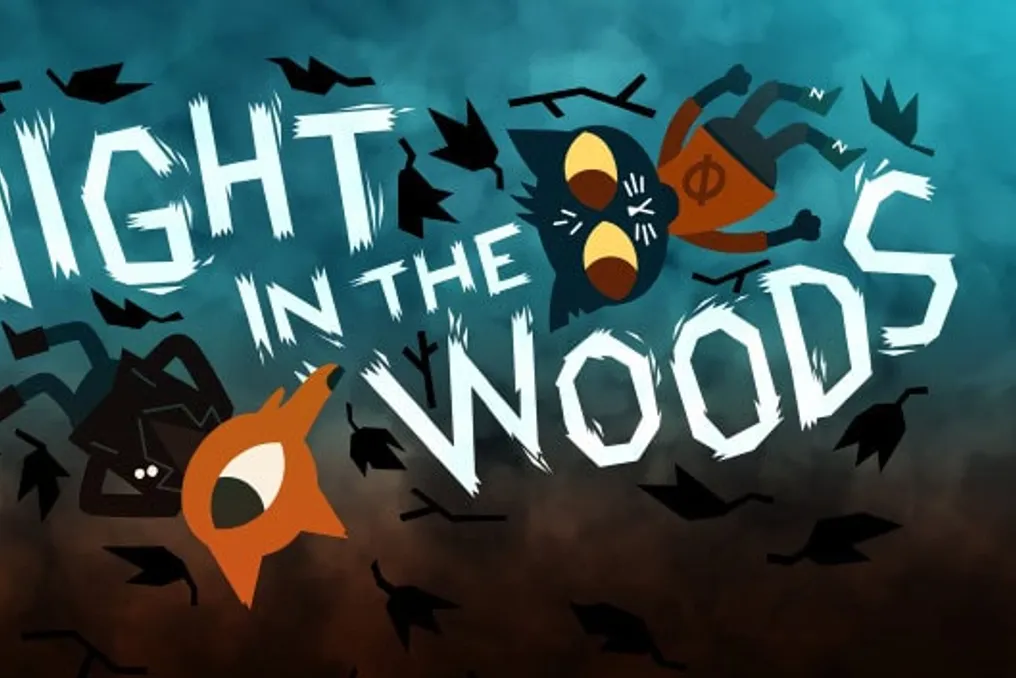
In Night in the Woods, mental health is connected to the uncomfortable feeling of not knowing which direction to take one's life. Mae Borowski leaves college and returns to her hometown, where she reunites with old friends pursuing different paths while trying to understand her own problems. Depression, anxiety, dissociation, and emotional challenges arise in casual conversations about careers, family, friendship, and the future. The game also demonstrates that these conflicts do not occur in isolation, as financial problems, family expectations, and the city's economic decline directly impact the characters' well-being.
Hellblade: Senua’s Sacrifice is perhaps the most direct title on this list when it comes to addressing mental health. Senua experiences episodes related to psychosis, including voices and changes in the perception of reality. For the game's development, Ninja Theory collaborated with researchers, specialists in the field, and people with lived experience of psychosis. Binaural audio is crucial in this process, as the voices seem to emanate around the player, potentially criticizing, guiding, contradicting, or questioning their choices. The intention is not to reduce Senua's condition to a mere horror element, but rather to center her perception within the narrative and experience.
Hotline Miami addresses the theme in a much less direct and considerably more disturbing way. The protagonist receives mysterious phone calls ordering him to commit massacres, while the fragmented narrative mixes hallucinations, trauma, identity, and distorted perception of reality, blending with violence. The game deliberately confuses what actually happened with what might be imagined or reconstructed by the character. More than representing a specific clinical picture, Hotline Miami prompts the player to reflect on their relationship with violence, questioning the willingness to continue after turning brutal murders into a fast and almost addictive sequence of trials and errors.
Despite its apparent humor and visual simplicity, Undertale features characters marked by feelings of guilt, loneliness, hopelessness, insecurity, and grief. These issues are presented in a particularly interesting way because the game allows the player to avoid violent confrontations and seek to understand what each character yearns for or fears. The choices made by the player profoundly modify the meaning of the experience, lending mechanical weight, not just narrative, to empathy, responsibility, and consequences. Rather than treating mental health as a topic separate from the adventure, Undertale uses its characters to demonstrate how knowing someone's vulnerabilities can completely alter the way we relate to that person.
These seven games demonstrate that there is no single way to incorporate mental health into video games. Celeste translates anxiety into a mountain to climb; Gris communicates grief through colors; Hellblade brings the player close to Senua's perception using audio and narrative; and Night in the Woods embeds its themes in the everyday conversations and struggles of adult life.
The common thread lies in the use of video games' differential: active player participation. Instead of merely watching a character go through an experience, the player can walk alongside them, make decisions, face their obstacles, and, in some cases, realize that overcoming a problem does not always mean making it disappear.