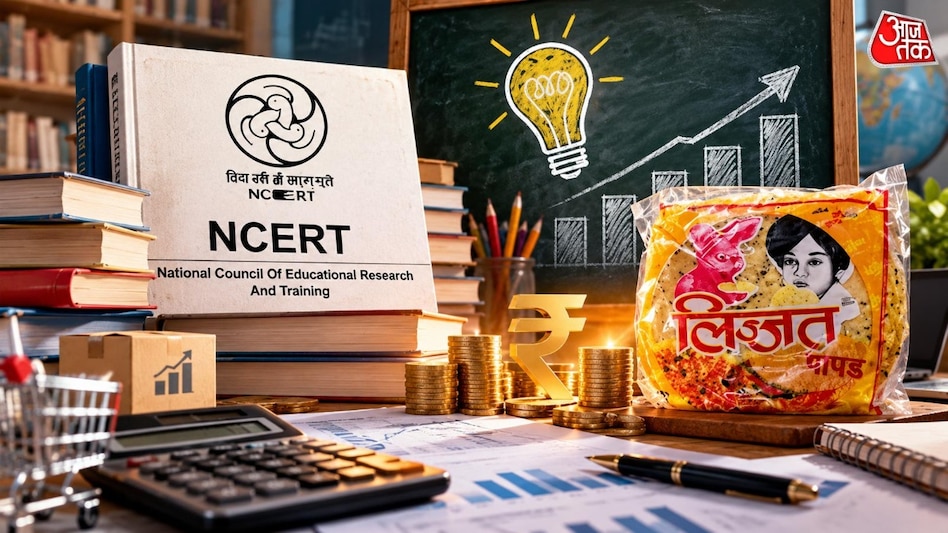
NCERT revised 9th-grade curriculum: Financial literacy and business cases are now taught
Read more
Aaj Tak
www.aajtak.in

NCERT revised 9th-grade curriculum: Financial literacy and business cases are now taught

The National Council of Educational Research and Training (NCERT) has made significant changes to the new social studies textbook for Grade 9, titled 'Understanding Society: India and Beyond'. The updated curriculum now covers not only old historical topics but also modern aspects of national development, personal finance, government policy, income tax calculation, and Indian business models.

The main goal of these changes is to nurture responsible, financially savvy citizens in children who can participate in nation-building from an early age.

Under Chapter 5, dedicated to 'Managing Personal Finance', students will receive a basic understanding of personal finance. They will be taught how to calculate income tax according to the new tax system, using examples to determine the tax burden.

The syllabus emphasizes that timely and honest tax payment is the duty of every citizen, as these funds are used to finance national development and public services. Furthermore, through the example of the Ayushman Bharat scheme (AB-PMJAY), it is explained how insurance provides financial protection to low-income families during medical emergencies.

Chapter 4, which focuses on 'Governance and Public Policy', links the country's management system to its historical and cultural traditions. It includes national ideals such as 'Satyameva Jayate' from the Mundaka Upanishad and the Supreme Court phrase 'Yato Dharmas Tato Jayaḥ' from the Mahabharata.

Attention is also paid to the 'Sengol' associated with the Chola dynasty and its installation in the new Parliament building in 2023. The concept of Good Governance is illustrated by the image of a banyan tree, whose seven branches symbolize participation, rule of law, accountability, efficiency, inclusivity, responsibility, and transparency.

Moreover, through the National Education Policy (NEP 2020) and the 'Khelo Bharat Policy 2025', children are educated about policy formation processes and the role of sports in nation-building.

In Chapter 6, titled 'From Ideas to Startups', entrepreneurship is explained through examples of Indian entrepreneurs and traditional models. The history of 'Shree Mahila Griha Udyog Lijjat Papad', which began in 1959 with a small sum of 80 rupees by seven housewives from Mumbai, is included in the textbook. It is mentioned that by 2023, over 45,000 women had joined this cooperative business, which reached a value of 1600 crore rupees.

The inspiring journey of M.S. Oberoi, who started his career as a hotel porter earning 50 rupees per month and eventually created one of the largest hotel chains in the country, is also studied. Additionally, the program includes the study of the traditional banking system of the Chettiar community from Tamil Nadu, their mutual trust-based lending, and their historical trade network extending to Southeast Asia.

This section, inspired by the ideas of Swami Vivekananda, highlights the activities of over 120 unique Indian Unicorn Startups. The role of new enterprises in the e-commerce, fintech, agritech, and healthcare sectors is discussed. Startups are linked to the national goals of 'Atmanirbhar Bharat' and 'Developed India 2047'. Children are taught that business brings not only profit but also contributes to societal development through job creation, innovation, taxation, and Corporate Social Responsibility (CSR).
Similar stories

Over 500 million children worldwide remain without education due to conflicts and climate change
Read more
www.aajtak.in

Over 500 million children worldwide remain without education due to conflicts and climate change

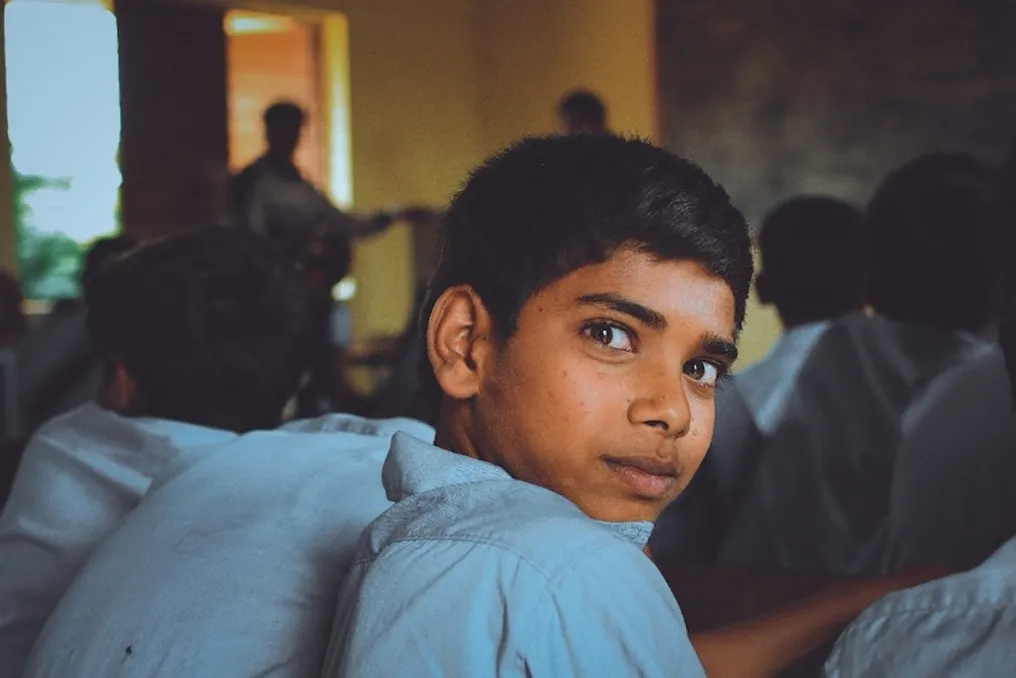
More than 500 million children around the world face extremely difficult conditions to receive an education, including in Gaza, Sudan, and Nepal. Wars, population displacement, and climate change negatively affect children's learning in many parts of the planet. In addition to the need for massive funding to ensure access to education, the world faces the task of getting these children into schools.

The situation in the conflict zone in Sudan was demonstrated in one of the schools. In a small and very hot sixth-grade classroom, one teacher taught 120 students, including an 18-year-old girl. She had to leave home three years ago due to fighting, after which she married young and became a mother, but she still strives to complete her education.

Mesa Jalbout, director of the organization Education Cannot Wait, shared this experience during her visit to the school. She reported that the temperature in the classroom reached 44 degrees Celsius, and there was no water supply or electricity. Despite this, the girl approached her with a request to ensure educational opportunities for her brothers, sisters, cousins, and orphaned friends.

According to Jalbout, the school was so small that hundreds of waiting children outside could not find space inside. The children asked her and other visitors to pass on a message about the need to build more schools. Jalbout stated that she would raise this issue before world leaders at the annual United Nations meeting this week.

The problem of education for more than 500 million needy children has become one of the key issues discussed at the UN meeting, alongside other topics. Some progress has been made in calls for fundraising for these children's education.

Gordon Brown, former Prime Minister of the UK and UN Special Envoy for Global Education, stated on Thursday that 273 million children are out of school. Furthermore, another 270 million children attend school but do not achieve sufficient literacy in reading, writing, or mathematics by age 11. He noted that many of these children are in areas affected by conflict or climate change.

Brown emphasized that the world should not limit the development potential of children in some countries but must be committed to developing the potential of all children in all countries at all times. He reminded governments of countries whose children are not in school of their pledge to spend 20 percent of their budget on education. He also reminded donor countries of their adoption of the UN Sustainable Development Goals in 2015, aimed at ensuring quality education for all children by 2030, noting that the world is still far from achieving this goal.

Brown expressed disappointment that the number of children out of school is not decreasing. He added that depriving a child of the basic right to education affects their entire life and the lives of their family.

Nevertheless, some results were achieved regarding education financing at the world leaders' meeting. On Wednesday, at the Global Partnership for Education event, it was announced that $3.5 billion would be raised from partners and donors to transform the education system and provide quality education in more than 90 least developed countries. Of this amount, $2.1 billion came from or is expected from governments and private philanthropists, and $1.4 billion was raised through co-financing. The latter includes $1 billion from development institutions and $400 million from the growing alliance of philanthropists and the private sector.

Nigerian President Bola Tinubu, who is a co-organizer of the campaign, stated that this funding helps dynamic and young countries like Nigeria overcome barriers preventing children, especially girls, from attending school and receiving an education. Education Cannot Wait focuses on 258 million school-age children affected by crises. Jalbout noted that this number significantly exceeds the number of children the organization can help.

As part of its activities, she announced the allocation of an emergency investment fund of $3 million for children in Gaza and the West Bank. These funds will help up to 13,000 of the most vulnerable children and adolescents. Priority will be given to children affected by conflict, as well as children with disabilities, who have lost parents or are left without family.

Jalbout pointed out that Gaza has the highest rate of limb loss among children per capita in the world. She stressed that for these children, survival is only the beginning. Children who have survived war, lost limbs, and possibly family, should not lose their future due to the inability to meet their needs. However, the funds are insufficient compared to the needs. Jalbout reported that for the third consecutive year, 660,000 children in Gaza are out of school, and about 70,000 young children lack access to preschool education.

In Nepal, the organization also provided 10 million...

Chief Minister Vijay expands school breakfast scheme from Thiruvanmiyur
Read more
www.aajtak.in

Chief Minister Vijay expands school breakfast scheme from Thiruvanmiyur

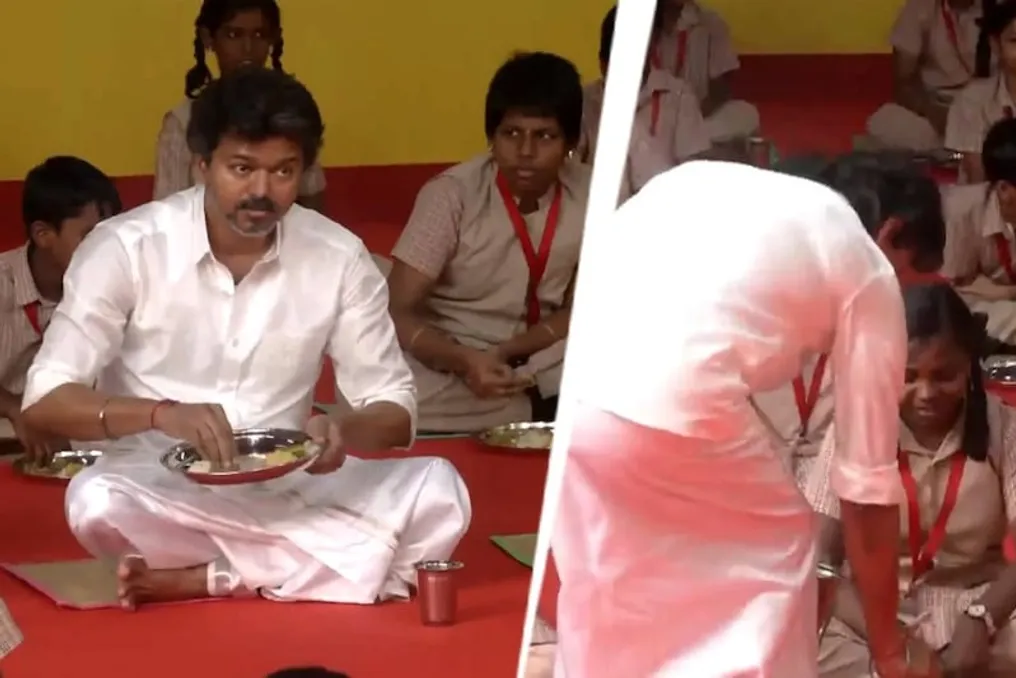
Tamil Nadu Chief Minister C. Joseph Vijay launched the expansion of the breakfast scheme for schoolchildren on Tuesday. He inaugurated this scheme at the government middle school in Gandhi Gramam, Thiruvanmiyur. On this occasion, he personally served food to the children and also had breakfast with them. Subsequently, he went to the classrooms and interacted with the children.

The scheme has been named 'Perunthlaivar Kamarajar Breakfast Scheme' in honor of former Chief Minister K. Kamaraj. Under this expansion, the scheme has been extended to students from classes six to eight. This increase will benefit an additional 1.30 million children studying in approximately 15,454 government and government-aided schools in the state. The government argues that this initiative is extremely important for the health of the children, enabling them to start the day with nutritious food.

An additional budget of ₹217.63 crore has been allocated for this expansion in the current financial year, increasing the total budget of the scheme to ₹724 crore. Originally, the scheme was supposed to start on September 17, but it had to be postponed due to Chief Minister Vijay's visit to London.

Although this scheme will not be implemented in Chengalpattu and Tiruppur districts for now, this is due to the Model Code of Conduct imposed by the Election Commission in view of the Madurantakam and Dharapuram assembly by-elections scheduled for October 6 in these districts.

Nutrient-rich dishes such as upma, khichdi, and pongal have been included in the breakfast, and millet-based food items will also be provided twice a week. This scheme will be operated under the joint auspices of the Greater Chennai Corporation, Directorate of Town Administration, and Tamil Nadu Women's Development Corporation, involving several thousand schools. Women from self-help groups present in the schools will serve the breakfast. The government is confident that this program will improve the health, school attendance, and academic performance of the children in all three areas.

Popular