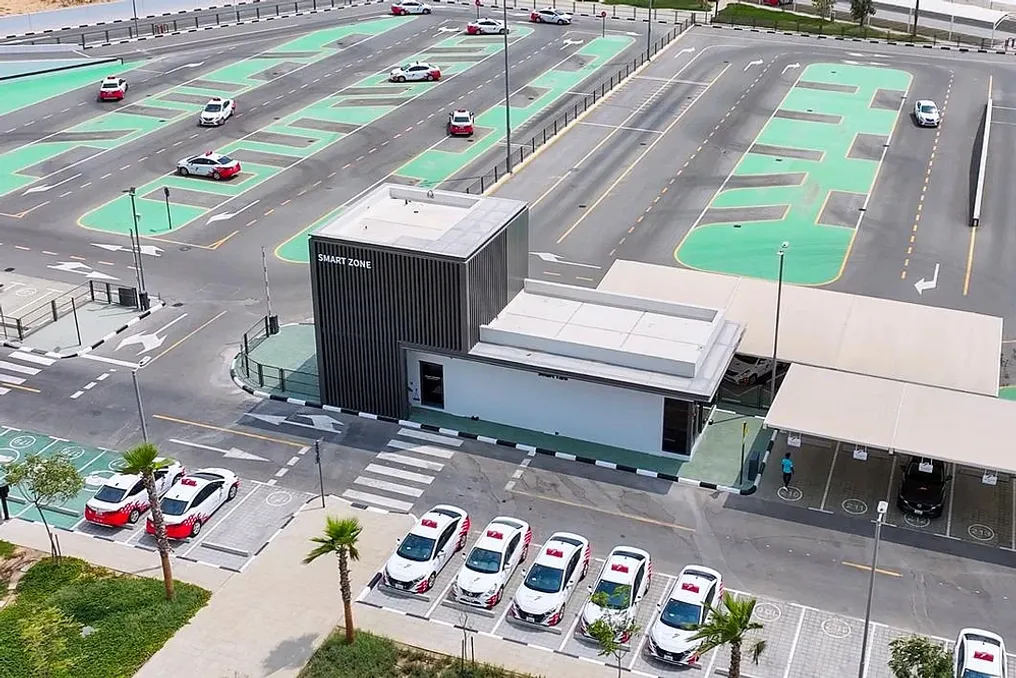
Smart testing system in Dubai allows drivers to analyze errors after failing an exam
Read more
Khaleej Times
www.khaleejtimes.com

Smart testing system in Dubai allows drivers to analyze errors after failing an exam

Drivers obtaining licenses in Dubai can now review their test drives and understand the reasons for failure thanks to the updated intelligent testing system implemented by the Roads and Transport Authority (RTA).

The new Smart Test System enables trainees to replay their vehicle's route and study the mistakes made through visual evidence. An interactive 3D map displays the path taken during the test and marks locations of both serious and minor faults, helping trainees understand what they need to work on to improve their skills.

This system is used when checking maneuvers in passenger vehicles. It utilizes artificial intelligence, computer vision, and data analysis to monitor driving maneuvers in real-time and calculate results according to established criteria, without human intervention in the scoring process.

Sultan Al Akraf, Director of Driver Licensing at the RTA Licensing Agency, noted that this system promotes consistency in evaluations and provides trainees with a clearer understanding of their results. He emphasized: 'The system goes beyond simply automating test result calculation. It provides an integrated framework for monitoring and analyzing a trainee's performance in various maneuvers, presenting recorded errors in an understandable visual format.' He added that this allows clients to understand the reasons for their results and identify areas needing improvement.

Intelligent cameras monitor whether trainees look in mirrors and check blind spots, as well as how they position their hands on the steering wheel while performing maneuvers. Facial recognition is used to confirm the trainee's identity and link the result to the correct person. The update also includes vehicle tracking technology with positioning accuracy up to two centimeters. This technology, known as real-time kinematic positioning, helps the system detect errors related to the vehicle's trajectory and parking position.

For the trainees themselves, the recorded route provides more information than just a 'passed' or 'failed' result. They can see exactly where the error occurred and why it was recorded, giving them a clearer picture of the skills they need to work on before the next test. The system is also equipped with safety features designed to prevent collisions in the testing area. Its automatic braking system intervenes if a situation arises that could lead to an accident or endanger the trainee, the vehicle, or the surrounding area.

Al Akraf stated that AI-based collision prevention and proactive emergency braking will help create a safer testing environment, mitigating risks before an incident occurs. According to RTA data, the system is designed to operate stably in various weather conditions and lighting, both day and night, thereby reducing the influence of external factors on the evaluation process. Test results can also be linked to the educational system, allowing performance data to be used to determine each trainee's individual needs. This can be applied to adapt curricula and focus training on areas where the trainee requires additional practice.
Similar stories

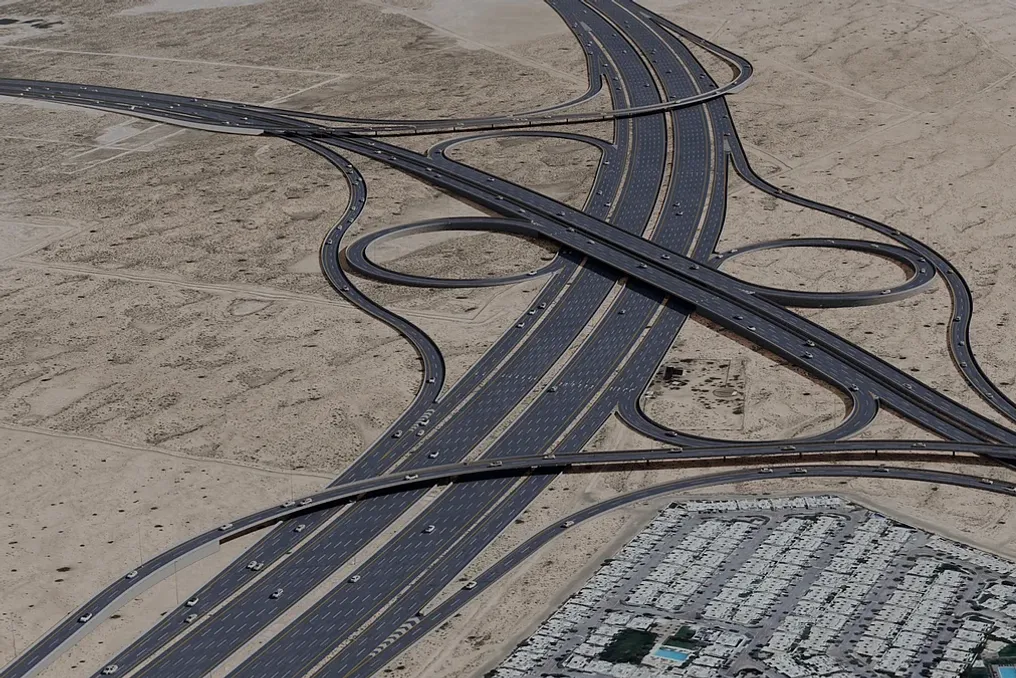
New Dubai Fourth Corridor promises residents reduced travel time and less traffic
Read more
www.khaleejtimes.com

New Dubai Fourth Corridor promises residents reduced travel time and less traffic

Residents of new, more distant areas of Dubai have long faced the problem of long commutes across the city, affecting daily needs such as trips to school, work, or short excursions to the city center.

Now, many Dubai residents believe that the implementation of the Fourth Corridor can solve this issue. For instance, 17-year-old student Damien Dexter Goveas, who has lived in Damac Hills 2 for almost five years, noted that connectivity with the rest of the UAE and central Dubai presents significant difficulties. He reported that getting anywhere in the city takes a minimum of 45 minutes from his home but believes the Fourth Corridor will make trips into the city and to school significantly easier and faster.

Last week, Sheikh Hamdan bin Mohammed bin Rashid Al Maktoum, Crown Prince of Dubai, approved the implementation of this 80-kilometer project in the emirate. This new arterial route will be the fourth major road connecting the emirates, alongside Sheikh Zayed Road, Sheikh Mohammed bin Zayed Road, and Emirates Road.

Muhammad, a Dubai resident who purchased property in The Valley, was initially skeptical about the project, fearing it was too far from central Dubai. However, his confidence was strengthened by the existing Dubai–Al Ain road and the Dubai 2040 plan. Now, after the confirmation of the Fourth Corridor, he feels his investment is paying off. He added that adding an extra lane between Emirates Rd and Lehbab Rd will make journeys even smoother.

The corridor will also provide fast access to Al Maktoum Airport, Abu Dhabi, Sharjah, and the northern emirates. Muhammad emphasized that this will eliminate the need to connect to existing highways when traveling to other emirates. He is also confident that his property value will increase, as improved transport accessibility will be an advantage rather than a drawback for future developments in the area.

This project will also help his family. His daughter, who is currently taking A-level exams, is considering universities in Academic City, Sharjah, and Abu Dhabi. Muhammad noted that travel time and connectivity were one of their concerns, and the new project should ensure faster movement regardless of where she enrolls.

Construction will proceed in two phases. The first phase covers approximately 30 km from Al Shanouf Road in Sharjah to the Dubai–Al Ain road, costing about 3.5 billion dirhams. The second phase will add another 50 km to Al Faya Road in Abu Dhabi. The highway will feature 12 lanes, 72 bridges, 17 tunnels, and 45 drainage culverts. It will be capable of handling up to 24,000 vehicles per hour and will be directly connected to Al Maktoum International Airport and Etihad Rail.

Joseph Salem, Partner and Head of Transport and Hospitality Practice at Arthur D. Little Middle East, believes this project aligns with the concept of forward-thinking infrastructure planning required by the region. He stated that by integrating road, air, and rail connectivity into a single corridor, Dubai is once again demonstrating an approach to transport as an integrated system, rather than a series of isolated fixes.

He also noted that combining a 60 percent reduction in travel time with real multimodal connections shows that Dubai is 'building potential that matches its long-term demographic and economic ambitions, rather than just reacting to today's transport pressure.' For Damien, the new highway offers hope for the development of a good public transport system. He mentioned that there are currently few accessible public transport options for city travel and hopes that after the corridor is completed, RTA will begin implementing faster and more convenient direct bus routes. He also suggested that introducing good feeder bus routes from nearby metro stations and Etihad Rail stations would be a big step forward.

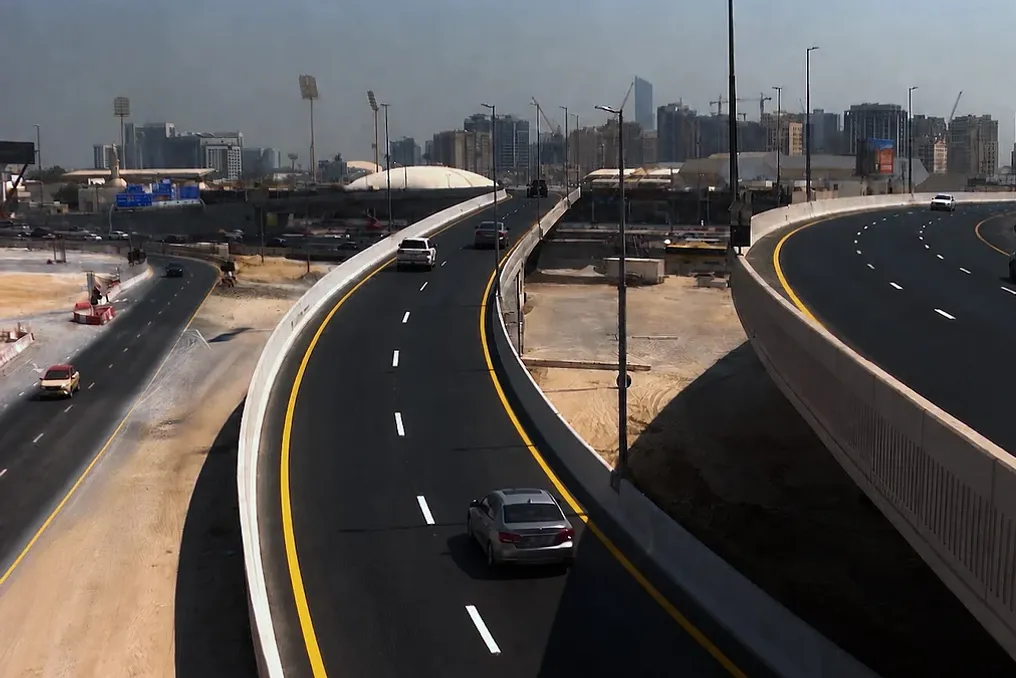
Completion of the RTA project in Dubai reduced travel time on Oud Metha and Al Asail routes from 20 to 5 minutes
Read more
www.khaleejtimes.com

Completion of the RTA project in Dubai reduced travel time on Oud Metha and Al Asail routes from 20 to 5 minutes

Drivers in Dubai traveling through the areas of Oud Metha, Al Jaddaf, Umm Hurair, and surrounding territories can now complete key journeys significantly faster thanks to the completion of a major road project implemented by the Roads and Transport Authority (RTA).

The development project for Oud Metha Road and Al Asail Street has increased the capacity of Oud Metha Road from 10,400 to 15,600 vehicles per hour in both directions, representing a growth of up to 50 percent. Furthermore, travel time has been reduced from twenty minutes to five minutes.

As part of this project, 14 kilometers of roads were constructed, four intersections were modernized, and bridges and tunnels totaling 4.3 kilometers were built, improving connectivity between Oud Metha Road, Al Asail Street, and neighboring routes.

This project serves residential and developing areas, including Zaabil, Al Jaddaf, Oud Metha, and Umm Hurair, as well as important destinations such as Latifa Hospital and Al Wasl Club. It is expected that the population in the served areas will exceed 420,000 people by 2030.

The CEO and Chairman of the RTA Executive Council, Mattar Al Tayer, stated that this project is part of a comprehensive plan to expand Dubai's road and transport infrastructure in line with population and traffic growth. He emphasized that the project's goal is not only to meet future demand but also to make daily commutes more comfortable for residents and visitors to the city.

Describing the project's role in connecting different parts of the road network, Al Tayer noted that it strengthens links between main corridors, residential areas, and service facilities while increasing intersection efficiency and road safety. He added that the project is vital for Dubai's road network due to its location and role in strengthening connections between multiple corridors, residential and developing areas, and service facilities, while improving intersection efficiency, facilitating access to key locations, and enhancing traffic safety.

Al Tayer also mentioned that the project was conceived with Dubai's future urban expansion in mind, and the infrastructure is designed to anticipate growing demand rather than just solving existing traffic problems. He reiterated that the project increases the capacity of Oud Metha Street from 10,400 to 15,600 vehicles per hour in both directions, which is an increase of up to 50 percent, and reduces travel time from 20 minutes to five minutes, which is a 75 percent time saving.

The authority reported that the changes improve the connection between Oud Metha Road, Al Asail Street, and the surrounding road network. At the intersection of Oud Metha Road and Sheikh Rashid Road, RTA added a left exit lane leading to Al Gharhoud Bridge, increasing its capacity to 1,800 vehicles per hour. Additionally, the service road on Sheikh Rashid Road between the existing bridge and the exit to Al Zahrawi Street was modernized to eliminate congestion and enhance safety.

The right turn capacity from Sheikh Rashid Road towards Oud Metha Road and Dubai-Al Ain Road was increased from two lanes to three, boosting the capacity to 4,000 vehicles per hour. A new tunnel connects the service road on Oud Metha Road with the Sheikh Rashid Road intersection for drivers heading to Bur Dubai.

Additional improvements were made at the intersection of Oud Metha Road, Al Asail Street, and Al Wasl Club Street. Two overpasses now connect Al Asail Street to Al Hail Road via Al Wasl Club Street. One bridge has two lanes and accommodates 2,400 vehicles per hour, while the second has three lanes with a capacity of 3,600 vehicles per hour. A separate two-lane bridge with a capacity of 2,400 vehicles per hour is designated for left-hand traffic from Al Asail Street towards Oud Metha Road.

RTA also improved access to Al Wasl Club, including its entrances and exits onto Al Wasl Club Street, to reduce conflicts with main traffic flow. Another two-lane bridge with a capacity of 3,000 vehicles per hour was built at the intersection of Al Wasl Club Street and Al Hail Road, serving traffic towards Al Hail Road and Business Bay crossing. Al Wasl Club Street was widened to create a two-lane exit onto Al Hail Road, along with service roads in both directions and additional parking spaces.

At the intersection of Zaabil Palace Street, Al Hail Road, and Oud Metha Road, RTA added a left exit lane towards Dubai-Al Ain Road, doubling its capacity from 900 to 1,800 vehicles per hour. A single-lane tunnel with a capacity of 1,200 vehicles per hour was also constructed to direct traffic from Dubai-Al Ain Road to the Oud Metha service road and alleviate current congestion. The project also expanded the bridge connecting traffic from Al Hail Road towards Oud Metha Road from two to three lanes, increasing its capacity from 2,200 to 3,300 vehicles per hour.

Popular