City of Aizawl demonstrates calm road behavior, which could serve as an example for other Indian cities
Read more
The Better India
thebetterindia.com

City of Aizawl demonstrates calm road behavior, which could serve as an example for other Indian cities

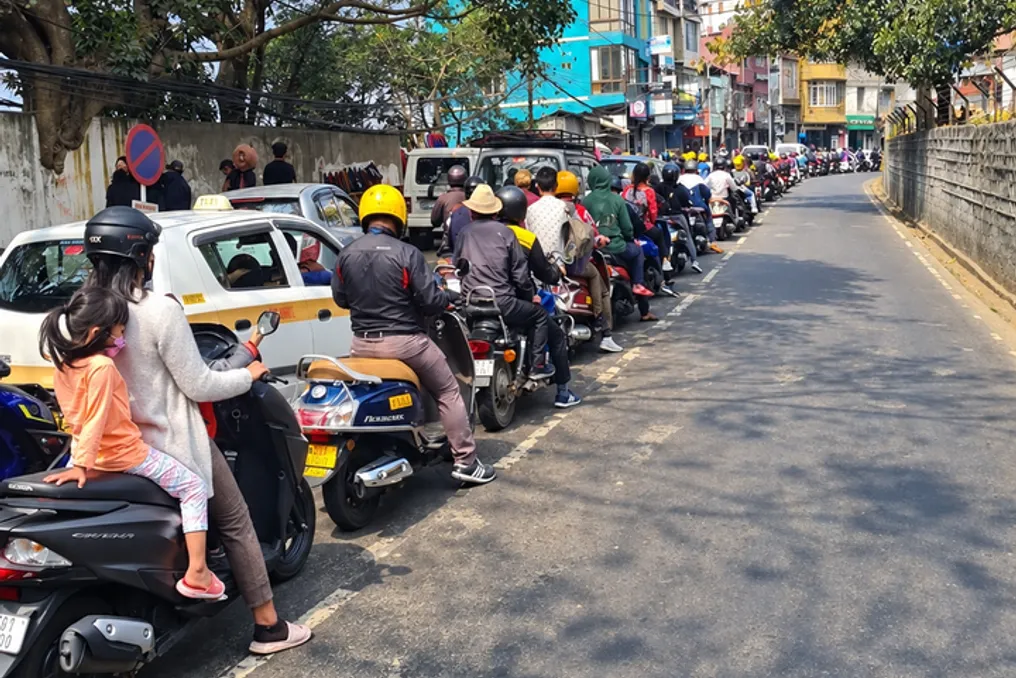
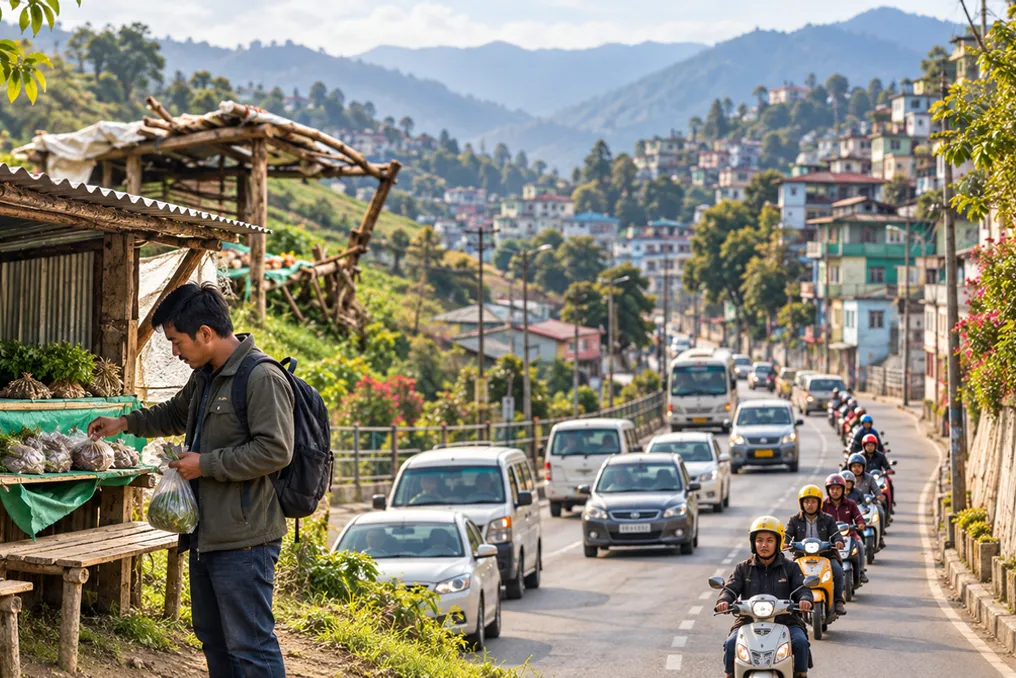
Even during rush hour, the city of Aizawl exhibits unusual calmness on its roads: drivers rarely honk, adhere to lanes, and overtaking is extremely rare.

For the residents of Aizawl, this state is part of daily life. One factor explaining Aizawl's outstanding road etiquette is considered to be the Mizo concept of Thlaukngaihna—a deeply rooted value of caring for others.

An important component of Thlaukngaihna is avoiding any actions that might cause inconvenience to others. This spirit is evident on the streets of Aizawl in how passengers yield to one another.

Drivers are known for refraining from unnecessary use of the horn, following lane rules, and yielding to pedestrians, thus forming a traffic culture based on patience and attentiveness.

This respect extends beyond the roads. In public transport, people often offer their seats to those in need, including the elderly, pregnant women, and strangers.

The Aizawl traffic police also plays a significant role in managing city roads and assisting passengers when necessary. However, most of the daily discipline comes from the citizens themselves, leading to the road etiquette in the city largely depending on mutual respect among people.

Similar stories

Civic Lessons from Northeast India: Absence of Horns and Self-Regulating Markets
Read more
thebetterindia.com

Civic Lessons from Northeast India: Absence of Horns and Self-Regulating Markets

In Aizawl, the hilly capital of Mizoram, cars queue at unmarked intersections, and the loudest sound in the early morning is the polite 'beep-beep' of gratitude between drivers. In the village of Bade, located 900 kilometers away in Nagaland, 83-year-old Shevotso Keikho has not sat behind his shop counter since 2021, yet his vegetables continue to sell, and his money box fills up.

In many parts of the northeast, an order functions that in other places would require a police officer, cameras, or fines, thanks to the absence of road horns and shelf supervision.

The Capital That Never Needed Traffic Lights

Aizawl has deservedly earned the nickname 'Silent City.' Many of its intersections are not equipped with traffic lights; a whistle from a road patrol officer and gestures are usually enough to manage traffic. Cars drive on the left side, and two-wheelers on the right, and a sudden lane change is considered deeply shameful in Mizo culture.

Residents surveyed by The Quint in 2022 described this restraint as a daily manifestation of mutual respect, rather than a rule imposed by the police. The Mizoram police explain the transformation of Aizawl into an officially recognized 'Horn-Free City' through years of educational campaigns at the school level. This capital, with over four hundred thousand residents, rarely faces the transport collapse familiar to most Indian cities, even without signals or intensive police control.

When the Shop Owner Acts as Conscience, Not Cashier

In the highways of Mizoram and Nagaland, shops without sellers are as commonplace for locals as quiet roads. Near Seling, 65 kilometers from Aizawl, farmers display fruits, vegetables, and flowers on wooden shelves next to a handwritten price list and a collection box, trusting travelers to pay exactly what they take. This practice is locally called 'nghah loh dawr,' meaning 'shop without a seller.'

Keikho's stall in Bade operates on the same principle since 2021. He displays his organic harvest every morning, and buyers either leave the correct change or, if they lack money, take what they need and promise to pay later. His business partner, Riteu Hamo, told Morung Express that her daily income ranges from 200 to 3000 rupees depending on the harvest, and customers who cannot pay in full often leave a handwritten note promising to return.

A similar concept has spread further west. In the Golagat area of Assam state, tea plantation workers who do not have time to sit in a shop began selling rice, vegetables, and duck meat unattended after seeing the idea on social media and adapting it for their villages.

Trust Deeper Than Commerce

This culture of uncontrolled trust extends far beyond roads and shops. In the village of Maulnong in Meghalaya state, cleanliness is maintained through the traditional council 'Dorbar Shnong,' which has no municipal staff—a practice dating back to a cholera outbreak in the 1880s when hygiene became a matter of survival. Since then, this has helped make Maulnong one of the cleanest villages in Asia.

Mizoram applied the same instinct to education. On May 20, 2025, the state became 'India's first fully literate state' under the ULLAS program. This occurred after 292 volunteer teachers, many of whom were students and homemakers, helped 1692 adults achieve a literacy level of 95%, raising the state's rate to 98.2%.

In the village of Khonoma in Nagaland state, elders banned hunting and deforestation in an area of 125 square kilometers in 1998 after residents killed nearly 300 endangered Blyth's Tragopan birds during a week-long contest. This decision was made not by order of the forest department but entirely by the initiative of the village council, turning Khonoma into the first self-governing 'green village' in Asia. In Manipur state, the 'Ima Keithel' market in Imphal has been managed exclusively by women since the 16th century. Around 5000 vendors decide who trades, pass stalls from mother to daughter, and manage internal credit unions, with no government body handling its daily management.

None of this formed due to a single government program. It arose from small, repeated choices: a driver waiting in line, a farmer displaying a price list, a village agreeing to clean its streets, a hunter agreeing to lower his weapon, a vendor passing their stall to their daughter. None of these actions seemed significant on their own, but together they built something stronger than most 'top-down' interventions. For a country that often resorts to large budgets and stricter laws to solve its civic problems, the northeast offers a quieter lesson: the most durable systems are those that nobody needs to manage.

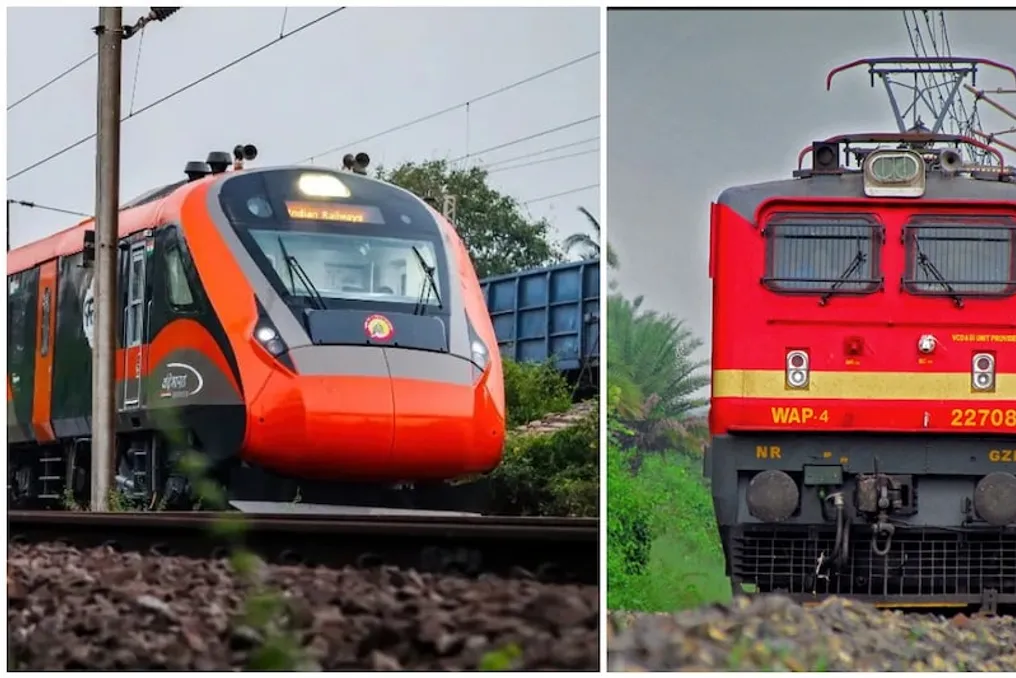
Vande Bharat vs. Rajdhani Express Comparison: Speed, Comfort, and Dining for Choosing the Best Route
Read more
www.aajtak.in

Vande Bharat vs. Rajdhani Express Comparison: Speed, Comfort, and Dining for Choosing the Best Route

Traveling on the Rajdhani Express was once considered one of the most premium experiences on Indian Railways. Thanks to high speed, air-conditioned coaches, long routes, and onboard amenities, Rajdhani held a special place for a long time. Then came Vande Bharat, which began to change perceptions of comfort and services in trains with its fast intercity runs. Vande Bharat is now also available in sleeper coaches. This article examines the specific differences between Rajdhani and Vande Bharat, and which train is better suited for a particular type of journey.

The Beginning of Premium Rail Travel with Rajdhani

The Rajdhani Express was launched in 1969 between New Delhi and Howrah. This train covered a distance of about 1450 kilometers in approximately 17 hours and 20 minutes. These trains connect the country's capital, New Delhi, with the capitals or major cities of various states, which is why the word 'Rajdhani' is in their name. Due to its high speed and long-distance travel in air-conditioned coaches, Rajdhani quickly became one of the most iconic trains of Indian Railways.

In contrast, travel on Vande Bharat is much newer. Its first commercial service began in February 2019 on the New Delhi-Varanasi route. This train covered a distance of about 759 kilometers in approximately 8 hours. It was initially named 'Train 18', but this name seemed foreign rather than Indian. This is why modern Indian trains were given the name 'Vande Bharat', which reflects both 'Self-Reliant India' and the talent of Indian engineers.

Who is Faster: Rajdhani or Vande Bharat?

When it comes to speed, Vande Bharat surpasses Rajdhani. Vande Bharat trains are designed to run at speeds up to 160 kilometers per hour, and during trials, they reached speeds of up to 183 kilometers per hour. However, the efficiency of any train is not determined solely by its maximum speed. The total travel time can vary due to the route, track conditions, speed restrictions, traffic, stations, and stops. The maximum operational speed of the Rajdhani Express is usually around 130 kilometers per hour.

Which Train to Choose for Which Type of Journey?

There are no set distance limits for either train, but their usage models differ. Vande Bharat is primarily designed for fast intercity travel, connecting one city to another. There are many Vande Bharat routes where passengers can depart in the morning and arrive at their destination the same day. Rajdhani is known for its long-distance journeys. It is more often used for overnight travel because it provides sleeping accommodations for passengers. This makes the choice between them simpler depending on the distance and duration of the trip.

Standard Vande Bharat coaches feature 'Chair Car' and 'Executive Chair Car' seats, providing comfortable reclining seating. In the Executive Chair Car, passengers have more space, and in some rakes, the seats can rotate by 180 and 360 degrees. However, standard Vande Bharat coaches do not have traditional sleeping berths. Rajdhani Express offers First AC, Second AC, and Third AC classes. First AC provides greater privacy, similar to a cabin or compartment. Second AC has two-tier berths, and Third AC has three-tier berths.

The situation is beginning to change with the introduction of Vande Bharat Sleeper. The Vande Bharat Sleeper rake includes 16 air-conditioned sleeper coaches. This means passengers can now travel overnight using the new technology and amenities of Vande Bharat. Although there are still few Vande Bharat Sleeper trains, we expect to see more in the coming years. It is anticipated that Vande Bharat Sleeper trains may eventually replace Rajdhani trains. Nevertheless, the railway has not made any official statements on this matter.

What is the Difference in Catering Between the Two Trains?

Both trains provide meal services during long journeys, although the menu and service may differ depending on the train's route. On Vande Bharat, meals such as tea, breakfast, lunch, evening snacks, and dinner are offered via IRCTC according to the travel time. The menu includes items like poha, upma, paratha, sandwiches, cutlets, dal, vegetables, paneer, chicken, roti, rice, sweets, and beverages. In some Vande Bharat trains, food selection is optional. That is, if a passenger requires breakfast, lunch, or snacks on the train, they must select it when booking the ticket. If not, they do not select the meal option. Consequently, the ticket price is also determined by this choice. Since the Rajdhani journey is long, the meal schedule there is usually more extensive, including morning tea, breakfast, lunch, evening snacks, and dinner. Additional items may be available in First AC.

Technological Superiority of Vande Bharat over Rajdhani

If considering only acceleration capability, Vande Bharat trains clearly outperform the Rajdhani Express. The reason lies in the fundamental design of both trains. Vande Bharat is a self-propelled unit. This means that an additional locomotive is not required to pull the entire rake; the motors are installed directly in the coaches that drive the train.
Popular