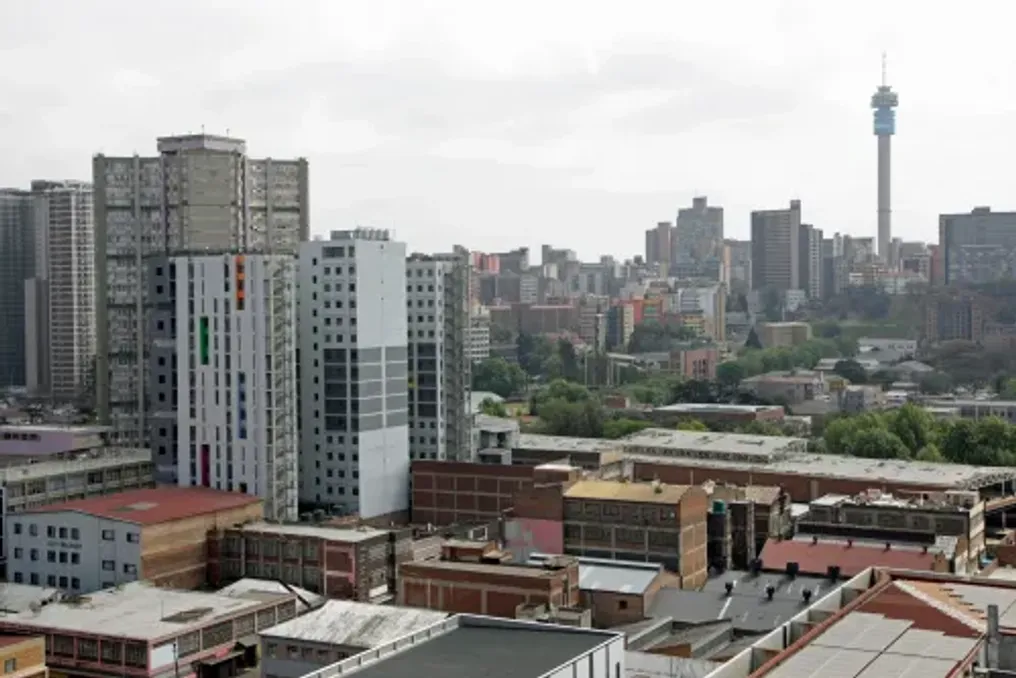
Problems identified by the Auditor-General, along with stakeholder opinions, point to the deteriorating state of infrastructure, weak maintenance levels, inefficient application of bylaws, and growing financial strain in Johannesburg.
The inability of the City of Johannesburg to invest in its infrastructure, ensure compliance with bylaws, and maintain basic services is increasing pressure on residents and businesses, as stakeholders warn that the city's worsening financial condition is felt everywhere.
These concerns arose against the backdrop of the Auditor-General's findings in the consolidated report on local government audit outcomes for the 2024/25 financial year, which revealed reduced investment in infrastructure, poor maintenance, and growing financial difficulties in the metropolis and its municipal structures.
The report noted that the City of Johannesburg, including the financial statements of municipal structures, received unqualified audit opinions. However, some individual financial statements of the City of Johannesburg received qualified audit opinions.
The City managed to achieve only 36% of its planned goals for infrastructure development and repair and spent less than 10% of its R83.1 billion budget on capital investments.
The report stated that despite the metropolis implementing initiatives to stabilize and restore finances and engaging with the National Treasury for support, these measures have not yet led to noticeable improvement.
Richard Ntjana, CEO of the Randburg Chamber of Commerce and Industry, stated that both businesspeople and residents feel the impact of these problems due to the lack of enforcement of bylaws in commercial areas. He noted: 'There is no enforcement of bylaws, especially in our main commercial areas. Anyone can do anything anywhere without any consequences.'
Ntjana added that informal traders occupied sidewalks in front of shops, selling goods similar to those sold by retailers. He expressed dissatisfaction, asking why retailers should pay rent if anyone can simply set up a stall and sell similar goods in front of their shops.
Furthermore, city structures were struggling to provide basic services. 'Pikitup has experienced numerous strikes, resulting in uncollected waste. Joburg Water had many problems; you find that we have clean water running in the streets for months due to constantly increasing leaks,' Ntjana reported. He also noted that requests are registered but rarely resolved, and when contacting them, they cite financial difficulties and that service providers have not been paid for months.'
The Auditor-General's findings regarding Joburg Water confirmed these concerns: the report stated that the structure failed to proactively maintain its water infrastructure, which contributed to frequent pipe bursts and reduced network reliability. The report emphasized: 'The lack of proactive and preventive maintenance has led to an increase in unplanned and emergency repairs. As a result, repair costs have significantly increased, putting pressure on the structure's financial position and increasing the risk of substantial financial loss.'
The Auditor-General attributed these failures to inadequate maintenance planning, poor execution of planned maintenance, and insufficient oversight.
Lael Bethlehem, former Director of Economic Development for the City of Johannesburg and economic development specialist, stated that the city's financial situation is deteriorating due to a shift in focus from infrastructure investment to operational expenses. Bethlehem noted: 'One of the fundamental problems with Johannesburg's financial situation is that they have moved money from capital expenditure to operational expenditure.'
In an interview with The National, sister publication of The Star, Bethlehem reported that by the end of the financial year in June 2026, about 96% of city spending was allocated to operations, and only 4% to capital expenditure. She concluded: 'When a city spends very little money on infrastructure and almost all its money on operational expenses, then you realize it is living paycheck to paycheck.'
She also pointed out that the lack of infrastructure investment is causing leaks and problems with transformers and water treatment plants. Bethlehem also expressed concern over City Power, which, she said, has recorded losses for three consecutive years. 'City Power really should not be operating at a loss. It operates at a loss partly due to inefficiency, and I think largely due to corruption.'
The Auditor-General's report showed that over a four-year period, City Power incurred R11.82 billion in irregular expenditures, and unauthorized expenditures within the administration amounted to R6.81 billion over four years. Furthermore, the city exceeded its budget by R2.38 billion despite adopting a non-funded budget, with the Auditor-General attributing the overspending mainly to higher-than-planned personnel costs and financial costs from short-term borrowing.
Bethlehem stated that the city's financial situation has reached a critical point, pointing to a debt to creditors of approximately R25 billion. 'It is now well established that Johannesburg is indeed bankrupt. It is bankrupt in the sense that it cannot meet its obligations, its financial obligations.'
Ntjana noted that financial problems are also reflected in the city's billing system. 'The billing crisis has not stopped. Residents approach us about increases in their bills, and while they try to solve this problem, the municipality rushes to disconnect services.'
He stressed that repeated interventions have not led to long-term improvements. 'Weekly meetings with these structures, where the city addresses these issues, but as soon as they leave, everything reverts to square one.'
Bethlehem insisted on the need for a fundamental change in the management of city finances and core services. 'This will require a substantially new financial plan, but it will also require honest leadership, eradication of corruption and organized crime, and a completely new approach, especially to water supply and electricity.'
Councillor Yonama Zigebe from the United Democratic Movement (UDM) stated that the city has taken real steps to address service delivery problems. These include replacing over 20 kilometers of water pipes for Joburg Water, cleaning Pikitup of illegal dumpsites, expanding connections, and protecting critical City Power infrastructure, as well as carrying out roadworks and upgrading roads through the Johannesburg Roads Agency.
He also reported that the city adopted a corrective plan to strengthen revenue collection, investigate unauthorized, irregular, fruitless, and wasteful expenditure, fill critical vacancies, improve asset control, and review audit plans monthly through Internal Audit, the Audit Committee, the Municipal Public Accounts Committee (MPAC), and the council. However, he said these measures have not yet yielded results on the scale deserved by the residents. The city has met only 32 out of 55 service delivery performance indicators; resolved only 45% of AGSA findings, while the number of findings has risen to 527. The balance of fruitless and wasteful expenditure amounted to R317 million. He concluded: 'The unqualified audit is important, but it cannot be a shield against legitimate public concern. The council must now strengthen oversight, insist on timely implementation of MPAC recommendations, ensure recovery of losses, and demand visible improvement in the daily lives of Johannesburg residents.'
In response, the City of Johannesburg acknowledged that serious problems persist in financial management, infrastructure, bylaw compliance, and the provision of basic services. The City stated that these issues are being addressed through a range of operational, financial, infrastructural, managerial, and oversight measures. It reported strengthening bylaw compliance monitoring, investing in infrastructure maintenance and repair, improving Joburg Water's responsiveness, and reducing water losses. Joburg Water hired 13 specialized contractors to support complex repairs and implemented first-line rapid response teams for prompt resolution of reported pipe bursts. The City acknowledged that cash flow constraints affected Joburg Water's capital expenditure, and payment delays led to work stoppages by some contractors and delays in infrastructure projects. An agreement on payment procedures was reached with affected service providers, and construction has resumed on some sites. The City also acknowledged the Auditor-General's concerns regarding infrastructure development and repair targets, stating that resolving infrastructure backlogs remains a priority. Targeted cleanup and control operations are also ongoing in areas affected by illegal dumping and informal trading.
Full Response from the City of Johannesburg:
1. Bylaw Compliance and Informal Trading
The City resumed issuing permits for informal trading in November 2024, and more than 2200 such permits have been issued to date. The process involves vetting traders against established criteria, and the allocation of trading spots is determined based on market availability and designated zones. The size and location of stalls are determined in accordance with the City's Informal Trading By-law and relevant policies. The City also collaborates with the Department of Interior as part of the vetting process to ensure that suitable and deserving individuals are considered for trading spot allocation.
The city's approach to ensuring compliance aims for traders to operate in designated and allocated areas and adhere to applicable requirements, including fire safety and food handling regulations. In cases where people trade in undesignated or unallocated areas, or operate without necessary permits, enforcement measures may include confiscation of goods, fines, and, where legally applicable, arrest.
The Johannesburg Metropolitan Police Department (JMPD) continues to enforce street trading rules and other municipal bylaws in the city center, including patrolling in restricted and unrestricted zones, as well as around key transport hubs such as taxi ranks and railway stations. Cleaning and managing pavements remains a priority. This helps maintain pedestrian access and address issues that could contribute to safety risks, including robberies on pavements and in the city center.
The City acknowledges that illegal informal trading remains a persistent problem, especially when traders operate in front of shops, at intersections, and in other areas where pedestrian movement is hindered. JMPD continues to conduct enforcement operations, including confiscating goods for non-compliance with applicable bylaws.
2. Problematic and Poorly Maintained Buildings
The City recognizes the impact that problematic and poorly maintained buildings can have on communities, public safety, and the overall urban environment. Resolving these issues requires coordinated intervention from relevant city departments and task teams, depending on the nature and circumstances of each case. Intervention may include inspections, bylaw enforcement, health and safety measures, housing interventions, and engagement with other relevant stakeholders. The City continues to strengthen the coordination of these interventions to ensure that issues related to problematic buildings are resolved within the respective mandates of responsible departments and operational structures.