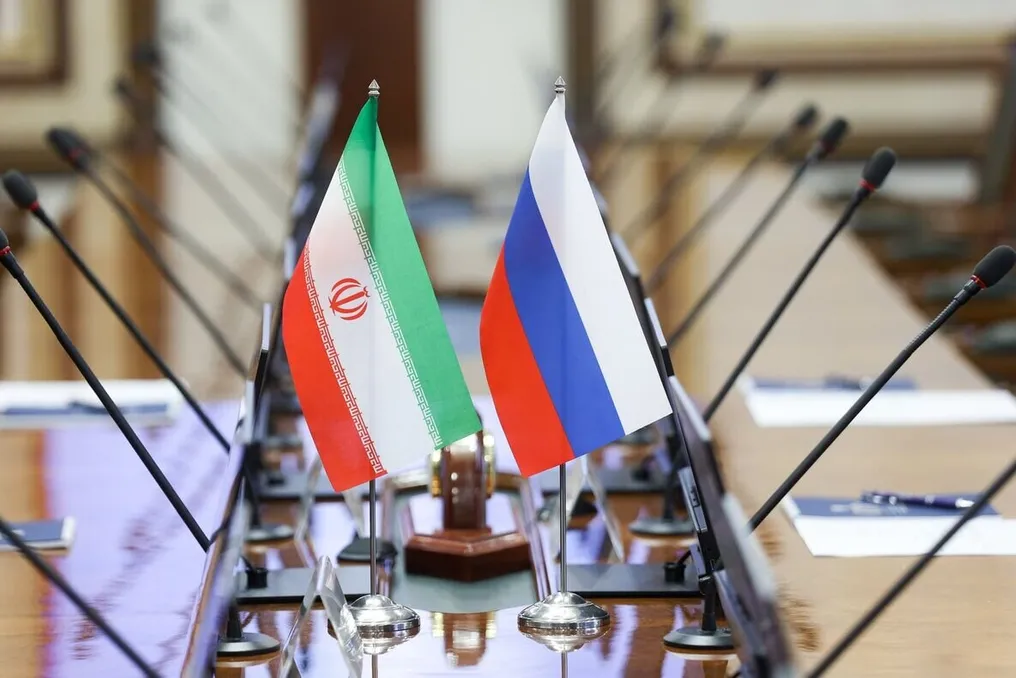
Iran and Russia are working on establishing a joint commission on science and technology. Within this commission, a document on international scientific cooperation between the two states is planned to be signed.
Ehsan Kabul, head of the Center for International Scientific Cooperation of the Iranian Ministry of Science, Research and Technology, stated Iran's firm commitment to expanding ties with Russia. He outlined the next steps that Tehran and Moscow will take to strengthen bilateral interaction, including the formation of the mentioned commission.
Kabul reported that the Minister of Science, Research and Technology intends to visit Moscow within the next three months to finalize the document on international scientific cooperation between Iran and Russia. Furthermore, plans have been announced to implement 500 joint programs with Russian universities and scientific institutions.
These programs include conducting 100 joint educational courses with the participation of Russian professors, the opportunity for 100 doctoral and master's students to choose a second supervisor among faculty members of Russian universities, and organizing 100 technological events aimed at expanding bilateral cooperation from the fields of science and education into the technological sector.
Moreover, Kabul mentioned planned initiatives such as 100 joint cultural events with Russian universities and academic and educational institutions, as well as 100 scholarships for Russian students. Priority for receiving these scholarships will be given to students wishing to study Persian language and literature.
The official also emphasized Iran's support for Persian language programs in Russian universities, noting that Iranian professors are ready to teach Persian to Russian speakers both in person and online.
In June, the Iranian Minister of Science, Research and Technology, Hossein Simai-Sarraf, and the Russian Minister of Science and Higher Education, Valery Falkov, reviewed strategies for developing scientific, educational, and academic cooperation between the countries. Special attention was paid to increasing faculty and student exchanges, strengthening research partnerships, and facilitating academic interaction.
Simai-Sarraf considered the establishment of Russian language departments in Iranian universities and Persian language departments in Russian universities as a sign of deepening scientific and cultural ties between the two states.
For his part, Falkov noted the start of a new admission period at Russian universities and welcomed Iranian students wishing to study at the country's universities. He emphasized the importance of providing employment opportunities and utilizing the academic potential of graduates after their return to Iran.
In December 2025, the second scientific conference between Iran and Russia took place in Moscow. The event was attended by the Iranian Ambassador to Russia, Kazem Jalali, scientific attaché Hadi Gudarzi, as well as representatives of universities and scientific institutions from both countries.
Referring to Iran's unique history and the civilizational commonalities between the two countries, Russian Presidential Assistant Andrey Fursenko stressed the need to strengthen cultural and academic relations between Iran and Russia. As reported by msrt.ir, he noted: 'The Russian government is fully ready to facilitate cooperation with Iran in the fields of science and technology. Russia and Iran must rely on their capabilities in striving for global development and play their historical role.'
In turn, Jalali emphasized the Comprehensive Strategic Partnership between Iran and Russia, as well as the need to activate ties in scientific, technical, and cultural areas.
In February, Evgeny Primakov, head of the Federal Agency of the Russian Federation for CIS Affairs, Compatriots Residing Abroad, and International Humanitarian Cooperation, expressed his country's interest in expanding scientific and academic ties with Iran for further technological cooperation. As quoted by IRNA, Primakov stated: 'The main goal of the organization is to lay the foundation for developing joint efforts with the University of Gilan. We look forward to recognizing the potential of both sides and studying ways to implement cooperation more effectively.'
This official continued that scientific ties will lead to the development of joint projects, exchange of teachers and students, and the creation of joint research networks.