
The Future of India's FinTech Industry: Shifting from Payments to Wealth Management
Read more
YourStory [india, en]
yourstory.com

The Future of India's FinTech Industry: Shifting from Payments to Wealth Management

If the last decade of Indian fintech was centered on payments, the next one may be dedicated to wealth management. UPI systems have made fund transfers instant and free, while digital lending has simplified access to loans via mobile phones. These achievements addressed the most complex yet least visible challenges in ensuring financial accessibility.

However, the focus has shifted to a more intricate question that arises after money lands in an account: what to do with it? For most Indians, this question remains unanswered.

Four factors are simultaneously at play, transforming wealth planning from a simple choice into a necessity for the Indian middle class. People are living longer, meaning savings must last for decades longer than their parents', and there is no state pension. Furthermore, rising incomes mean more people have surplus funds, but lack a structure for utilizing them.

As a result, a generation emerges that earns well and saves diligently but is uncertain about the correctness of its financial path. For instance, mutual fund assets exceeded 87 lakh crore rupees in August 2026. Millions of people now invest with discipline comparable to paying rent, yet regular investment and having a plan are different things.

The unpleasant truth is who Indians turn to for advice. Most information comes from pseudo-advisors, mutual fund distributors, and bank relationship managers whose income depends on the products they sell. Despite good intentions, their incentive is structurally conflicted: they profit when a person buys, not when they succeed.

When people do not approach them, they rely on family, friends, or WhatsApp groups. Truly reliable advisors registered with SEBI and paid by the client, rather than by the product, number only about 900 across the country, and most serve HNI and UHNI segments where it is economically viable.

Thus, the middle-class employee faces a choice between advice with a conflict of interest and advice that is inaccessible and too expensive. This gap, rather than access to investing itself, is the real unresolved issue of this decade.

What has changed is that three favorable factors have converged, making unbiased advice scalable and accessible to the retail audience of 30 million people, not just the wealthy.

RBI's Account Aggregator infrastructure allows for the extraction of a person's complete financial picture—bank balances, stocks, mutual funds, NPS, and much more—within minutes, with their consent. Additionally, artificial intelligence can analyze these cash flows, model goals considering risk and inflation, identify leaks or deviations from the course, turning an annual conversation into continuous, personalized guidance, similar to the attention previously required from a dedicated wealth manager. Critically, this lowers the cost of such guidance, making it available to millions, not a privilege of the few.

The regulator itself is moving in this direction. SEBI is actively working to ease RIA norms, recognizing that developed economies already possess: a large middle class needing access to fiduciary advice, not just products.

The open question that new-generation startups are trying to answer is what portion of this should be pure AI and what should be AI involving a human. Will people be willing to let an algorithm suggest changes to their finances, or will trust still require a human presence? This answer has not yet been found, and whoever finds it will define this category.

Wealth is a slower and more complex form of trust than payments. The result, achieving family goals, only manifests years later. Therefore, the real question for the new generation player is: can they build trust throughout the entire process—through every workflow, every market downturn, every review, and reminder—to earn the right to be present when the outcome is finally achieved?

This is the work of this decade: not speeding up the flow of money, but becoming the advice that Indians truly trust regarding what to do with their money—advice that is finally on their side.

Similar stories

Finance Minister Sitaraman names AI, semiconductors, and quantum technologies as India's next priority
Read more
yourstory.com

Finance Minister Sitaraman names AI, semiconductors, and quantum technologies as India's next priority

Union Finance Minister Nirmala Sitharaman called for increased investment in artificial intelligence (AI) infrastructure, semiconductors, and quantum technologies on Saturday, emphasizing that these areas will be the next major development direction for India.

Speaking at an event in the form of a 'fireside chat' organized by the IIT Madras Alumni Association in Bengaluru, she stated that India must accelerate efforts to build the necessary hardware base, skills, and institutional ecosystem to utilize these new technologies.

Sitharaman noted that although developments are occurring in AI in India, foreign publications often shape the opinion that 'India missed the AI train,' which is partly due to the limited number of AI-focused companies listed on the National Stock Exchange of India (NSE) and the Bombay Stock Exchange (BSE).

Nevertheless, the minister pointed out that several startups in the AI sector have already reached unicorn status or are on the verge of doing so. She acknowledged the trend among startups to fear listing due to the high compliance requirements but emphasized the advantages of going public.

Highlighting that the 'listing cluster' pertains to the AI domain, she suggested that if these companies were on the stock market, external observers could learn about what is happening, the availability of funding, and the emergence of institutions ready to invest.

She added: 'India is not lost in AI or quantum technologies. Perhaps 'just not being on the stock market' cannot be a sufficient measure of what is happening here. But remember, this is the world. We must account for these narratives, and perhaps to get the most out of the world, you should also go public where possible.'

Sitharaman stated that India needs to strengthen its existing AI ecosystem by increasing investments in hardware, training, and upskilling. She stressed that despite calls to slow down the pace of AI innovators, India still requires more investment in such equipment and in teachers for institutions that must constantly update and impart AI-based knowledge, as well as adapt AI across many sectors.

According to her, India's Micro, Small, and Medium Enterprises (MSMEs), which cover a wide range of manufacturing industries, increasingly need AI-based solutions to improve productivity and competitiveness compared to counterparts in other countries. Therefore, she concluded that investment in AI is definitely the next frontier and insists that the academic community and industry should determine the level of such investments, not dispute the necessity of AI development.

The Finance Minister also indicated that the next major wave of infrastructure investment will be directed towards AI, semiconductor chips, and the development of quantum technologies, stressing the need for collaboration between science and industry to build capacity in these fields.

Furthermore, she highlighted the potential for larger investments in defense production, especially in emerging technologies such as unmanned systems and drones. Sitharaman noted that India has moved beyond being merely an importer, exporting defense equipment of various types and sizes that is hard to imagine. However, in her view, there is still much to be done in defense manufacturing.

Pointing to the expansion of the global market, the minister observed that even countries that were previously global suppliers of defense equipment cannot keep up with the technologies, implement them, and advance in areas like unmanned systems, drones, or aircraft. She concluded by noting that much is happening in defense manufacturing, and while India may remain important in some aspects, the potential for both private and public investment is enormous, and the Indian private sector has achieved significant success in this area.

SBI Chairman states that the role of banks must shift from supporting the economy to financing transformation
Read more
timesofindia.indiatimes.com

SBI Chairman states that the role of banks must shift from supporting the economy to financing transformation

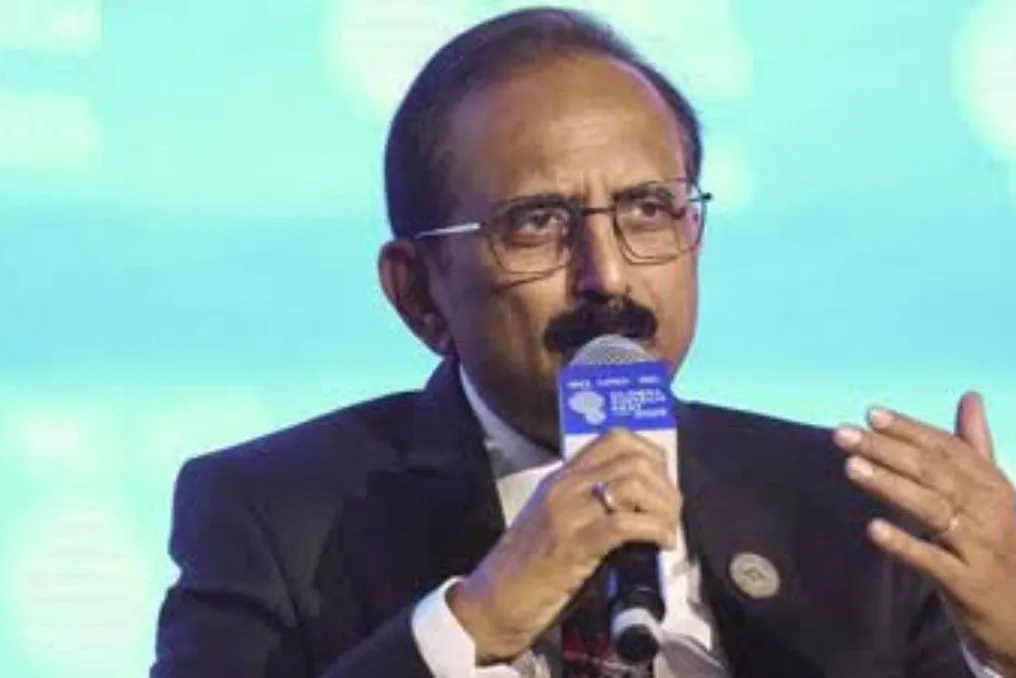
SBI Chairman C. S. Shetty stated at the SBI Banking and Economy Conclave in Mumbai that India's financial system must evolve to finance the next phase of the country's economic growth. Banks, meanwhile, must play a more significant role in supporting high-tech manufacturing, new technologies, the transition to green energy, and enterprises striving for global competitiveness.

Shetty noted that the banking and financial systems need to be transformed by providing a financial foundation that can stimulate investment, innovation, and economic strengthening as India aims to become a leading economic power.

He emphasized that India's resilience in the face of domestic and external economic difficulties has strengthened the financial system's capacity to participate in the next stage of economic expansion. However, maintaining this momentum requires improvements in productivity and competitiveness, deeper integration into global value chains, and the emergence of companies capable of competing internationally on a large scale.

According to Shetty, the key issue is not just the speed of growth, but the effectiveness of transforming that growth into global significance and leadership. He highlighted India's strengths, such as a large and dynamic domestic market, a young workforce, improving infrastructure, domestic capital, and a competitive services sector.

It was noted that the digital public infrastructure has demonstrated how technology, scale, and public purpose can combine to create solutions relevant not only to India. The next wave of global investments, according to Shetty, will be shaped by sectors such as renewable energy, semiconductors, energy storage, and green hydrogen, as well as robotics, biotechnology, and advanced technologies.

Shetty is confident that India possesses the necessary talent, entrepreneurial energy, and technological capabilities to participate significantly in these industries. He added that the greater opportunity lies in turning these trends into businesses, technologies, manufacturing capabilities, and intellectual property that can have a global presence.

This transition will require the financial sector to support innovation and investment as the economy moves towards high-tech manufacturing and globally competitive enterprises. The banking sector, according to Shetty, will play a crucial role in strengthening infrastructure, enterprises, and innovation within the broader transformation of the productive economy. The conclave brought together politicians, regulators, industry leaders, and economists to examine how India can sustain its economic momentum, build confidence, and create conditions for the global presence of the new generation of Indian enterprises and institutions.

Popular