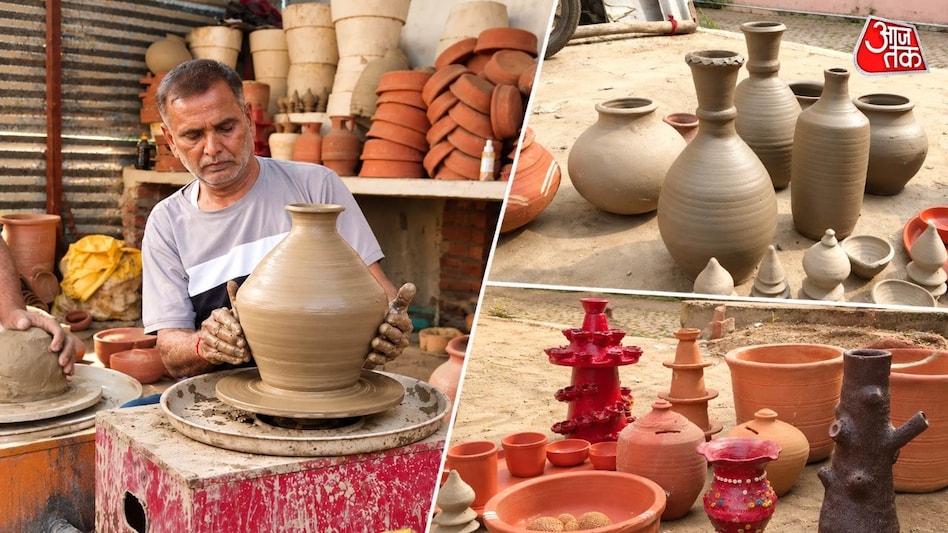
Government loan of 200 thousand rupees helped young resident of Saharanpur revive family pottery business
Read more
Aaj Tak
www.aajtak.in

Government loan of 200 thousand rupees helped young resident of Saharanpur revive family pottery business

For Devendra Kumar, a resident of Jaroda Panda village in Saharanpur, clay has always been more than just raw material; it has been the foundation of his life and livelihood. His family craft of making clay pottery and other items, which he practiced since childhood, eventually declined, forcing him to close the business. To support his family, he started working as a horse cart driver, but this also became a heavy burden on the family.

The situation changed in 2025 when Devendra learned about the Uttar Pradesh state government's program—the 'Matikala Rojgaar Yojana' (Matikala Employment Program). He applied to the Hadi Handicrafts Department and, under this program, received a loan of two lakh rupees. After receiving the credit, Devendra decided to resume his traditional craft on a larger scale.

With the funding, working with clay returned to his home. He now produces not only traditional pottery but also various items according to market demand. Among his products are flower pots, planters, decorative water containers, glass items, piggy banks, lamps, and various figurines. According to Devendra, he makes over two dozen types of clay products.

The most significant changes have occurred in sales. Previously, buyers came from the village only occasionally, often leaving finished products unsold, and the low price did not allow for sufficient profit, which ultimately led to the gradual closure of the business. However, the situation is different now.

Thanks to the government program, Devendra receives orders not only from Saharanpur but also from cities such as Chartawal, Muzaffarnagar, Karnal, and other settlements. He notes that he is now paid good money for the finished products, and demand is constantly growing. Thus, the very clay business he had to give up has once again become a significant source of income for his family. Devendra emphasizes that he produces goods according to incoming demand. Demand for lamps and other clay items also increases during Diwali. For example, he received a large order to produce carts of pots from Karnal.

The Matikala program provided Devendra with another opportunity: he was invited to Lucknow to showcase his clay products. He sent several attractive items there and also prepared and sent a model of a temple. This model was approved and subsequently taken to Lucknow. For Devendra, this was the first time his craft reached such a level. Devendra believes that his story is not just one of restarting a business; thanks to the income from this venture, he was able to hold his children's wedding and provide for his family. His two sons work, and other family members also assist in the work. His wife and children are also involved in this business.

Today, Devendra works with four other people. That is, a business that was once closed due to decline and low sales has now become a source of employment for others. Devendra says that the family works constantly, and four other people work for him. He notes that the received loan helped restore the business. Nevertheless, he believes that if he had received a larger loan, he could have built a larger factory and increased production. He has both labor and demand, but large-scale production requires additional resources.

The clay business was connected to Devendra's life since childhood; his father also engaged in this on a large scale. After an accident involving his father, the responsibility fell on Devendra. He took over management, but the business was not thriving then. Over time, when the work slowed down, he closed it. Now, after many years, this family craft has returned with new methods and markets. Devendra points out that previously he worried about selling finished products, but now demand comes from various places. During festivals like Diwali, the demand for items such as lamps increases, while at other times pots, flower pots, figurines, and other items are produced.

The loan of two lakh rupees, obtained under the Matikala Employment Program, gave Devendra a chance to revive his closed business. Today, his clay products leave the village and reach other cities. The family supports its needs through this business, and four other people find employment alongside it. For Devendra, this family craft has once again become the foundation of his family and employment.
Similar stories

Murra breed description: characteristics, productivity, and cost of dairy buffaloes
Read more
www.aajtak.in

Murra breed description: characteristics, productivity, and cost of dairy buffaloes

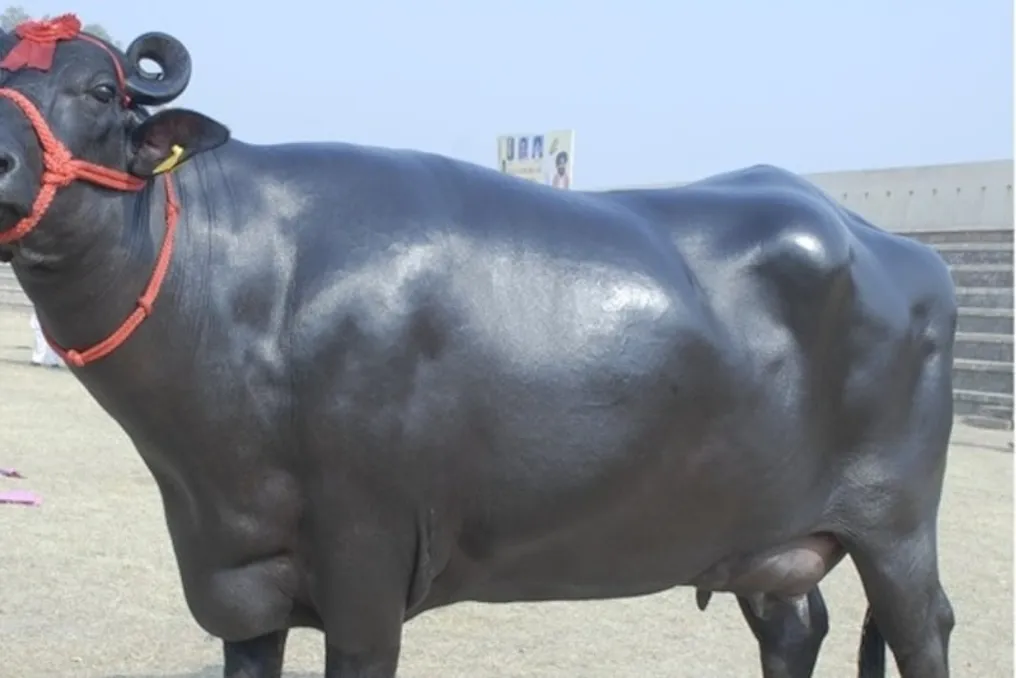
Buffaloes can be found everywhere, but some have unique horns. These horns are small, curl inwards near the head, and the animal's body is shiny black. If someone calls such a buffalo a Murra, its identification is related not only to color but also to the overall breed and appearance. Thanks to its high lactating ability and high fat content in milk, the Murra is popular among livestock breeders. However, the question remains: why is it called a Murra, how to recognize it, how much milk does it yield, and what is its price?

The Murra's body is usually glossy black, strong, and well-developed. The animal's head is medium-sized, and the skin is smooth. But the most distinctive feature is its small, tightly curled horns. According to data from the Central Institute of Buffalo Research (ICAR-CIRB), Murra horns are small, they bend backward and upward, and then curl inwards in a semi-circle shape. It is these curved horns that distinguish it from many other buffalo breeds.

Nevertheless, one cannot consider a buffalo a Murra based only on its black color and curved horns. For accurate breed identification, factors such as physical structure, pedigree, milk productivity level, and health status are also taken into account.

It is believed that the name 'Murra' is associated with the most outstanding physical characteristic of this breed. According to ICAR-CIRB, buffaloes that produce a lot of milk and have curved horns were selected in northwestern India and were named 'Murra'. The word 'Murra' translates to 'curved' or 'twisted'. The horns of this breed are small, dense, and curl inwards after bending backward and upward. With age, the spiral curvature becomes more obvious. This special horn shape is part of the genetic and breed identity of the Murra.

Scientific studies have also investigated the relationship between various physical traits of the Murra and its milk productivity. However, no clear difference was found during the research between the horn shape and the volume of milk production. That is, curved horns are a trait of the Murra, but not a direct cause of high yield.

The Murra is among the main milk-producing breeds. However, each Murra produces milk in a different amount daily. The volume of milk depends on age, diet, health status, care, and breed quality. According to ICAR-CIRB, over 305 days, the milk production of a Murra ranged from 1003 to 2057 kilograms. Under favorable conditions and with a good animal, this figure can exceed 5000 kilograms. The milk fat content is about 6.9–8.3 percent. This is why the Murra is valued not only for the volume of milk but also for its high fat content.

There is no single answer to the question of the cost of a Murra that yields about 9 kg of milk per day. The price of a Murra is determined not only by the volume of milk. Its age, breed, number of calvings, pregnancy status, milk fat content, health, and milk production records also affect the price. Because of this, the price of each Murra yielding 9 kg of milk will be different. A well-bred buffalo with excellent performance can cost significantly more than ordinary livestock.

The price of a quality Murra depends on its age, health, and ability to produce milk. Special attention is paid to how many liters of milk the buffalo yields daily. Generally, the price of one Murra can start from approximately 60 to 80 thousand rupees. While Murras that yield more milk and are of a superior breed can cost from 1 to 1.5 lakh rupees. Some special buffaloes with record yields can cost 2 lakh rupees or even more.

When buying a buffalo, one should not determine the price solely based on its appearance or breed. It is much more important to independently check its ability to produce milk. Experts advise milking several times before purchase to establish a fair price. In some regions, government livestock subsidy programs provide financial assistance to herders who meet the criteria, which can facilitate the purchase of a buffalo.

The main region for the Murra is Haryana. According to ICAR-CIRB, its original habitat is in the districts of Rohtak, Hisar, and Jind in the state of Haryana. Additionally, it is found in the districts of Nabha and Patiala in Punjab, as well as in West Uttar Pradesh and Delhi-NCR. Today, the Murra is not limited to these territories; it has spread to many parts of the country and is used to improve local buffalo breeds. If someone wants to purchase a Murra, they can get information from livestock breeders in these key areas of Haryana or from reliable dairy farms.

Popular