ARC Ride launches electric bikes for delivery in South Africa, offering an alternative to expensive gasoline
Read more
TechCentral
techcentral.co.za

ARC Ride launches electric bikes for delivery in South Africa, offering an alternative to expensive gasoline

ARC Ride, a motorcycle company from Kenya, has introduced an electric delivery bike for South Africa priced from 22,500 South African Rand. The company is betting that couriers who spend about 27 Rands per liter on gasoline will prefer to pay for battery replacement.

The Panther model was unveiled in Cape Town this month. Under the 'battery as a service' model, drivers exchange a fully discharged battery for a charged one at an ARC hub or an automated swap station. A full swap costs 50 Rands and provides a range of up to 110 km; partial swaps are charged proportionally.

ARC Ride claims that a 125cc gasoline motorcycle consumes over 59 Rands of fuel per 100 km at a price of about 27 Rands per liter, whereas the Panther consumes approximately 45.45 Rands per 100 km, which is 23% less. This comparison remains valid inland, where after the adjustment on September 2nd, the price of AI-95 gasoline was 26.92 Rands per liter. At the current coastal price of 26.05 Rands per liter, the savings decrease to approximately 20%.

The cost gap may widen soon. Data from the Central Energy Fund (CEF) dated September 28th indicated a rise in the price of AI-95 by approximately 3.06 Rands per liter by October 7th, which would raise the domestic price to approximately 29.98 Rands per liter. According to ARC Ride's calculations, in that case, battery replacement would be about 30% cheaper than using gasoline.

In an ARC Ride press release, drivers were promised 'up to 20% more net income,' but the details described savings on fuel and maintenance of 'up to 20% of the driver's total weekly operating expenses.' When TechCentral requested clarification regarding this discrepancy, ARC Ride representative Justus Visagi stated that this figure reflects a reduction in weekly operating costs by 20%, not an increase in earnings by 20%, and that the release would be corrected. He added that 'how much it increases net income depends on how much the driver earns.'

Visagi clarified that this estimate, mentioned in the release as being based on 'proprietary data from the ARC Ride fleet operations,' 'was modeled based on its operations in other African markets, not measured on South African fleets.'
Similar stories

Rider discusses high-earning formula while working without his own motorcycle
Read more
www.aajtak.in

Rider discusses high-earning formula while working without his own motorcycle

Modern life allows people to receive necessary goods online in minutes, and couriers are responsible for this speed. These workers often perform hard labor, delivering orders even late at night. The story of one such rider shows how one can earn money even without owning their own vehicle.

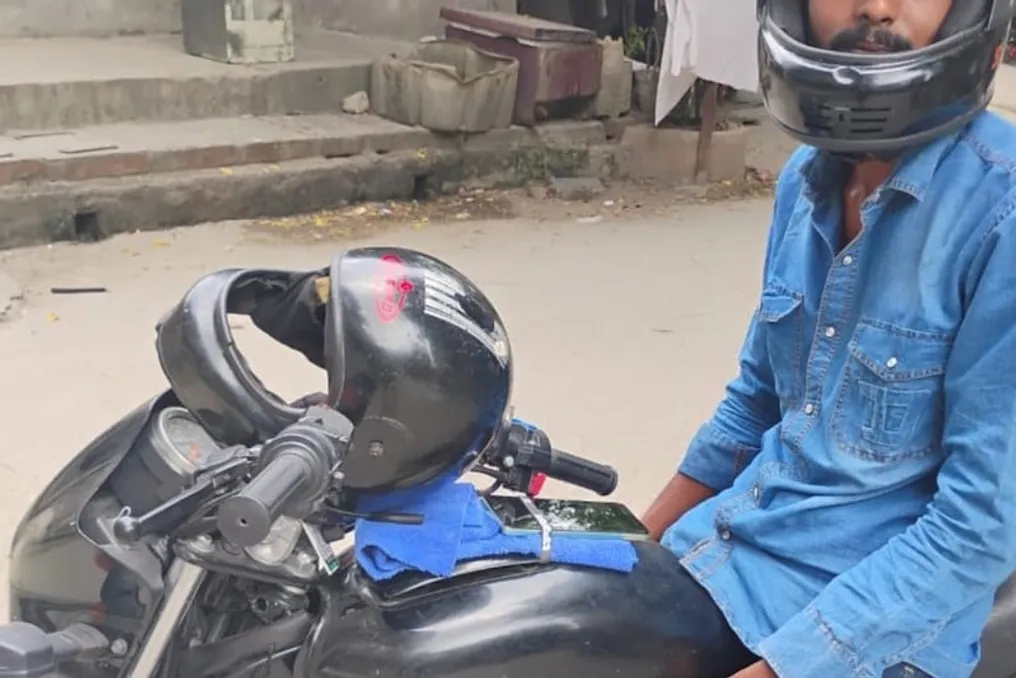
One day, using the Rapido service, the article's author met a rider named Vicky. He mentioned that he works not only for Swiggy but also for Rapido, and the motorcycle he rides does not belong to him but is rented.

Previously, Vicky worked for a company in Noida where his salary was 25 thousand. However, after layoffs, he lost his job. He is from Western Uttar Pradesh, and although he did not specify the exact area, his home is near Noida, which takes 4-5 hours to reach. Despite actively looking for work, he could not find a suitable position, and he needed to send money home.

A friend suggested he take up courier work while he searches for permanent employment. Since he did not have his own bike, his friend advised him to contact agencies like Rapido or Swiggy, which provide motorcycles for rent. A prepayment of 500 rupees was required for the motorcycle use, and the daily rental fee was 290 rupees; however, through a broker, he had to pay an additional 4500 rupees for the rental.

Vicky initially viewed this job as a temporary solution until he found permanent employment. However, the income from this activity turned out to be higher than his previous salary for a 9-hour workday. He explained that for delivering orders within a 2-kilometer radius for Swiggy or Zepto, he can earn up to 50 rupees. If the delivery happens after 9:00 PM in the same radius, the payment doubles, reaching 90–100 rupees.

He noted that if he earns 500 rupees in 4 hours of daily work, this income can double to 1000 rupees at night. Therefore, he advises against limiting himself only to daytime trips, as night shifts provide higher profits.

Vicky sets his own schedule, working only in the morning and evening: from 6 AM to 10 AM and from 8 PM to 11 PM. During this time, he usually completes at least 20 deliveries, sometimes even more. Even after deducting the motorcycle rental fee, he retains between 1200 and 1400 rupees daily. This income allows him to avoid taking on small side jobs earning 20–25 thousand per week. Furthermore, he has the freedom to manage his time without needing vacations or permission from a boss.

He also compared the working conditions with other services. For Zepto or Swiggy, a one-time payment of 1500 or 1700 rupees is required for a T-shirt and bag, after which a commission is charged for each delivery. In the case of Uber or Rapido, an initial account top-up of 180 rupees is needed, which covers up to 2000 rupees worth of rides and is valid for three months.

In Vicky's opinion, working as a courier is similar to running one's own business: the person sets their own work schedule and is not obliged to seek permission from anyone. He emphasized that he is the master of his own will, and his earnings directly depend on the volume of work completed.

Popular