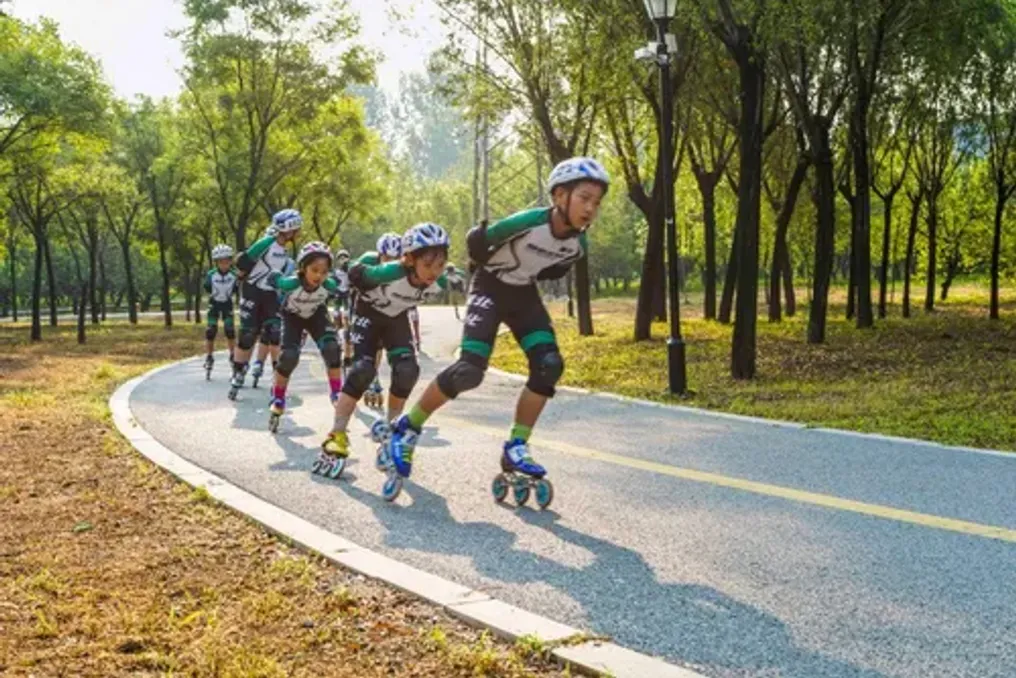
In July of this year, China unveiled a plan aimed at transforming the country into a leading sporting nation during the fifteenth five-year plan period (2026–2030). This plan sets three main goals: ensuring approximately four square meters of sports facilities per capita, achieving a regular participation rate of about 40% of the population, and having 31.1% of residents meet national physical fitness standards.
Furthermore, the country aims to enter the ranks of global leaders in the number of world champions and increase the total volume of its sports industry to over 7 trillion yuan (equivalent to approximately $1.05 trillion).
Su Junsheng, a 70-year-old resident of Shanghai, shared his experience, noting that he visits a senior center to maintain his physical fitness almost daily, feeling stronger and experiencing greater life satisfaction. In Shanghai, health and fitness centers for the elderly have opened in various districts, making age-appropriate sports venues accessible to the older generation.
Wan Hailun, founder of the 'Shangti Lehuo Sports and Health Clubhouse for the Elderly,' emphasized that these centers provide a full range of services, including physical fitness testing, scientific training guidance, chronic disease intervention, health education programs, and social activities, allowing seniors to engage in sports safely, correctly, and voluntarily. As of August 2026, over 200 such centers have been established in Shanghai, and more than 300 across the country have registered over 100,000 visits.
Jiang Min, a resident of Zendou district in Suizhou city, Hubei Province, Central China, reported that he can now participate in provincial-level competitions right near his home. In response to community fitness needs, Hubei Province began hosting innovative sports events across the region starting in 2024. By September 9th, a total of 1,016 events had been held, covering over 1,900 rural communities and urban neighborhoods. Approximately 190,000 people participated directly, while 1.5 million attended as spectators.
On June 25th, China's national squash team relocated to its new base in Chengdu, Sichuan Province, Southwest China. This base features 22 internationally certified courts and a professional recovery and fitness center, providing the team with a unified location for training, accommodation, and recovery.
A new model of competitive sports is emerging in China: it is state-managed but involves a broader range of participants. Provincial governments oversee national teams, cities organize university teams, and talent development and testing systems are continuously improved.
During the fourteenth five-year plan period (2021–2025), China won 665 world championship titles and broke 91 world records in competitive sports, achieving the widest reach in terms of both medal count and sports disciplines.
This year, in Jiangsu Province, East China, the amateur football tournament 'Su Super League' launched 106 themed inter-regional tourist routes, allowing fans and tourists to explore Jiangsu during matches.
The active recreation industry is experiencing a new surge of energy. Previously, visitors to Wuwu Mountain in Sichuan would simply come, take photos, and leave. Today, this location has become attractive to outdoor enthusiasts because sporting events attract tourists throughout the year. A village basketball competition in 2026 generated 23 million yuan in consumer spending, and 700,000 tourist visits were recorded in the area during the first seven months of this year.
Expenditures on culture, sports, and leisure are steadily growing since the beginning of the year, which is reflected in increased revenue for major sports enterprises. Huang Haiyang, Dean of the Management Faculty at Beijing Sport University, stated that it is necessary to continue promoting high-quality expansion and modernization of the sports industry so that it can contribute more to stimulating domestic demand, stabilizing growth, and promoting employment, thereby becoming a true driver of a better life and a catalyst for economic and social development.