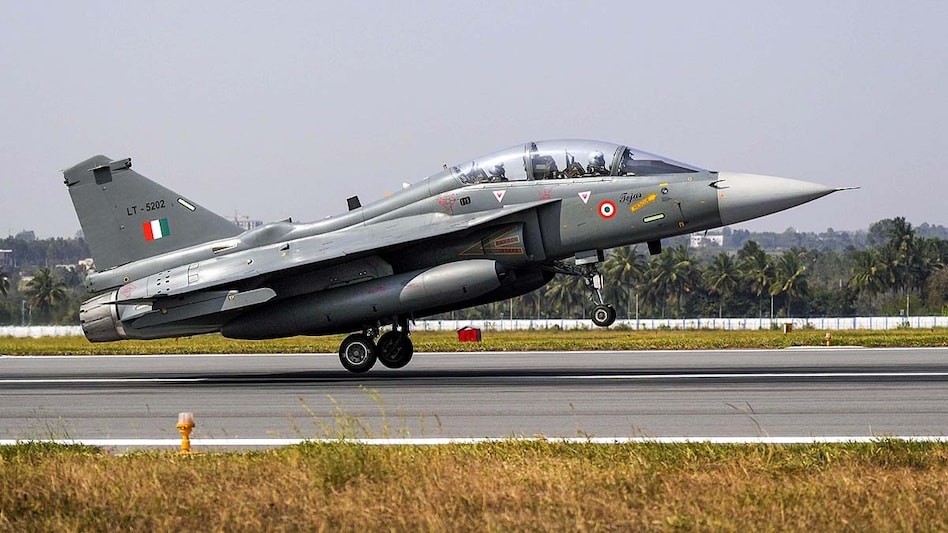
The issue with engine supplies for the indigenous Tejas Mk-1A fighter program of the Indian Air Force is gradually being resolved. The Ministry of Defence has confirmed that India expects to receive another 12 F404 engines from GE Aerospace by the end of the current year.
This progress is significant because Hindustan Aeronautics Limited (HAL) has already prepared 27 Tejas Mk-1A airframes. Currently, 10 engines have been received, and the remaining airframes are operating using test or spare engines. Work on final integration and testing continues.
GE Aerospace has promised to supply four engines monthly. This will help the government achieve the goal of commissioning at least one full squadron of Tejas Mk-1A by the end of 2026. For a long time, the main obstacle in the Tejas Mk-1A program was the shortage of engines; HAL managed to create the airframes, but the lack of engines hindered the completion of aircraft assembly. Now, according to senior officials of the Ministry of Defence, supplies from GE will become regular.
The addition of 12 extra engines by the end of the year will accelerate the completion of assembly for existing ready airframes. Ravi Ke, Chairman and Managing Director of HAL, previously stated that 27 airframes are ready, but final delivery depends on testing and integration. Technical complexities related to the integration of radars and weapon systems are still being addressed, but the arrival of engines will allow this work to be completed, making the aircraft operational. This change could act as a catalyst for advancing the program.
The Indian Air Force has a total order for 180 Tejas Mk-1A aircraft. The first contract was signed in February 2021 for 83 aircraft. The second contract was signed in September 2025 for an additional 97 aircraft, including 68 fighters and 29 two-seaters. The cost of this contract exceeds 62,370 crore rupees excluding taxes.
Delivery under the second contract is scheduled to begin in 2027–2028 and be fully completed within six years. This order increased the content of domestic components, which will account for over 64 percent of the aircraft. Compared to the previous Mk-1A model, 67 additional elements have been added, such as a domestic AESA radar, self-defense system, and indigenous flight control actuators. This is a significant step towards achieving self-sufficiency.
HAL entered into a separate agreement with GE Aerospace in November 2025 for 97 aircraft of the second order, which includes 113 F404-GE-IN20 engines and corresponding support packages. These engines will arrive between 2027 and 2032, ensuring long-term supply. HAL is expanding its production capacity, aiming to produce about 24 aircraft annually. Currently, the priority is resolving remaining integration and testing issues, as well as ensuring regular engine supplies. Since 27 airframes are already ready, the speed at which the aircraft transition to operation will depend on engine availability and the verification of radars and weaponry.
Tejas Mk-1A is a critical program for enhancing the combat capability of the Indian Air Force and reducing dependence on imports. Reducing barriers related to engines will not only ensure faster delivery of already completed aircraft but also increase confidence in building the entire fleet. The government is forming the Mk-1A fleet based on the cumulative order of 83 and 97 aircraft. The second batch will be delivered gradually until 2033. Resolving technical issues and maintaining engine supplies are currently top priorities. If this pace is maintained, the Air Force will receive modern indigenous fighters on time. Overall, the improvement in engine supplies is a positive sign for the Tejas program and requires close monitoring of its progress in the coming months.