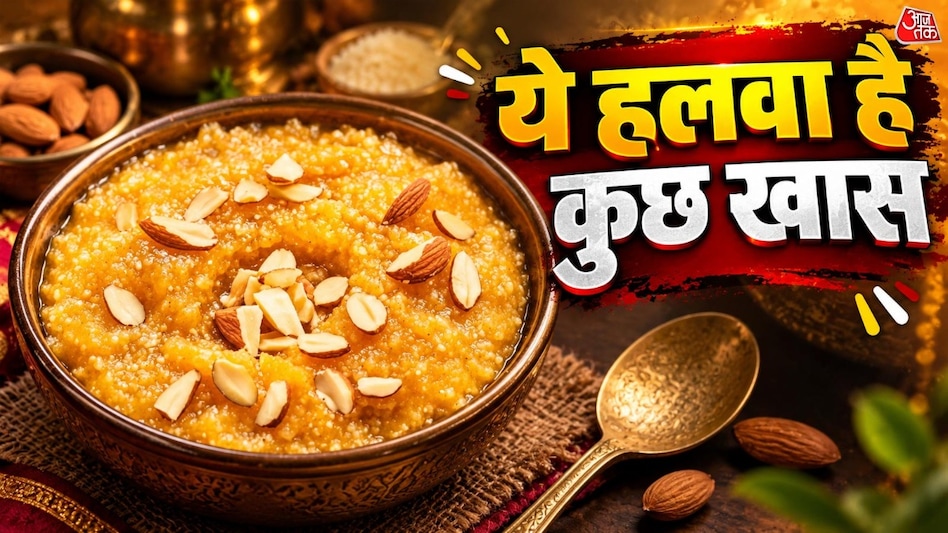
Semolina halwa is one of the most beloved and popular sweet dishes in India, prepared during religious ceremonies, festivals, or rituals with girls.
However, problems often arise: the semolina sticks to the bottom of the pan when frying, lumps form in the halwa, and after cooling, the dish becomes hard and dry.
If you encounter such difficulties, do not worry. Professional chefs who prepare halwa for bhandara (community feast) use specific proportions and a special technique that allows every grain of halwa to open up, and the dish does not stick to the pan at all. Below is the most accurate and simple instruction for making crumbly and juicy semolina halwa in the bhandara style.
The following ingredients are required for preparation:
- 1 cup of semolina (preferably coarse-grained)
- 1 cup of ghee (clarified butter)
- 1 cup of sugar (to taste)
- 4 cups of water (or 3 cups of water + 1 cup of milk)
Additional ingredients:
- 1 tablespoon of chickpea flour (besan) or wheat flour (a secret ingredient for texture and color)
- 1/2 teaspoon of cardamom powder
- 8-10 strands of saffron (soaked in warm milk)
- Chopped cashews, almonds, and raisins
First, heat 4 cups of water, 1 cup of sugar, saffron strands, and cardamom powder in a separate pot on the stove. It must be heated until the sugar is completely dissolved and the water begins to boil; syrup should not be made.
Add 1 tablespoon of ghee to the pan and fry the cashews, almonds, and raisins until lightly golden, then remove them.
Technique for frying semolina
Next, add the remaining full cup of ghee to the same pan. When the oil is slightly heated, add 1 cup of semolina and 1 tablespoon of chickpea flour. Adding chickpea flour prevents the semolina from sticking to the pan and also gives the halwa a pleasant aroma and color, like that prepared by professionals.
On low or medium heat, stir the semolina constantly for 8-10 minutes. The semolina is considered properly fried when its color turns light golden and the oil starts to separate.
Secret technique for adding water
Lower the heat to the minimum. Then, gradually pour the boiling sweet water into the semolina while continuously stirring with the other hand to prevent lumps from forming. It is important to add the water very carefully, as steam and splashes can be abundant.
After adding the water, continue cooking on medium heat. When the semolina has absorbed all the liquid, cover the pan for 2 minutes and reduce the heat. This allows each grain of semolina to swell, making the halwa soft and crumbly.
Final touch: remove the lid, add the fried dried fruits, and sprinkle with 1 tablespoon of ghee. The halwa will start to separate from the sides of the pan and take on a juicy appearance.
The finished crumbly and juicy halwa, worthy of a temple and bhandara, is ready to serve. It should be served hot.