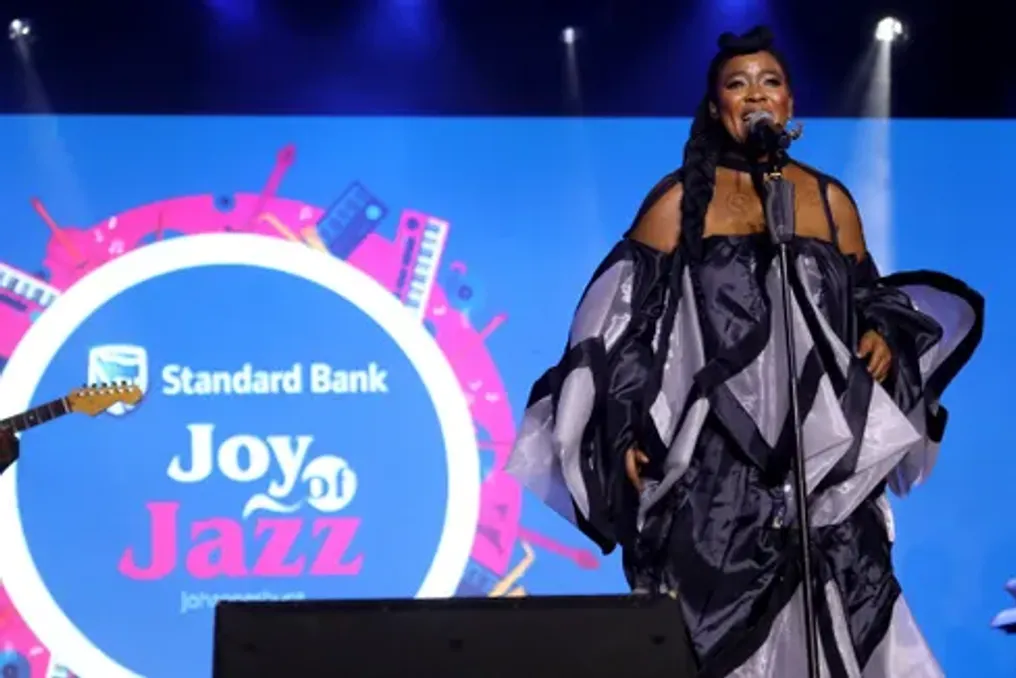
Attendees who were present at the Standard Bank Joy of Jazz festival this past weekend likely noticed that sticking to the schedule was nearly impossible. The two-day festival energized the Sandton Convention Centre in Johannesburg on September 25th and 26th, allowing music lovers to move between four stages to see performances by local favorites, international stars, and artists they might hear for the first time.
There was always an opportunity to catch the next performance; new sounds drifted from adjacent stages, and new crowds gathered for long-awaited artists. For the author of this piece, this was a distinction of the current festival compared to their first experience in 2025.
Last year, the author worried about which performance they might miss if two desired artists played simultaneously. This year, they felt more relaxed, accepting the idea that they couldn't see everything. Instead, they allowed themselves to discover what was happening around them.
One such discovery was Sydney Mavundla on the Conga stage. The author was unfamiliar with her music, but her rendition of the song 'Dirge for our Forefathers' from the 2024 album immediately captured attention. Her storytelling through the song was particularly interesting, and the cello and piano added another layer to the performance. After the set, the author wanted to learn more and added the album to their music library after a quick search.
Kabomo Vilakazi shared his thoughts on his long association with the Standard Bank Joy of Jazz and the evolving musical landscape of the festival. This is one reason why Joy of Jazz is such a pleasant experience: you can come knowing who you want to see and leave having discovered someone completely new.
The Neo-Soul singer and actor Kabomo Vilakazi, who has attended the festival since its early days in Newtown and has performed there himself, noted how he has watched this experience grow over many years. When asked about the current festival, he said he came on Friday and explained that he has been attending Joy of Jazz since its inception.
He recalled times when the festival took place in Newtown and noted the growth in audience and artist curation, especially after the festival resumed following the Covid-19 hiatus. Vilakazi stated that he loves the festival and how it is organized, adding that it was encouraging to see some venues filling up this year.
Vilakazi also highlighted the dedication of the South African public to local musicians. He emphasized that even when major international stars are on the program, the audience comes in large groups for local performers. He remarked: 'I really like this about the South African public. They are very dedicated.'
He also believes that the younger generation is helping to change the perception of jazz as music only for older audiences. The combination of jazz with soul, R&B, and neo-soul has made the genre accessible to young listeners, and young musicians are bringing more live instruments and brass into their music.
Vilakazi specifically singled out Thandi Zide, whom he saw performing on the neo-soul show, praising her versatility, vocal range, musical approach, and ability to connect with the audience. He observed: 'I think today's young artists are much bolder than our generation.'
The blending of generations was noticeable throughout the festival. The young audience, including the author, filled the Mbira stage for Manana, then quickly switched to the Conga stage to watch the Grammy-nominated group Tank and the Bangas. Lead vocalist Tarriona 'Tank' Ball delivered an energetic performance, engaging with the crowd, while the rest of the band maintained movement in the hall. It was one of those performances where sitting became increasingly difficult.
The creator of the hit 'Colour of You' also had the chance to see artists they already knew alongside musicians they were discovering for the first time. Among his highlights were Judith Sephuma, Floetry, and Kamasi Washington. During the festival, he walked into a hall and saw a woman singing in French. He didn't know who she was, but the performance impressed him. He said: 'What I like about festivals is that they introduce you to new artists, people you have never heard before. I like the educational element of the festival.'
This sense of discovery is particularly fitting for a festival that has been part of the South African jazz landscape since 1997. The 2026 edition marked the festival's 27th anniversary, having grown from much humbler beginnings into a significant event uniting international artists with leading South African musicians and emerging talents.
Standard Bank reported that over the history of the festival, attendance has grown from around 2,000 people to over 36,000, continuing to provide a platform for emerging jazz artists.
This year's lineup reflected this blend, featuring international names such as Angelique Kidjo and Kamasi Washington, alongside Thandiswa Mazwai, Manana, the Mkhize brothers, Internet Athi, and Gurulogic.
For the author, one of the biggest moments was how Thandiswa Mazwai paid tribute to Hugh Masekela on the Mbira stage. Her performance of 'Stimela' made the audience stand up and sing along with her, as Mazwai delivered the song with a stage presence that made sitting difficult. She also performed her own hits, including 'Zabalaza,' as well as 'Thanayi,' a collaboration with Masekela. There was something beautiful in watching the audience's reaction to 'Stimela'; it wasn't just listening to a familiar song. People sang from the bottom of their hearts, completely immersed in the performance.
Strolling through the Sandton Convention Centre during the evening, this connection was palpable everywhere. Friends moved between stages together, discussing the artists they had just seen, and people in traditional attire added to the atmosphere of the heritage month festival.
For anyone attending Joy of Jazz for the second time, the author left with a much deeper understanding of the experience. Although they still missed some scheduled performances, this year they worried less about it and allowed themselves to go with the flow. Sometimes walking onto a stage without expectations is exactly how you find something worthwhile to listen to.