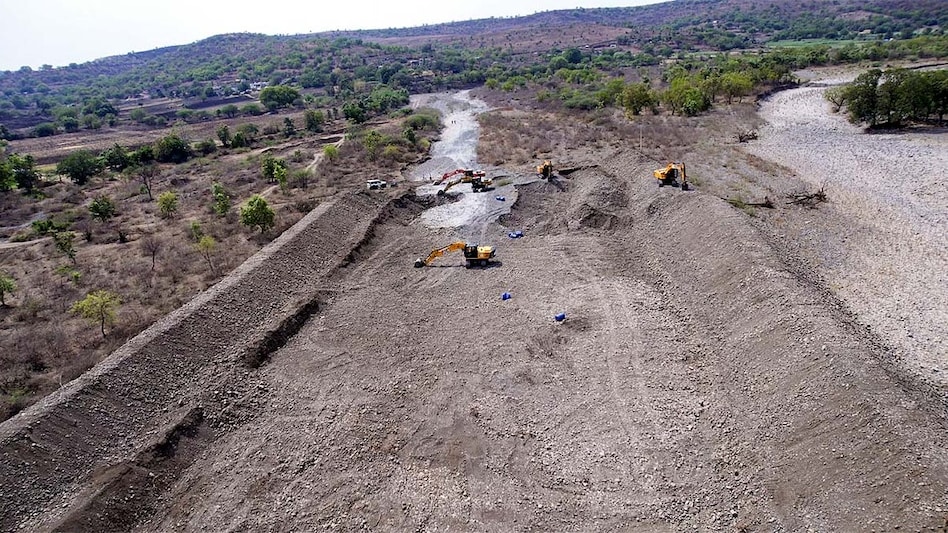
An unusual and serious situation is observed in the country: many states are suffering from heavy rains and floods, while the underground water level is constantly dropping. Rivers are overflowing, fields are flooded, yet in several states, including Maharashtra, severe drought has set in, and groundwater levels are falling.
A natural question arises: where is all this water going? Why isn't the floodwater seeping into the ground? Experts are analyzing the scientific reasons for the decline in groundwater levels.
The government of Maharashtra has declared drought in 265 out of 358 talukas, which accounts for about 74 percent of the state's territory. Thirty-two out of thirty-six districts of the state are battling acute water shortages. Trigger-1 is activated if a region experiences drought conditions for more than 21 days, and precipitation in June-July is less than 50%, and in June-September is less than 75%. According to the agricultural commissioner, the lack of precipitation and other indicators confirmed this situation by September 24.
Minister Devendra Fadnavis and Deputy Minister Eknaat Shinde visited affected villages and upgraded the status from 'drought-like' to 'drought'. This situation is considered one of the worst in recent years, comparable to the severe drought of 1972. If the monsoons do not bring sufficient rainfall in the next two weeks, the following nine months could be difficult, as rice crops have been destroyed, and water and fodder reserves are critically low.
The government has announced a package of 12 measures and benefits, but compensation for crops will be provided later. The opposition and farmers' organizations are demanding immediate and tangible assistance.
The main problem is that most of the floodwater quickly flows into rivers and seas. The construction of concrete roads, buildings, and major structures in cities and plains has significantly reduced the land's ability to absorb water. Previously, rainwater seeped into the soil, replenishing groundwater; now, most of the water runs off the surface, which is called surface runoff.
Furthermore, dams and embankments built on rivers have altered the natural flow of water. Instead of being evenly distributed, floodwater quickly moves downstream. Deforestation and soil erosion have also reduced the land's water retention capacity. As a result, groundwater replenishment is inefficient even in flood zones.
The most significant reason for the decline in groundwater levels is excessive water consumption. India is a country that extracts the most groundwater in the world. Water is pumped from wells and boreholes for agricultural needs. In some areas, dependence on groundwater for irrigation reaches 60-70 percent. Monsoon rains have become uneven. Climate change is altering monsoon patterns: there are periods of prolonged drought alternating with sudden heavy rains. Heavy precipitation does not have time to soak into the soil and turns into floods, while in arid areas, there is insufficient rain to replenish groundwater reserves.
Geological features, such as rock types and soil type, also affect groundwater replenishment in states like Maharashtra. In areas with basaltic rocks, water does not penetrate easily. Moreover, groundwater is being used indiscriminately for industrial and domestic purposes. In some places, groundwater levels drop by several meters annually, reaching dangerous levels.
The monsoon in India is never uniform. More rainfall falls in the Western Ghats, Northeast, and some plain areas, while less falls in Marathwada, Vidarbha, Rajasthan, Gujarat, and parts of Madhya Pradesh. This year, severe rainfall shortages in Maharashtra led to drought, while heavy rains in other states caused floods. Climate change has intensified this unevenness. Rising temperatures increase evaporation, leading to moisture loss. If measures are not taken to replenish groundwater, the situation could worsen in the coming years. Floodwater either flows into the sea or evaporates, while groundwater reserves are depleted.
It is crucial to understand this paradox and find a solution. First and foremost, efforts must focus on water conservation and groundwater recharge. Measures such as ponds, catchment dams, rainwater harvesting, and afforestation can help retain floodwater in the ground. It is also necessary to promote water-saving methods in agriculture, such as drip and sprinkler irrigation, and to change crop rotation, favoring less water-intensive crops. The government must provide immediate financial aid, compensation, and ensure fodder and water for farmers affected by the drought.