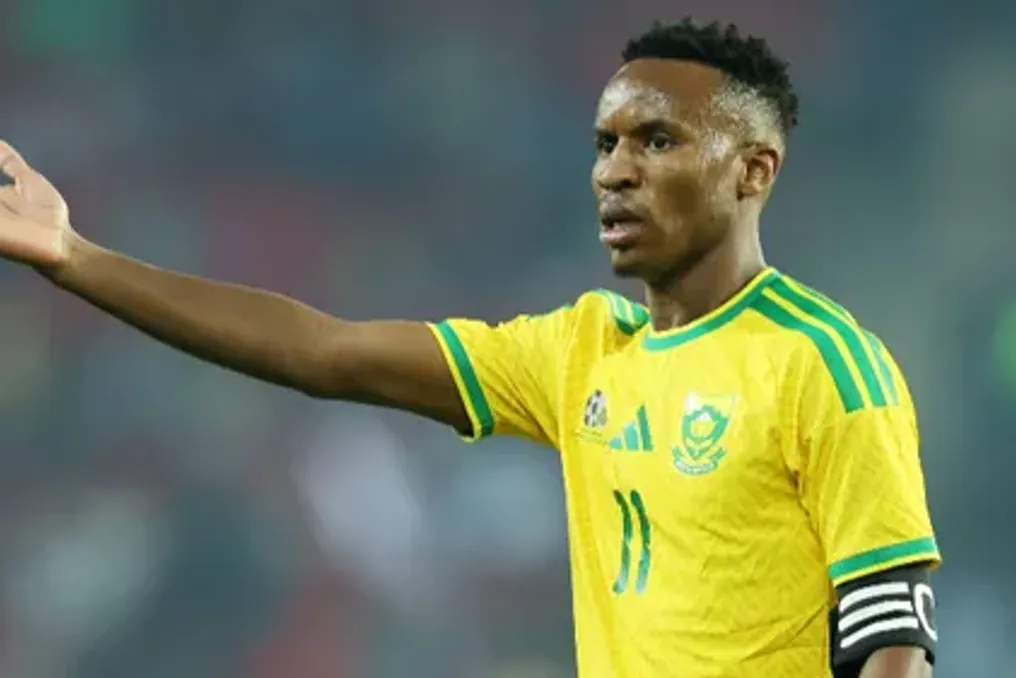
Club culture is the main obstacle for the South African national team, surpassing problems in other countries on the continent
Read more
IOL
iol.co.za

Club culture is the main obstacle for the South African national team, surpassing problems in other countries on the continent

The issue of club culture presents the most serious challenge for the South African national team (Bafana Bafana) compared to any other country on the continent.

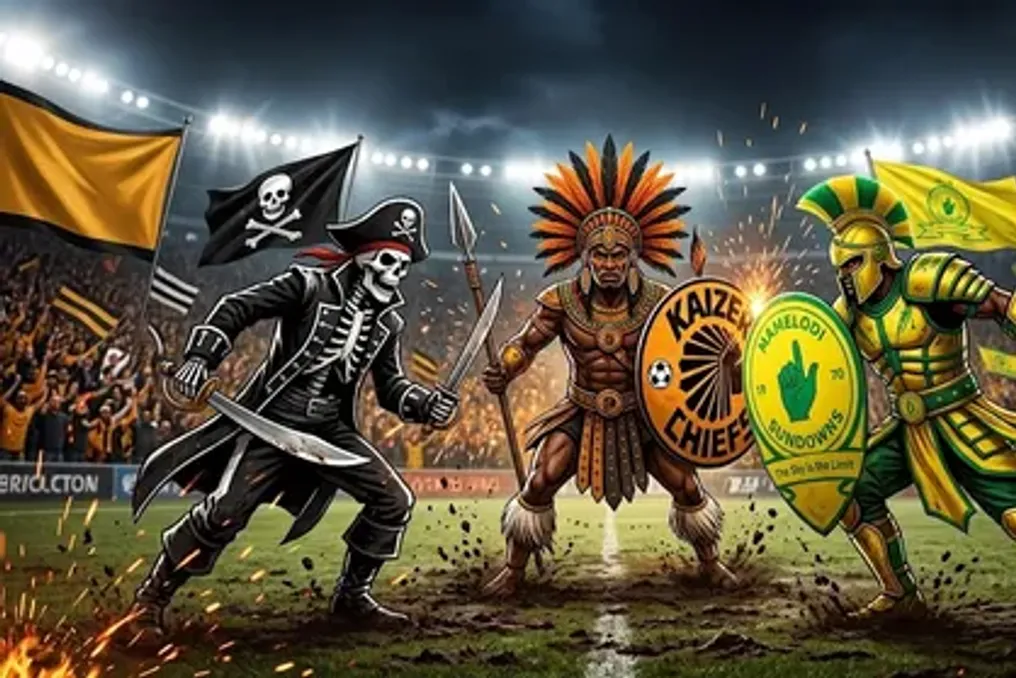
This problem manifests in the fact that club fans transfer their rivalries onto the national team matches. Examples include support for clubs such as Orlando Pirates, Kaizer Chiefs, and Mamelodi Sundowns.

Despite Bafana Bafana's ability to win, qualify for major tournaments, and create memorable campaigns at the World Cups, there is one battle South Africa may not be able to win: convincing fans to set aside club preferences for the national team.

Discussions began after Pitso Mosimane announced the first national team squad. Of the thirty players selected for the CAF qualifiers 2027, thirteen were from Mamelodi Sundowns, and six were from Orlando Pirates. This immediately sparked debate among fans, who questioned whether these numbers reflected playing level or Mosimane's long association with Sundowns.

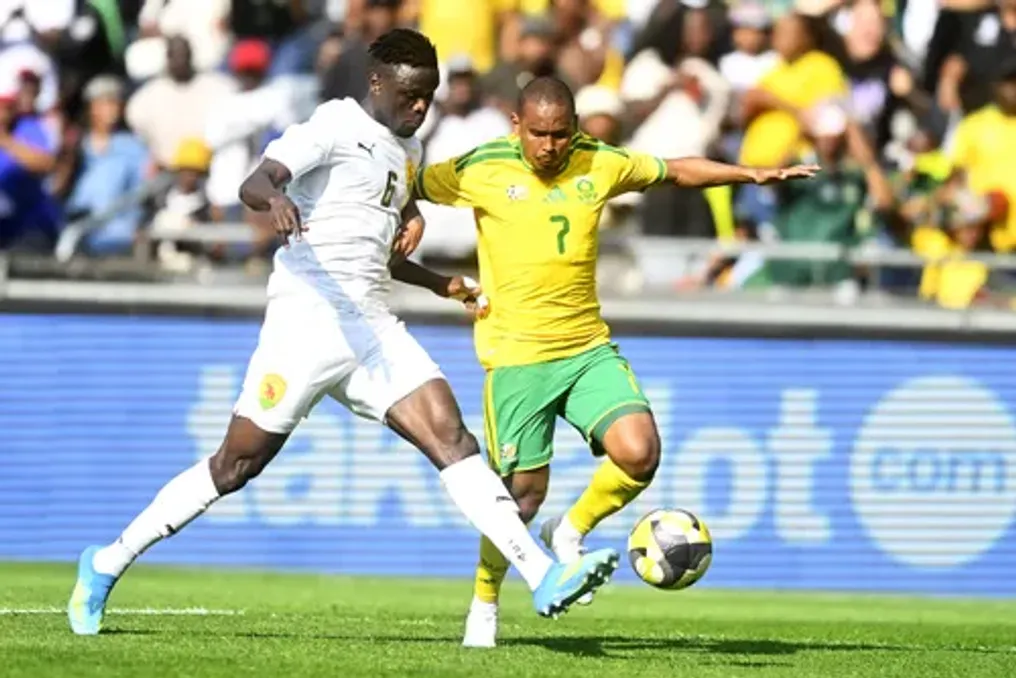
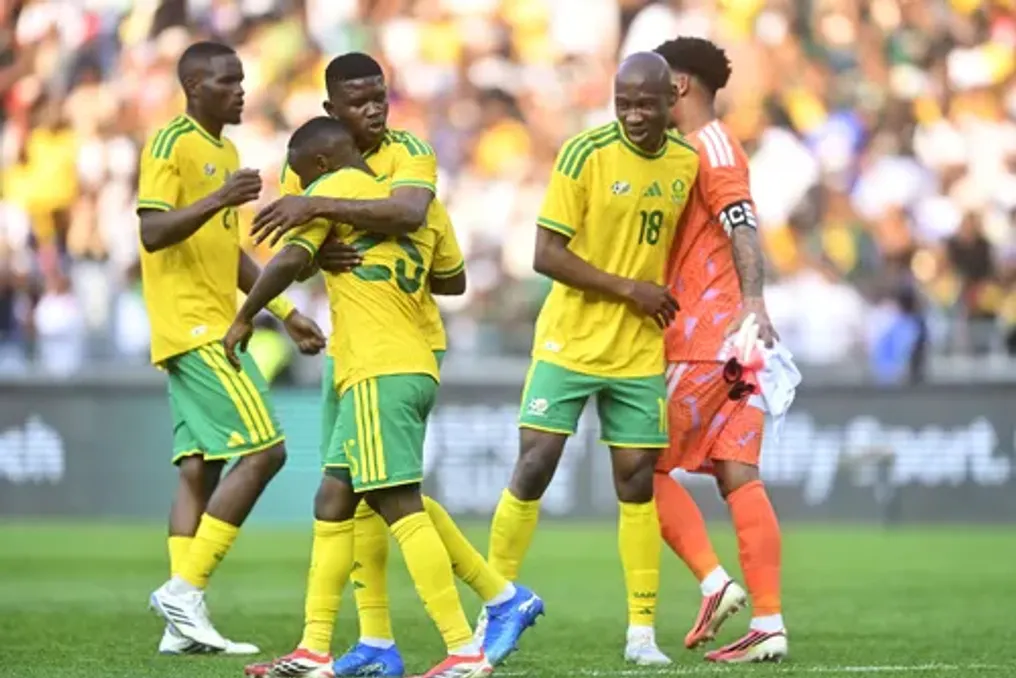
Even after Bafana defeated Guinea 2-1 at the Orlando Amstel Arena, the debate over club rivalry did not cease. This demonstrates a problem in South African football: the national team has become an extension of the PSL rivalry.

If a Sundowns player is included instead of a Pirates player, it is perceived as bias. If a Chiefs player is left out of the selection, fans demand explanations as to why their club is being ignored. Furthermore, any connection the coach has with a major domestic club is viewed through this lens.

However, this is not solely Mosimane's problem; it is a problem of football culture. The reaction to the inclusion of 13 Sundowns players showed how deeply club identity has penetrated the discussion of the national team.

An awkward irony arises: South Africa has spent years asking why Bafana cannot replicate the best qualities of its strongest clubs internationally. But when the coach actively selects players from one of these clubs, doubt arises as to whether the selection is motivated by club loyalty.

While the decisions of the national coach should always be critically evaluated, the standard of assessment must be the same regardless of which club the player represents. A Bafana fan should not rate a player higher or lower simply because they wear another club's jersey on the weekend.

The national team belongs to everyone. Pirates fans should celebrate goals scored by Sundowns players for Bafana, Chiefs fans should applaud Pirates players, and Sundowns fans should acknowledge the contribution of Chiefs players to South Africa's game. This seems obvious, but it is clearly not the case in South African football.

Perhaps this is the biggest problem facing Bafana—not rivals like Morocco or Senegal, but the necessity of making South Africans support Bafana before they support the club crest on a player's shirt.
Similar stories

Pitsso Mosimane insists on adapting Bafana Bafana players to national team requirements despite club habits
Read more
iol.co.za

Pitsso Mosimane insists on adapting Bafana Bafana players to national team requirements despite club habits

Pitsso Mosimane is setting strict demands for the Bafana Bafana national team players, emphasizing that the tactical approach and playing style must adhere to the interests of the team, rather than club preferences. He believes that every footballer is obliged to adapt to the needs of the national team.

Bafana Bafana

During the CAFCON qualifier match against Guinea, which ended with a 2-1 victory for Bafana Bafana at Orlando Stadium Amstel Arena on Saturday afternoon, Aubrey Modiba and Oswin Apollos played on the left flank. Mosimane highly praised Modiba's performance as a left-back and urged him to continue playing as he does for 'Mamelodi Sundowns,' as this is the most effective way to serve the national team.

Mosimane stated decisively: 'Modiba must play exactly as he plays for Sundowns. He must take up the number 10 position. This is important. I did not invent this style for Modiba—he played like this. We must use his strengths.'

Nevertheless, Mosimane believes that Apollos and right-back Kamogelo Selebele could contribute more to the team's game in both defense and attack, as the Bafana formation differs from how they operate at 'Orlando Pirates.' Mosimane explained that Apollos knows that when Modiba drifts inside, he must stay on the flank. However, at 'Pirates,' Apollos plays shifted inside, whereas for the national team, he needs to adjust to match Modiba.

He added that at 'Pirates,' Apollos drifts inside while Deon Hotto comes in from the flank, but in the national team, he needs to remain wide on the flank instead of moving inside. Sometimes Selebele must drop back.

Mosimane's comments after the match sparked active debate on social media. Critics accused him of bias towards the 'Sundowns' playing style while ignoring the 'Pirates' system, which opponents argue promotes division among clubs instead of unity around the national team. However, the article's author maintains that such criticism is unfounded. Although Mosimane naturally prefers the system he created at 'Sundowns,' his approach is based on tactical logic that he developed many years ago and upon which the successes of subsequent coaches, including the current Miguel Cardoso, were built. Ultimately, the responsibility for game plans lies with Mosimane at Bafana Bafana, who develops strategies to neutralize the strengths of opponents, and the players must adapt to the requirements of the national team, not vice versa.

Bafana Bafana defeated Guinea, showing character in the new era under Pitso Mosimane
Read more
iol.co.za

Bafana Bafana defeated Guinea, showing character in the new era under Pitso Mosimane

The Bafana Bafana team began its journey in the Africa Cup of Nations 2027 qualifiers by defeating Guinea at the Orlando Amstel Arena on Saturday afternoon. Despite adopting changes for this new era, the team maintained the core values established over the past years.

Pitso Mosimane, leading his second mission, did not start the match perfectly, although he made a respectable beginning. His team appeared transitional, and both he and the players experienced tense moments. Mosimane remained a reserved figure on the sidelines for most of the time, occasionally checking the situation, applauding the regaining of possession, and welcoming two goals from Ime Okona and Samukele Kabini. He resembled a student and spectator more than a leader.

This freedom sometimes proved to be a double-edged sword for the team. The players seemed uncertain, finding it difficult to play freely as they repeatedly apologized to substitutes for every clumsy tackle attempt or lost ball during the day.

Since Mosimane had only been training the team for a week, it was clear that he had not yet established his philosophy. Players often lost possession, allowing the Guineans to create tense defensive moments. Although Mosimane was pleased with the play and Okona's goal, the central defender was sometimes in the attacking half of the field unusually, often against the flow of the game, which put pressure on his defensive line.

His drive to advance and assist in attack also led him to have to return backward. In one instance, he failed to cope, making a dangerous tackle in front of the goal, which resulted in a free kick and a yellow card.

In the first half of the match, Relebokhile Mofokeng looked flawless, but he lacked support. Oswin Apollos tried to find open spaces but could not break through. Mosimane even noted that Apollos needed to improve his defensive play at certain times, rather than just staying up front.

Kamogelo Sebelebele's uncertainty about whether to push forward or stay back during ball circulation caused problems at the start of the first half, when Guinea disrupted the game and started high pressing, and Aliou Baldé created various problems for him on the flanks.

However, after Guinea equalized, the true Bafana of the last five years emerged. The team demonstrated character and an unyielding determination in the search for the winning goal, and captain Ronwen Williams also called on fans to support the team.

This happened. A player who previously showed uncertainty and was somewhat raw displayed maturity under Mosimane's leadership. Kabini brilliantly capitalized on his substitution, scoring the winning goal and demonstrating impressive returns. He didn't just fit into a struggling defense; the team also found its rhythm. Shpefelo Sithole reminded everyone why he was one of the best midfielders in the team at AFCON 2023 before his progress was halted by injury.

Despite the game not being perfect and having too many controversial moments, which highlights the team's transitional period, some effective qualities of the play were shown, helping the team start the qualification campaign at a high level. The result gives Mosimane and his players a foundation for further work, but the match on Wednesday against Eritrea in Cairo should provide another indication of how quickly the new Bafana can establish its identity.

Bafana Bafana coach Pitso Mosimane presents list of 30 national team players
Read more
iol.co.za

Bafana Bafana coach Pitso Mosimane presents list of 30 national team players

Bafana Bafana coach Pitso Mosimane explained his decisions regarding the retention of veteran Themba Zwane in the national team's management group. He announced the final list of 30 players for Bafana Bafana on Thursday afternoon at Safa House.

This squad was presented ahead of the qualifiers for the 2027 Africa Cup of Nations against Guinea and Eritrea, as well as before a friendly match against Egypt.

Bafana will face Guinea at Orlando Stadium Arena on Saturday, September 26, Eritrea at Al Salam Stadium on Wednesday, September 30, and then play Egypt at Cairo International Stadium on Sunday, October 4.

The concept of continuity and bringing in a fresh perspective defined Mosimane's first squad during his second term, reflecting his strategy of building upon the foundations laid by Hugo Brues while simultaneously addressing key areas for improvement.

Retaining the World Cup Core Team

Eighteen members of the squad participated in the group that achieved a historic playoff exit at the recent FIFA World Cup. Player selection was based on current form, experience, and availability.

Veteran playmaker Themba Zwane, aged 37, who endured a difficult World Cup and remains a fringe player at Mamelodi Sundowns, was brought back to the team to provide vital leadership and experience. Mosimane acknowledged that he may not be an automatic starter.

Since the domestic league is in its early stages and viewing time is limited, Mosimane retained his proven goalkeepers: Ronwen Williams, Sipho Chen, and Ricardo Gossa, despite Williams and Gossa now being teammates and rivals for the starting goalkeeper spot at Sundowns.

Zwane's Return as Leader

Williams has a clear opportunity to strengthen his place in the team, as Mosimane confirmed that Williams, Zwane, and Chen will feature among the team leaders.

The start of the season also encouraged players who were previously on the bench or excluded. Cassius Mailule, Luther Sing, and Lebohang Maboe have returned to the national team with expectations of immediate impact.

Several notable names—including Mbekezeli Mbokazi, Talente Mbatata, Evidens Makgopu, and Huliso Mudau—were not selected due to ongoing rehabilitation from injuries.

Mosimane expressed strong confidence that the new and returning faces will bring much-needed energy, specifically highlighting the selection of Yanela Mbuthumu from Orlando Pirates, stating that the forward fully deserves his spot despite criticism for missed opportunities.

South African players playing for foreign clubs, such as Relebokhile Mofokeng, Tapelo Maseko, and Shandre Campbell, have successfully adapted in their new European clubs, and Mosimane is interested in seeing how they translate club form onto the international stage.

Popular