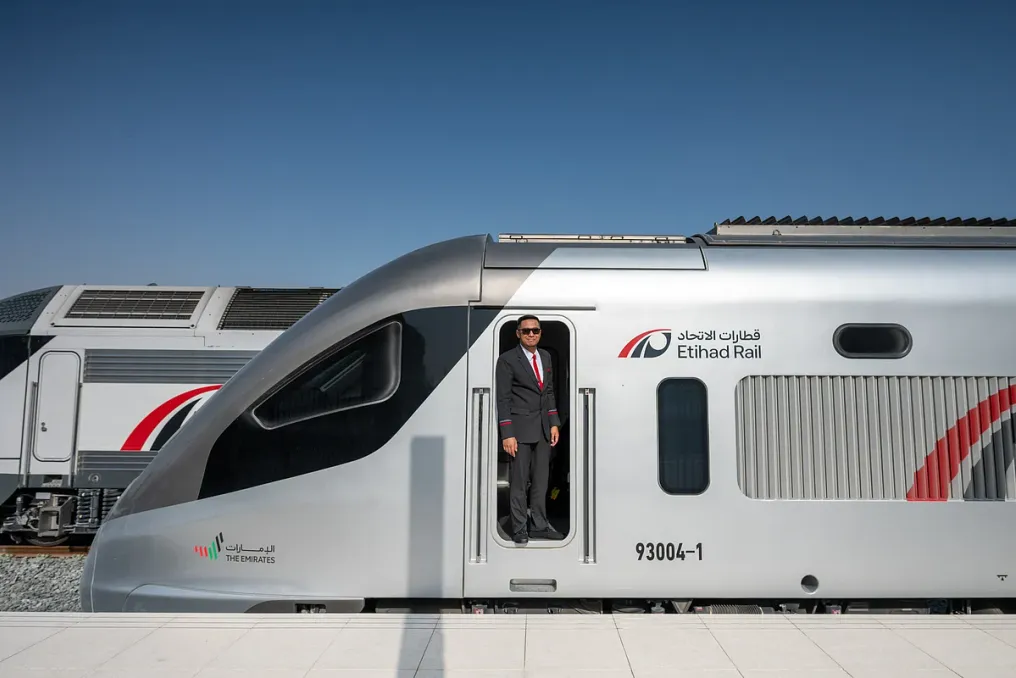
One day before the launch of the first passenger train running between Dubai and Abu Dhabi, the Khaleej Times team visited Mohammed bin Zayed City station in Abu Dhabi. The purpose of the visit was to participate in an exclusive media preview to see what the journey on the train between the two emirates will be like.
Similar stories
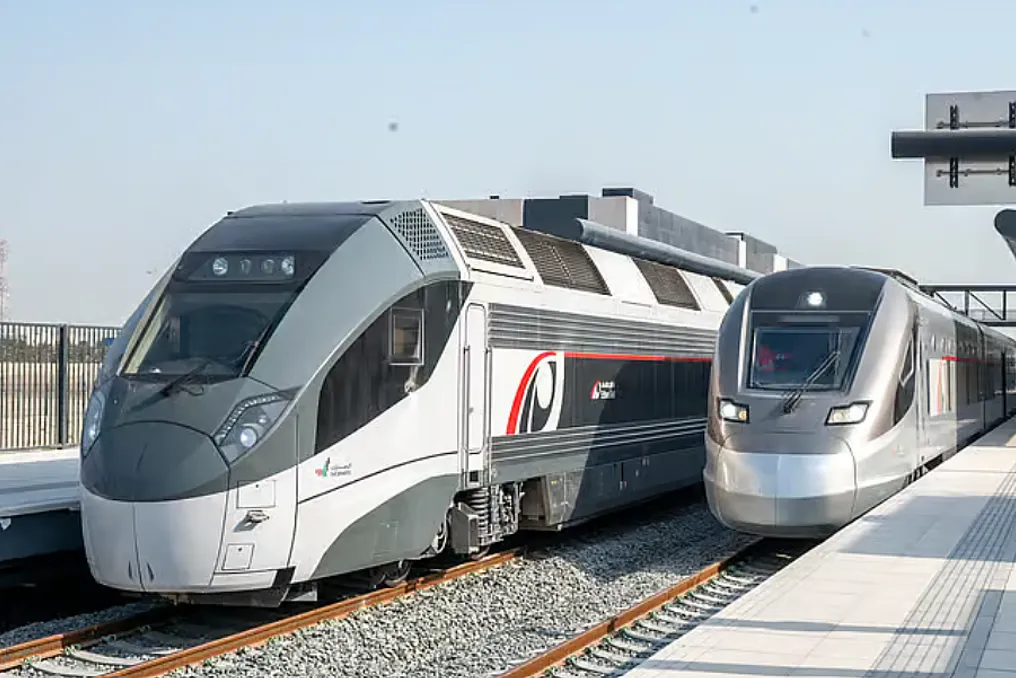
Etihad Rail in Dubai adds option to purchase Nol day pass for metro, tram, and buses
Passengers booking trips on Etihad Rail in Dubai can now add a Nol day pass, starting from 22 dirhams, to their ticket. This allows travelers to combine inter-emirate rail journeys with unlimited travel on the Dubai metro, tram, and bus network using a single QR code.
This addition comes ahead of the launch of passenger services on Etihad Rail from Dubai on September 30th. These routes will connect Al-Yalayis Station in Jumeirah Golf Estates with Abu Dhabi and Fujairah. This step provides passengers with an additional way to continue their movement around Dubai after using Etihad Rail services.
As previously reported by Khaleej Times, the Dubai Al-Yalayis station is connected to the Jumeirah Golf Estates Metro Station on the Red Line, ensuring connectivity with Dubai's public transport.
When adding the Nol day pass to an Etihad Rail booking, passengers can use both their rail ticket and the public transport pass via the same QR code. This code will be available in the Etihad Rail app and in the booking confirmation email, and it can be presented if necessary during the journey.
A review of the Etihad Rail booking platform conducted by Khaleej Times showed two options for the Nol day pass: the Standard Nol Day Pass at 22 dirhams per passenger and the Gold Nol Day Pass at 42 dirhams per passenger.
Gold Pass holders can use first-class carriages on the Dubai metro and tram. It is important to note that passengers can purchase the Gold Nol Pass regardless of the class they booked on Etihad Rail; for example, a traveler with a Comfort class ticket can still choose the Gold Nol Day Pass.
This pass is valid for travel on the Dubai Metro's Red and Green Lines, as well as on RTA public buses in the respective zones. This may allow an Etihad Rail passenger arriving in Dubai to transfer to the Jumeirah Golf Estates metro and continue their journey to other parts of the city before, if necessary, switching to the tram or bus network.
During the booking of an Etihad Rail trip, passengers can navigate to the 'Through Travel Options' section before checkout and select the Nol day pass. They can then choose between the standard and gold options and complete the combined booking. The process can also be initiated through RTA's smart channels, including Nol Pay and S’hail, by selecting the Etihad Rail option, which will redirect to Etihad Rail channels to finalize the booking.
The Nol day pass is valid for 90 days from the date of purchase until activation. Once activated, it is only valid for that day. Etihad Rail states that passengers do not need to use the pass on the same day as their train journey; even if the Etihad Rail trip has already concluded, the pass can be activated at any time within the 90-day period.
If a passenger misses an Etihad Rail train, the Nol day pass is non-refundable, but it can still be used within 90 days from the date of purchase. The Nol pass is issued by the Roads and Transport Authority of Dubai and is governed by RTA's tariff policies and applicable terms. It is a personal product for one passenger and cannot be shared, duplicated, or transferred to another person.
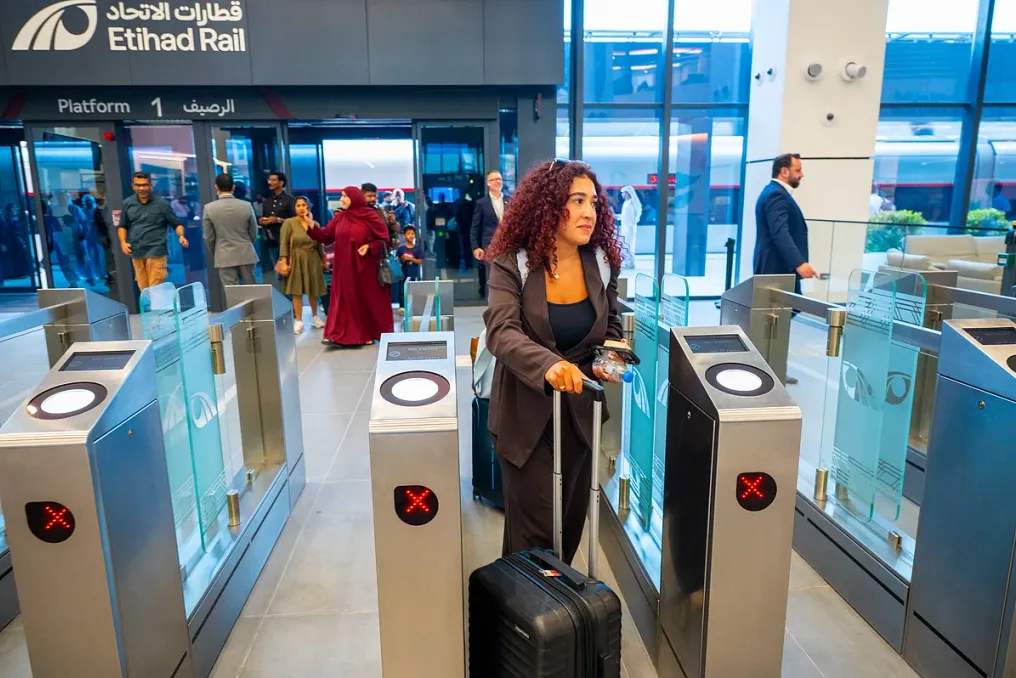
How Etihad Rail integrates with the Dubai Metro Red Line
A unique connection has been established between Etihad Rail and the Dubai Metro, allowing passengers to combine trips on inter-emirate trains with the use of Dubai's Red Line network. Starting September 30th, Etihad Rail will begin operations from Dubai, and passengers arriving at the Dubai Al Yalayis station can transfer to the Red Line metro in the Jumeirah Golf Estates area. From this station, they can travel around the city to various destinations without using a private car.
Dubai residents can take the metro to Jumeirah Golf Estates and then transfer to Al Yalayis station to board a train heading to Abu Dhabi or Fujairah. A check conducted by Khaleej Times using Google Maps showed that these two stations are approximately 1 km apart.
Dedicated Pedestrian Walkway
This was recently announced by Mattar Al Tayyar, CEO and Chairman of the Executive Council of the Roads and Transport Authority (RTA) of Dubai. He confirmed that a special pedestrian bridge is being constructed to directly connect Al Yalayis with the Jumeirah Golf Estates metro station. Al Tayyar noted that the authority is working jointly with Etihad Rail to simplify the transfer process as the national railway integrates with the Dubai metro network.
When Khaleej Times visited the site previously, a long steel pedestrian structure leading from the Etihad Rail station to the underground metro station could be seen. At the time of the visit, work was ongoing on building the pedestrian crossing, station access zones, and landscaping.
Where Does the Metro Connection Lead for Passengers?
The Jumeirah Golf Estates station is located on the Dubai Metro Red Line, providing passengers transferring from Etihad Rail access to some of the city's most well-known business, tourist, and residential areas. From Jumeirah Golf Estates, passengers can move towards stations serving locations such as Dubai Marina, Dubai Internet City, Mall of the Emirates, Burj Khalifa/Dubai Mall, Business Bay, Dubai World Trade Centre, and Dubai International Airport Terminals 1 and 3. In the opposite direction, the line continues towards Dubai Investment Park and Expo 2020.
Travel options extend beyond just the Red Line. At the Union and BurJuman stations, passengers can transfer to the Green Line, allowing them to reach areas like Gold Souq, Al Ghubaiba, Dubai Healthcare City, and Creek. Furthermore, from the Red Line, one can connect to the Dubai Tram, which serves areas including Dubai Marina, Jumeirah Beach Residence, Media City, and Al Sufouh, as well as the Palm Jumeirah tram stop. According to the RTA rail map, Metro-Tram interchange hubs are located at Sobha Realty and DMCC.
Thus, for someone arriving in Dubai via Etihad Rail, the journey does not necessarily end at Al Yalayis. After transferring at Jumeirah Golf Estates, they can continue traveling across much of the city by train, avoiding the need for a private car.
Station Designed for High Passenger Flow
Jumeirah Golf Estates is not just a small metro stop in a quiet area. When RTA opened it in September 2021, the authority described it as the largest underground station in the Dubai Metro network. The station covers an area of 28,700 square meters and is designed to handle 11,555 passengers per hour during peak times and about 250,000 passengers daily. It is also equipped with four bus stops, 20 taxi stands, 400 public parking spaces, and 20 accessible spots for people with disabilities.
More Integration in the Future
The physical metro connection is part of a broader plan to ensure seamless journeys on Etihad Rail from start to finish. Etihad Rail is working on ways to allow passengers to plan routes combining the national railway with the metro, buses, taxis, ride-hailing services, and other first and last-mile transport modes. Ultimately, this could lead to fewer individual steps when planning and undertaking journeys across different transport networks.
Integration may also affect ticketing. In 2024, RTA and Etihad Rail signed an agreement whereby RTA will develop solutions for purchasing tickets and paying fares through its nol system. This agreement was presented as the first step in a joint venture between the two entities. The announcement did not specify a concrete date for implementing nol payments on Etihad Rail.
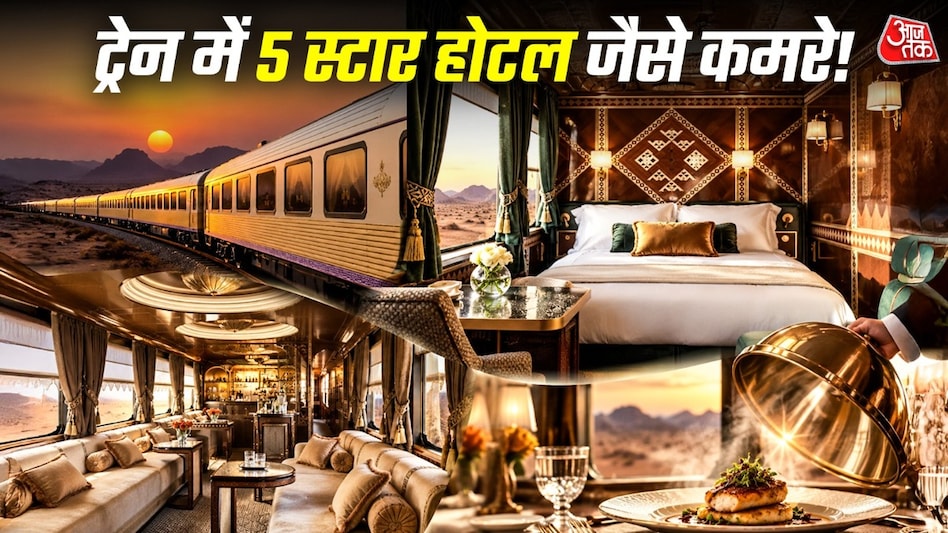
First ultra-luxury train in Saudi Arabia, 'Desert Dream,' will offer guests a five-star hotel experience
The opportunity to experience luxury travel on the move is presented: 24-hour butler service, hotel-level suites, magnificent restaurants, and views of the vast Saudi Arabian desert right from the train window. Saudi Arabia is preparing to offer a similar royal experience. The country's first ultra-luxury train, named 'Desert Dream,' is intended to provide passengers not just transportation from one point to another, but a complete elite travel experience. One night of such a journey will cost a huge amount, in exchange for a moving palace.
Saudi Arabia's new luxury train, 'Desert Dream,' attracts attention due to a number of features. Instead of ordinary seats or carriages, it will feature hotel-level suites, round-the-clock butler service, exquisite restaurants, and lounge areas. Notably, all these amenities will be accompanied by travel through the vast desert and historical regions of Saudi Arabia. This is why the ticket prices are significantly higher than those of ordinary trains.
According to reports, the initial price for one compartment is about 30,000 Saudi riyals, equivalent to approximately 30,000 dirhams per night. In Indian rupees, this amount is estimated at approximately 6.5–7 lakh rupees per night. The official website of 'Desert Dream' emphasizes that the train's specialty is not only its external splendor. Passengers are provided with luxurious suites, exquisite cuisine, lounge areas, live entertainment, and personal butlers. Furthermore, picturesque views of the desert and historical sites of Saudi Arabia open up from the train windows. Thus, the journey here is not just about reaching a destination, but a comprehensive experience of enjoying luxury in motion with a close acquaintance with the desert.
Reiterating the pricing issue, it is reported that the starting price for one compartment reaches 30,000 Saudi riyals, corresponding to approximately 30,000 dirhams per night, or about 6.5–7 lakh Indian rupees per night. This level of pricing indicates that 'Desert Dream' is positioned not as an ordinary railway trip, but as an exceptionally special experience of elite tourism.
'Desert Dream' is designed not as a standard passenger train. It will consist of 12 carriages, housing 34 passenger suites. The train can carry about 72 people simultaneously, ensuring no large crowds. The focus is on comfortable and private travel with a small number of passengers, aiming to create an impression comparable to staying in a five-star hotel.
The main highlight of this train will be the route itself. The train will allow passengers to view the desert and natural landscapes of the country up close, passing through various regions of Saudi Arabia. The train route will start in Riyadh and move in a northern direction, including locations such as Hail and Al-Quraiyat. Thus, the trip becomes not just a means of transport, but a self-sufficient tourist adventure.
According to information from the official website of 'Desert Dream,' the train is being developed so that passengers can feel the atmosphere of a premium hotel inside the carriage. It will feature luxurious suites, comfortable seating and sleeping areas, and high-class amenities for guests. The train's design aims to combine both Saudi Arabian culture and modern luxury. That is, the exterior will have a traditional desert look, while the interior will have ultra-modern amenities.
The most unique feature is the interior, which combines modern luxury with traditional Saudi Arabian culture. The design work was carried out by architect and interior designer Aline Asmar d’Amman and her studio Culture in Architect. Inside the train, one can see beautiful carved wooden elements, expensive fabrics, soft lighting, and attractive design. Many design elements are inspired by traditional Saudi Arabian equestrian art and culture. This means that passengers will immediately upon entering the train experience a blend of modern hotel comfort and authentic Saudi atmosphere.
The cost of this train causes the most astonishment. The starting price for one compartment is set at approximately 30,000 dirhams per night. Additionally, those interested in early trips can place a refundable deposit of about 2,500 dirhams to be included in the priority passenger list. This implies that the travel expenses will multiply the costs of an ordinary train journey. However, Saudi Arabia presents this not just as a trip, but as a unique experience of elite tourism.
In recent years, Saudi Arabia has been actively promoting tourism through the implementation of many large projects. 'Desert Dream' is considered a significant step in this direction. The project's goal is to give travelers the opportunity to see various regions of Saudi Arabia in a completely new and luxurious way. In the future, trips across Saudi Arabia will not be limited only to major cities and...