Foreign investors have withdrawn 3.84 lakh crore rupees from the Indian market in the last 24 months
Read more
Aaj Tak
www.aajtak.in

Foreign investors have withdrawn 3.84 lakh crore rupees from the Indian market in the last 24 months

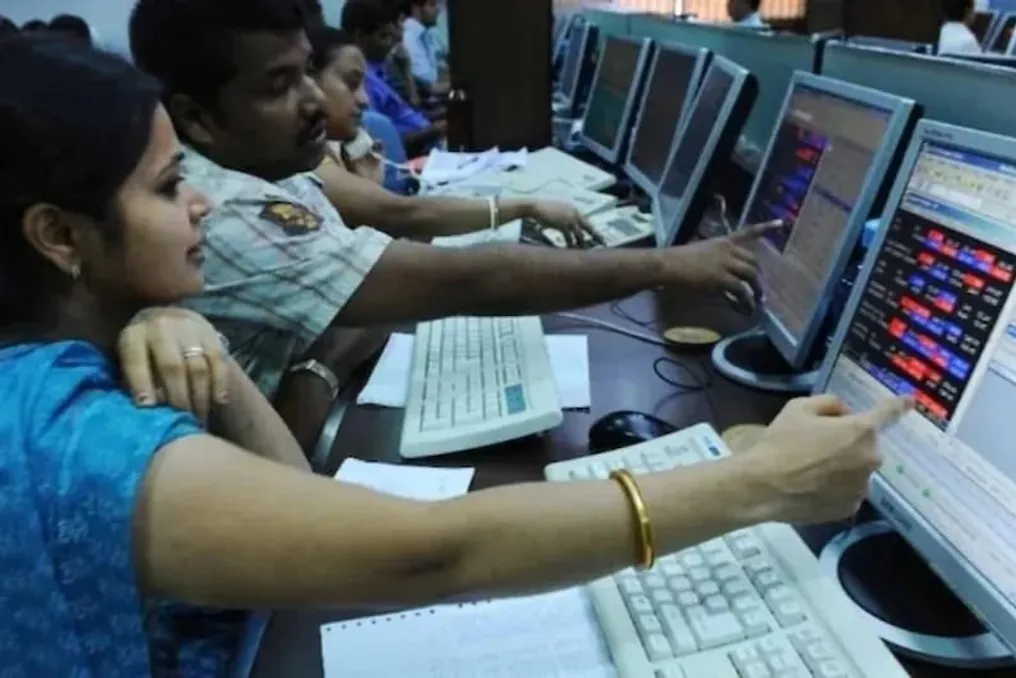
Despite India's rapid economic growth, this growth is not reflected in the sentiment of foreign investors. Even with strong GDP growth in the country, Foreign Institutional Investors (FIIs) are not investing in the Indian stock market in the same volumes. Over the last two years, about $40 billion has been withdrawn from Indian stocks (equivalent to 3.84 lakh crore rupees).

According to a report by the brokerage firm Bernstein Research dated September 21, 2026, some old factors that attracted foreign investment to India have lost their former significance. This means that rapid economic growth alone is no longer sufficient to attract the attention of foreign investors.

The stance of FIIs, which represent large foreign funds and institutional investors, has changed significantly. According to Bernstein, the net outflow of FII funds over the last 24 months amounted to about $56.3 billion, while inflows during the same period reached $38.6 billion. Thus, more money has left the Indian stock market than has entered over the past two years.

Looking at the picture over the last 10 years, the net volume of FII investments in the Indian stock market was only about $4 billion. In comparison, Domestic Institutional Investors invested about $300 billion. This demonstrates the growing role of local investors in the Indian market as the contribution of foreign participants weakens.

Once, India's economic growth and foreign investor sentiment went hand in hand: as India's GDP accelerated, foreign investments also grew. However, according to Bernstein, this link was quite strong until around 2007, after which it began to weaken. In recent years, the situation is such that despite the stable dynamics of the Indian economy, FII funds continue to be withdrawn from the country. This indicates that foreign investors make investment decisions based not only on India's economic growth.

The difference in interest rates between India and the US also plays an important role in the decisions of foreign investors. Between 2012 and 2018, there was a close correlation between this rate differential and FII investments. However, this relationship has weakened over the last 4-5 years. Now, the movement of the rupee against the dollar is becoming more critical for foreign investors. Bernstein notes that in the recent period, the correlation between FII inflows and the movement of the rupee was about 72.9 percent.

Simply put, if a foreign investor invests money in India, and the price of the Indian stock rises, but at the same time the rupee depreciates against the dollar, their return may decrease upon converting the profit back into dollars. Consequently, the success of an investor in the Indian market depends not only on stock price growth but also on the movement of the rupee and dollar exchange rates.

Foreign investor concerns are not limited to currency rates; market valuation is also a serious issue. Valuation refers to how expensive or cheap a stock or the entire market is assessed relative to its earnings. Bernstein reports that after 2020, India's valuation consistently remained higher than that of other emerging markets. From December 2023 to September 2026, India's average relative valuation was 162 percent. During this same period, the net FII outflow amounted to about $44 billion, coinciding with the period when India appeared more expensive than other emerging markets, and investors continued to withdraw their funds.

Bernstein predicts that over the next 12 months, FII inflows may remain stable or show slight growth. That is, no immediate large-scale injection of funds into Indian stocks by foreign investors is expected. According to the report, some foreign investment may return if crude oil prices stabilize, corporate profits improve, and other economic indicators improve. Nevertheless, to ensure a sustainable return of foreign investment in the long term, rapid market or GDP growth alone will not be enough.

Bernstein emphasized that to ensure a strong inflow of foreign capital in the long term, globally competitive companies in specific sectors where India can play a more significant role are necessary. These areas include semiconductors, batteries and energy storage, space, defense, and deep technology. Simply put, although the Indian economy is growing, foreign investors now need to consider not only GDP growth but also rupee stability, market valuation, corporate profitability, and future business opportunities.
Similar stories

S&P Global raises India's economic growth forecast to 7% for 2026-27
Read more
www.aajtak.in

S&P Global raises India's economic growth forecast to 7% for 2026-27

The confidence of major global agencies in the pace of India's economic growth continues to rise. The rating agency Standard & Poor's Global (S&P Global) has raised its forecast for India's growth, despite the complex global situation, high oil prices, and geopolitical tensions.

The agency increased the forecast for India's real GDP for the fiscal year 2026-27 from 6.6% to 7%. This increase came after economic indicators in the June quarter were better than expected. According to S&P, strong industrial activity, domestic consumption, goods exports, and government investments helped the economy, with consumption growth in India proving particularly resilient.

Investment activity in India also remains the strongest among leading economies in the Asia-Pacific region, allowing India to be considered one of the main growth drivers in the region.

Nevertheless, S&P warns of some future challenges. The agency forecasts a slight slowdown in growth rates in the second half of the current fiscal year. The additional momentum given to the economy through GST rationalization and income tax reduction is gradually weakening. Furthermore, weather will play an important role; up to September 9, the total rainfall in the country was about 15% below normal, which could significantly affect agriculture and rural consumer demand.

S&P forecasts that average consumer inflation in India in the current fiscal year will be around 5.1%. Consequently, attention will be paid to inflation and food prices. The agency expects the Reserve Bank of India (RBI) may raise its policy rate by 25 basis points during the current fiscal year. Thus, despite strong growth, there is pressure from the need to tighten policy due to rising inflation.

The most serious external challenges for India are the cost of crude oil and the dynamics of the rupee. If oil prices remain high amid Middle East conflicts, this could affect import bills, inflation, and the Indian rupee exchange rate. India imports over 80% of its required fuel. According to S&P, by mid-September, the Indian rupee had weakened by more than 5% against the US dollar. Despite this external pressure, the resilience of domestic consumption and investment remains, making the domestic economy India's main strength.

The rating agency adjusted the forecast for India's real GDP for 2026 by 0.4 percentage points, while the forecast for 2027 remained unchanged. According to S&P estimates, the next three fiscal years may look like this: 2025 – 7.8%; 2026 – 7.0%; 2027 – 7.2%; 2028 – 7.0%; 2029 – 6.8%.

India surpasses China and Japan in GDP growth rates according to S&P forecasts. China is projected to grow at 5.0% in 2025, 4.3% in 2026, 4.3% in 2027, 4.4% in 2028, and 4.2% in 2029. Forecasts for Japan are 1.2% in 2025, 0.8% in 2026, 0.9% in 2027, 0.9% in 2028, and 0.7% in 2029. South Korea is projected to show figures of 1.1%, 3.5%, 2.7%, 2.4%, and 1.9%. Although Taiwan's forecast for 2026 is 10.9%, higher than India's, this is attributed to strong activity in technology and artificial intelligence.

S&P is not the only one positive about India's growth. On September 18, Moody's Ratings also raised India's GDP forecast for the fiscal year 2026-27 from 6% to 7%. The agency attributed this to strong private consumption, investment, public infrastructure spending, and the strengthening of the services sector. Thus, there has recently been an improvement in growth forecasts for India from global rating agencies.

India's strong growth means that the foundation of demand and investment in the domestic economy currently remains solid. However, another side of the coin is important for investors: the inflation forecast of 5.1%, a possible 25 basis point rate hike, expensive oil prices, pressure on the rupee, and the risk of growth slowdown in the second half of the year cannot be ignored. In the coming months, key indicators for India's growth rate will be agricultural production, food inflation, crude oil prices, and the next RBI decision.

US attempts to halt India's economic growth, fearing a repeat of the China experience
Read more
www.aajtak.in

US attempts to halt India's economic growth, fearing a repeat of the China experience

Although the US is not directly threatening India with tariffs, India's friendship with Russia and good relations with Iran constantly raise concerns for the American side. Various measures are being taken to contain India. This month, the 'Lindsey O. Graham Sanctioning Russia and Iran Act' was passed in the US Congress and signed by President Donald Trump.

This law grants the US administration the right to impose tariffs of up to 100% on countries purchasing Russian oil. According to experts, the main targets of this act are India and China. The question arises whether this step is solely related to policy towards Russia and Ukraine, or if it is backed by a US strategy to curb India's economic growth.

History shows that whenever the US faces economic competition, it does not shy away from applying pressure. In 2001, the George W. Bush administration lifted US sanctions on India after nuclear tests in Pokhran in 1998. Now, exactly 25 years later, the US is again seeking to pressure India through tariffs, this time because of India's purchase of crude oil at preferential prices from Russia.

Experts note that one of the main reasons for the US hardline stance is the fear that India could become the next Asian economic leader challenging the US globally. In March of this year, US Under Secretary of State Christopher Landau stated that 'the US will not repeat the mistake it made with India 20 years ago.'

Indeed, in the 1970s and 1990s, the US opened almost all major world markets to China, provided technological assistance, and facilitated Western investment. The result was that China's economy, which accounted for only 7% ($191 billion) of the US economy in 1980, grew to $19.5 trillion by 2025, while the US GDP stands at $30.8 trillion. Furthermore, China's share of global production grew from 3% in 1990 to 31.8% in 2023, while the US share declined.

The US expected China to democratize after enrichment, but China turned into a strong economic and military rival. Experts believe that this experience prompted the cautious US to adopt an extremely strict policy towards India.

Despite the US expecting complete loyalty from its allies, India's foreign policy has always been based on the principle of 'strategic autonomy.' India purchases military equipment from the US, Rafale fighters from France, crude oil from Russia, and electronics from China, based on its national needs.

According to India's ambassador to the US, Vineet Mohan Kwatra, energy is a fundamental strategic need for 1.4 billion Indians, and India employs a comprehensive strategy to meet these needs, as over 85% of its crude oil requirement is imported. In July 2026, Russia accounted for about 52% of India's total oil imports, and India's clear position is that energy security and affordable prices for its citizens are the highest priorities.

It should be noted that even after the nuclear tests in 1998, the US imposed strict restrictions on India, banning military sales, technology transfer, and lending. However, India managed to overcome this crisis thanks to its strong domestic economy and maintained its strategic autonomy. Later, in 2001, the US was forced to lift these restrictions, and in 2008, a historic peaceful atom agreement was reached between the two countries.

In light of this, the US attempt to stop India from buying oil from Russia by threatening a 100% tariff could cause tension in bilateral relations. Foreign policy experts believe that the US must realize that attempts to suppress India or limit its economic growth will prove unsuccessful. The India-US partnership can remain strong only if it is based on mutual interests and respect, not unilateral pressure. India will move forward without sacrificing its energy security and economic development.

US Markets Show Volatility, While Gift Nifty Gives Positive Signals for Indian Stock Market
Read more
www.aajtak.in

US Markets Show Volatility, While Gift Nifty Gives Positive Signals for Indian Stock Market

Last week, the Indian stock market experienced a significant decline. Trading was suspended on Monday due to the Ganesh Chaturthi holiday. Meanwhile, global markets, from the US to Japan, witnessed serious turmoil.

Sharp declines were recorded in American markets, including the Dow Jones and Nasdaq, which closed in negative territory. Consequently, analysts are examining what signals are being received for Sensex-Nifty from foreign markets such as Japan, Hong Kong, and South Korea.

During the last trading day, American stock markets appeared extremely unstable, showing fluctuations from opening to closing. The most significant factor contributing to the decline in the US market was the aggressive sell-off of artificial intelligence (AI) related stocks. Shares of major AI companies collapsed. Stocks of firms like Samsung, Nvidia chip manufacturer, SoftBank, and semiconductor companies fell by 4% to 10%.

Due to the crash in AI stocks, the Nasdaq index dropped by one percent but ultimately closed at 26,186, losing 147 points. As for the Dow Jones, a substantial drop was also noted, with the index ending trading at 52,421, down by 152 points. Furthermore, the S&P 500 closed in negative territory, losing 37 points.

Not only did American markets show a sharp decline; chaos reigned in many Asian markets on Monday as well. During trading, the Japanese Nikkei fell by more than 500 points, the Korean KOSPI by more than 250 points, and the Taiwanese stock market by 322 points.

The Indian stock market will open today after the holiday. Analysis of external signals indicates that although negative signals are coming from America, many Asian markets, as well as Gift Nifty, point towards a possible acceleration of Sensex-Nifty on Tuesday.

At the time of writing, Gift Nifty, considered a key indicator for the Indian stock market, was trading up by more than 60 points. Additionally, the Japanese Nikkei recovered after a sharp fall on Monday, showing a rise of about 600 points. There was also an increase in the South Korean KOSPI index. The UK's FTSE-100 index was also trading in positive territory.

Last week, the Indian stock market experienced a significant downturn. Throughout the week, both major indices, Sensex and Nifty, were in a decline of more than 2%. By the end-of-week trading results, the Sensex BSE, comprising 30 stocks, closed at 74,781, down by 120 points, while the NSE Nifty finished at 23,398, losing 80 points.

Popular