Global Competency Centers in India are Shifting from Service Provision to Product Creation, Requiring Changes in Developer Roles
Read more
YourStory [india, en]
yourstory.com

Global Competency Centers in India are Shifting from Service Provision to Product Creation, Requiring Changes in Developer Roles

Global Competency Centers (GCCs) in India, which previously functioned as divisions of multinational corporations handling a full spectrum of tasks—from finance to engineering and customer support—were long viewed primarily as cost centers rather than technology-forming structures. However, this concept is becoming obsolete.

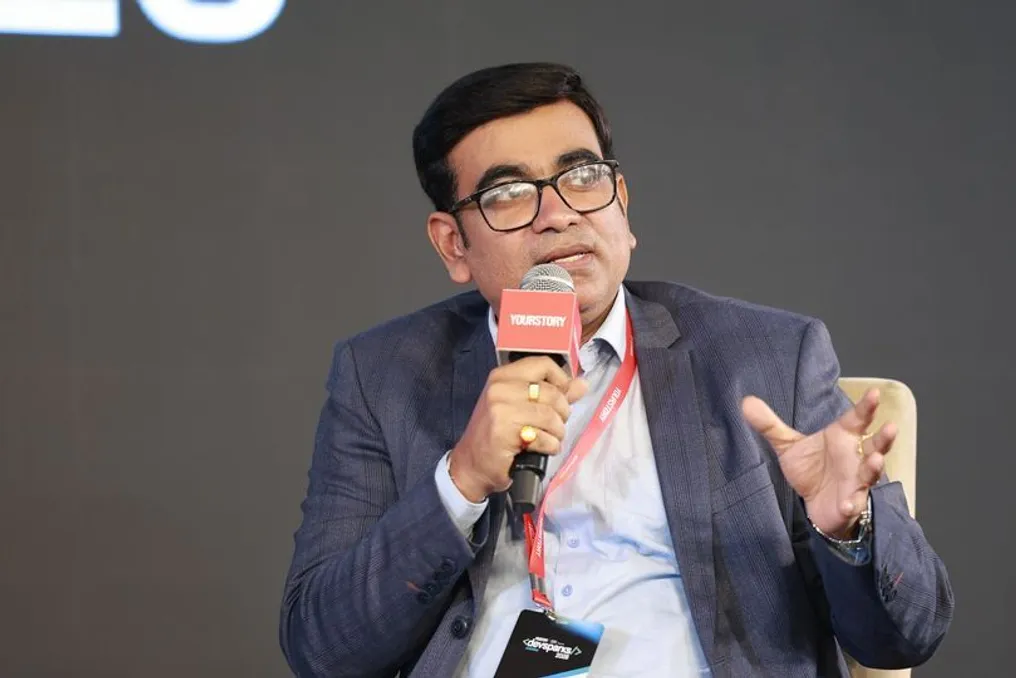
Quinn George, Head of AI and GCC, noted at the DevSparks Chennai 2026 conference that GCCs in India are transforming into nodal centers for developing products, platforms, and innovations, not just executing orders. His presentation, titled 'From Code to Business Impact: What Are GCCs in India Really Creating?', focused on the role of developers as the driving force behind these transformations and the requirements placed upon them.

George highlighted three main trends observed in GCCs. Firstly, automation: he estimates that 50–60% of GCCs are implementing automation for routine, high-volume operations, such as handling support service requests, which previously required constant human involvement. Secondly, it is a shift towards full ownership. Instead of creating a small part of a global product, some GCCs are now developing entire systems from start to finish, citing a GCC that is fully responsible for developing a credit management system for a banking client. Thirdly, there is an accelerated hiring of AI engineering specialists, although George admitted that for many organizations, it remains unclear what specific products should be created with these new teams.

A significant part of this activity is motivated by Fear of Missing Out (FOMO)—both among multinational companies competing to establish GCCs in India and among the GCCs themselves striving not to fall behind in the field of AI. This urgency has led to tangible results: George pointed to companies using two types of AI application scenarios—those that directly impact revenue and provide a visible return on investment, and those aimed at improving internal productivity.

George's main caution concerned a phenomenon he termed the 'pilot graveyard'—situations where hackathon wins and proven concepts are celebrated once and then never tested further. He stressed that it is crucial for GCC employees, when moving from idea to a finished solution, to consider long-term sustainability. In his view, this is the biggest gap.

He argued that an idea that looks convincing in a controlled pilot mode must still pass testing in real, live operation, as well as its ability to adapt to changing business needs and maintain user interest after the novelty wears off. A strong pilot does not guarantee long-term success.

George linked this problem to a common practice in GCCs: teams first develop a product they believe is correct and then try to sell it to the business. He believes this approach is backward. Instead, engineers should interact directly with business and client teams, identifying problems independently, rather than waiting for a formal technical specification.

The change in what GCCs create affects the requirements for developers. George noted that these developers do not have a single starting point and are divided into three generations. The first generation was trained on legacy systems like mainframes; the second underwent training in Java and similar languages; and the third, newer generation, is learning coding directly using AI tools. It is this third generation that concerns him, as he says these individuals may completely lose logical and systemic thinking.

He countered that what is passed from one technological shift to another is not mastery of any specific tool, but the fundamental ability to solve problems. Therefore, in George's opinion, simply knowing how to prompt an AI system correctly is insufficient. He illustrated this with an interview example for an AI architect position: after confidently executing a complex prompt, the candidate could not explain what was happening 'behind the scenes' of the system. For George, the gap between controlling a tool and understanding its principles distinguishes a true AI engineer from a developer who has merely learned to use AI well. Knowing code or being able to build an application with AI is not equivalent to being an AI engineer.

Regarding specific skills, George identified five areas that he predicts will be most important. The first is AI engineering itself, which requires a combined knowledge of product, process, business, and technical aspects, not just technical skills. The second is AI configuration engineering, which involves adapting large language models to specific organizational needs. The third is AI infrastructure, i.e., the systems on which these models run. Furthermore, he added that governance, risk, and compliance (GRC), as well as cybersecurity, are rapidly gaining momentum as AI adoption expands in GCCs and will take up an increasing share of hiring.

In conclusion, George warned about entry-level hiring. Since routine tasks are becoming increasingly automated, he estimated that only about 30% of engineering graduates are likely to secure strong positions in GCCs in the near future, and the rest will require significantly more thorough preparation, which must begin long before their first job, in order to be competitive.

Similar stories

Ashwini Vaishnaw stated that India is rapidly becoming a semiconductor manufacturing hub
Read more
www.aajtak.in

Ashwini Vaishnaw stated that India is rapidly becoming a semiconductor manufacturing hub

Union Minister Ashwini Vaishnaw noted that the history of the semiconductor industry's development in India has been quite fascinating. Initially, there were significant doubts regarding this sector, but the government's clear vision and honesty allowed these concerns to turn into reality.

During a meeting with CEOs of global semiconductor companies, the Union Minister presented them with the current state of affairs in the country with great respect.

India focuses on localizing materials and gases as part of semiconductor industry development
Read more
yourstory.com

India focuses on localizing materials and gases as part of semiconductor industry development

As commercial production begins at numerous semiconductor plants in India, industry leaders are shifting focus to the next stage of development—the localization of materials, gases, and components required for these manufacturing facilities to operate.

Representatives from companies such as Kaynes Semicon, Merck, INOX Air Products, and L&T Semiconductor Technologies stated at the Semicon 2026 event that India has an opportunity to deepen its supply chain around the emerging manufacturing base. These statements were made across various public platforms during the three-day event.

Nanni Torres, General Manager of Kaynes Semicon, noted that 'from the idea to implementation, we have proven that India can do it,' adding that 'the first level of hurdles has already been overcome.' The Kaynes plant in Sanand began production on March 31, 2026, and several semiconductor facilities are now operating commercially in India.

Torres pointed to areas such as lead frames, molding compounds, and interconnect wires as having significant potential for localization. According to data presented by them, lead frames can account for 5% to 15% of production costs, molding compounds for 4% to 8%, and interconnect wires for 2% to 8%, which, he said, represents a huge market capture opportunity.

However, there is a qualification issue. Torres explained that while established suppliers of semiconductor materials often operate for decades, the certification process for a new supplier can take nine to eighteen months. Kaynes is also working to qualify multiple suppliers of critical components instead of depending on a single source.

Benjamin Hein, CEO of Merck Electronics, emphasized that the viability of the fabs will require parallel local investments in ultra-pure chemicals and gases for semiconductors, safe material handling, and the presence of certified domestic suppliers. These remarks confirm the industry view that semiconductor manufacturing capacity must be accompanied by a deeper local supply chain of materials.

Localization also extends to specialty gases. According to Hein, one semiconductor chip may require over 500 specialty chemicals and 50 gases, some of which must have a purity exceeding 99.999%. Diganta Kumar Sharma, Head of Strategy and Business Development at INOX Air Products, reported that the company currently produces about 12 semiconductor gases in India and plans to add another 10. Nevertheless, he clarified that even after expansion, about 20–25 gases needed by the industry may continue to be imported.

Sharma stated that if the goal is to develop a deeply localized semiconductor industry, then 'gases and chemicals cannot be imported into India.' INOX has already allocated Rs 500 crore for expanding gas purification capacities, creating import-related supply chains, and implementing advanced logistics and packaging infrastructure. Furthermore, the company acquired land in Dholera to establish an Electronic Specialty Gas Center, which will supply ultra-high purity gases to fabs and OSAT facilities.

Sharma added that further investments will depend on whether chip manufacturers provide greater demand transparency to suppliers. He warned, 'if fabs, OSATs, and ATMPs do not sign binding contracts with suppliers, people will always hesitate.' Special attention must be paid to gas infrastructure, which needs to be planned concurrently with semiconductor plants, not added after production starts. As he stressed: 'You cannot bolt on a facility later than when the fab starts operating. You must do it right at the beginning.'

Opportunities extend beyond materials and gases. Sandeep Kumar, CEO of L&T Semiconductor Technologies, believes that building a globally competitive Indian industry will require hundreds of domestic semiconductor companies. Since there are over 20,000 different semiconductor products in the world, no single company can cover more than a small fraction of the market, necessitating the creation of a wide network of specialized domestic enterprises.

Kumar noted that India already possesses competencies in digital computing, analog, and radio frequency technologies, but it needs to deepen expertise in areas such as system architecture, high-power chips, memory, optical interconnects, and end-to-end supply chain management.

Government policy is also moving towards this broader supply chain. The Semicon 2.0 program includes machinery and materials as one of six areas of focus, alongside chip design, fabs, advanced packaging, R&D, and talent. The government also announced receiving investment proposals ranging from $11 to $12 billion, covering equipment, materials, gases, chemicals, and semiconductor substrates.

This shift marks a transition from building semiconductor plants to developing what these plants consume locally. Thus, the next phase for India is not just about adding fabs and packaging units, but about creating a network of material manufacturers, gas suppliers, chip developers, and specialized producers around them.

Popular