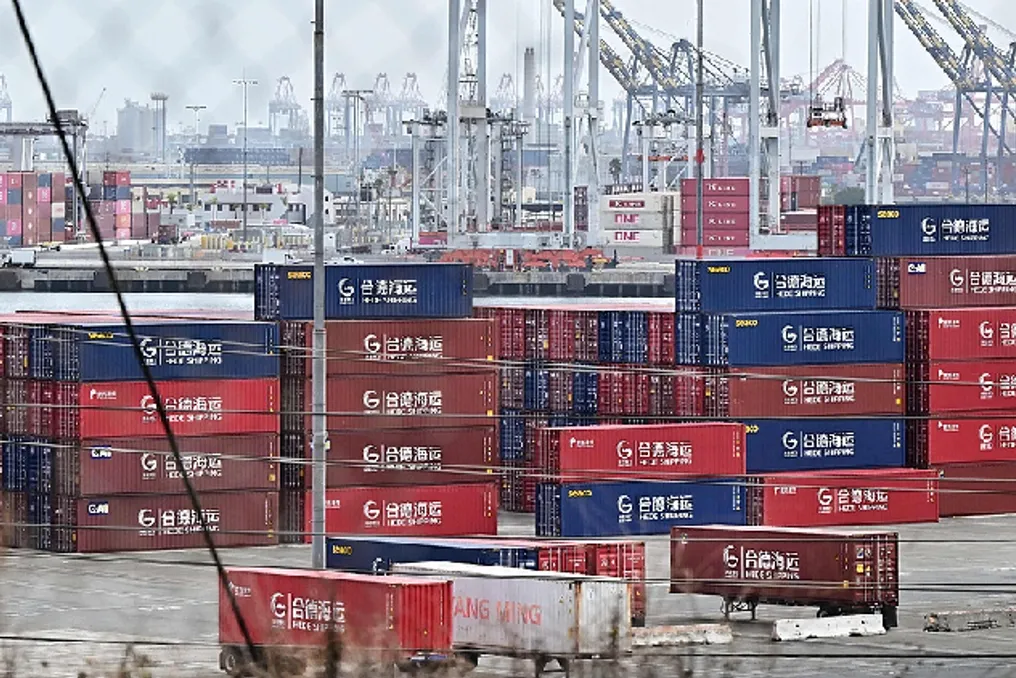
A recent round of consultations on economic and trade issues between China and the United States concluded in New York, USA. The parties held frank, in-depth, and constructive discussions on mutually important economic and trade issues. During these negotiations, the first dialogue on artificial intelligence took place within the framework of bilateral economic and trade consultations.
During a meeting with U.S. President Donald Trump at the White House on Thursday, Chinese President Xi Jinping stated that the economic and trade teams had reached a new joint agreement. He characterized this as good news for the industries and populations of both countries, as well as for the global economy.
Furthermore, both presidents acknowledged the successes achieved by their respective economic and trade teams. These include the establishment and development of mechanisms such as a trade council, an agreement on mutual tariff reduction of $30 billion, and the continuation of results achieved at the Kuala Lumpur consultations, according to a statement from the Chinese Ministry of Foreign Affairs after Xi's state visit to the US on Friday.
China and the US intend to strengthen the foundation of stability for the world's most important bilateral partnership to benefit all parties. As the two largest economies in the world, China and the United States possess enormous complementary capabilities in resources, industries, markets, and technologies, despite differences in goals and development models, as well as divergences in views on many issues, which generates a strong desire for cooperation between businesses of both nations.
However, the pace of corporate interaction has been seriously slowed down by various factors, including tariffs, restrictions on market and investment access, port fees, negative rhetoric regarding China, and even discriminatory actions. These obstacles have caused companies that would otherwise be interested in leveraging their strengths for mutually beneficial partnerships to hesitate, creating significant pressure on achieving the economic goals of both countries.
Against this backdrop, multiple consultations between the economic and trade teams of both countries have provided a channel for resolving disagreements through dialogue. The shift from attempts to solve problems unilaterally to peaceful discussion demonstrates that China and the US are becoming more pragmatic. When signs of relationship easing appeared, the pace of mutually beneficial cooperation between companies accelerated for both American multinational corporations with long roots in China and fast-growing AI firms.
Trade data illustrates how these changes are transforming into commercial activity. According to data from China Customs, China's imports from the US in May of this year amounted to 89.22 billion yuan (approximately $13 billion); by August, this figure rose to 90.30 billion yuan, an increase of 1.2% over the three-month period. Simultaneously, China's exports to the US increased from 266.59 billion yuan to 287.10 billion yuan, representing a growth of 7.7%.
These trade flows also underscore the importance of the two markets to each other. It is worth noting that before the US introduced various restrictive measures against China, China was for a long time the largest trading partner of the United States, just as the US was for a long time the largest trading partner of China.
The structure of trade also reveals much information. Regarding imports, the largest categories of goods imported by China from the US remain electrical equipment, machinery, and mechanical instruments. In August, the value of imports in these categories reached 33.62 billion yuan and 11.00 billion yuan, respectively, an increase of 9.4% and 13.8% compared to May figures. Imports of mineral fuel, mineral oil, and their refined products reached 7.71 billion yuan in August, a 20.9% increase from May, while imports of goods such as aircraft and optical equipment also exceeded 1 billion yuan. The largest growth was demonstrated by furs, artificial fur, and products made from them, which sharply increased by 9300%. The import of flour products, barley, starch, etc., ranked second with a growth rate of 310%.
The goods imported by China from the US have provided a wide selection for the Chinese market and industry, and have also created more opportunities for the industrial development of US enterprises. Sectors related to the oil industry, which were actively promoted by the Trump administration, have also gained greater access to the Chinese market.
A similar picture is observed on the export side. The largest categories of Chinese goods exported to the US in August were electrical equipment and mechanical instruments, with export values of 60.01 billion yuan and 48.21 billion yuan, respectively. They were followed by categories necessary for American households: knitted or woven clothing, toys, furniture, as well as plastics and plastic products. Exports to the US in each of these categories exceeded 10 billion yuan, amounting to 18.27 billion, 17.38 billion, 16.20 billion, and 13.39 billion yuan, respectively.
These necessities have become vital for American households, and China is undoubtedly one of the best sources of supply. It is evident that China and the United States are engaged in extensive intra-industry cooperation—not only in electromechanical products but also through complementary partnerships covering the entire value chain: from raw materials and intermediate goods to final consumer products. It is difficult to single out any specific product where one side has an absolute advantage and dominates trade unilaterally.
This highlights the colossal scale of both economies, their diverse internal stages of regional development, and the multifaceted division of labor; it also reflects the willingness of businesses to strengthen cooperation to enhance their competitiveness and supply chain resilience. Speaking at the White House, Xi also emphasized that cooperation between China and the United States should continue to expand the range of areas of cooperation while simultaneously reducing the list of issues.
With the approach of the holiday shopping seasons for Christmas, New Year's, and Chinese New Year, greater stability in economic and trade relations between China and the US may provide businesses and consumers on both sides with more choice and access to more competitive goods.