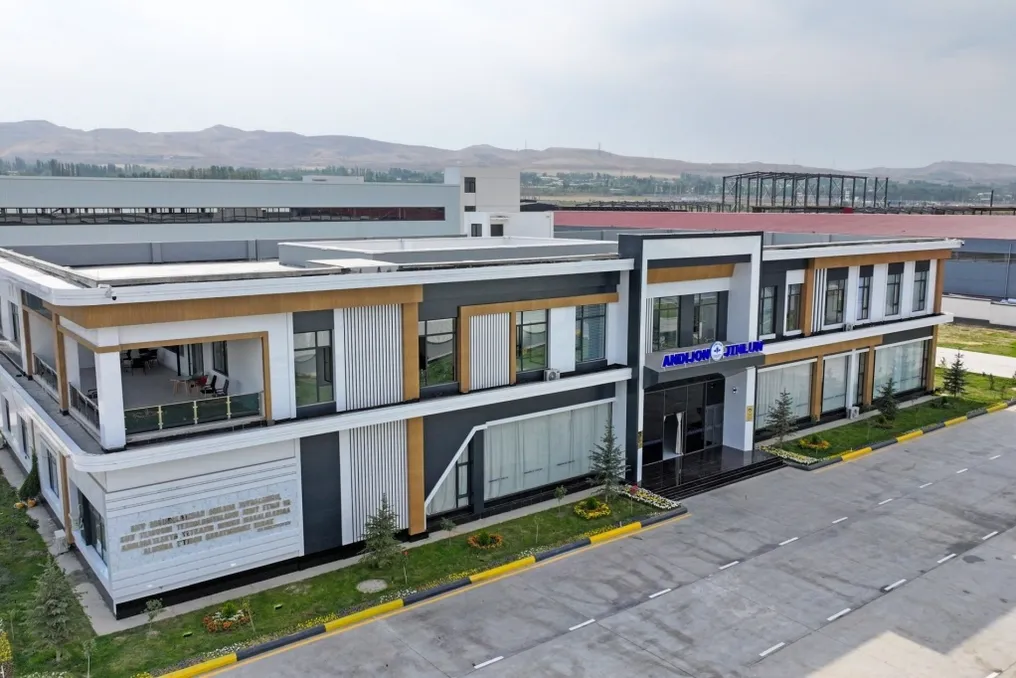
The international company Delta Y, specializing in artificial intelligence and data processing, has created a specialized platform for the regional Khokimiyat of Andijan. This system is designed to help officials prepare reports and plan decisions more effectively.
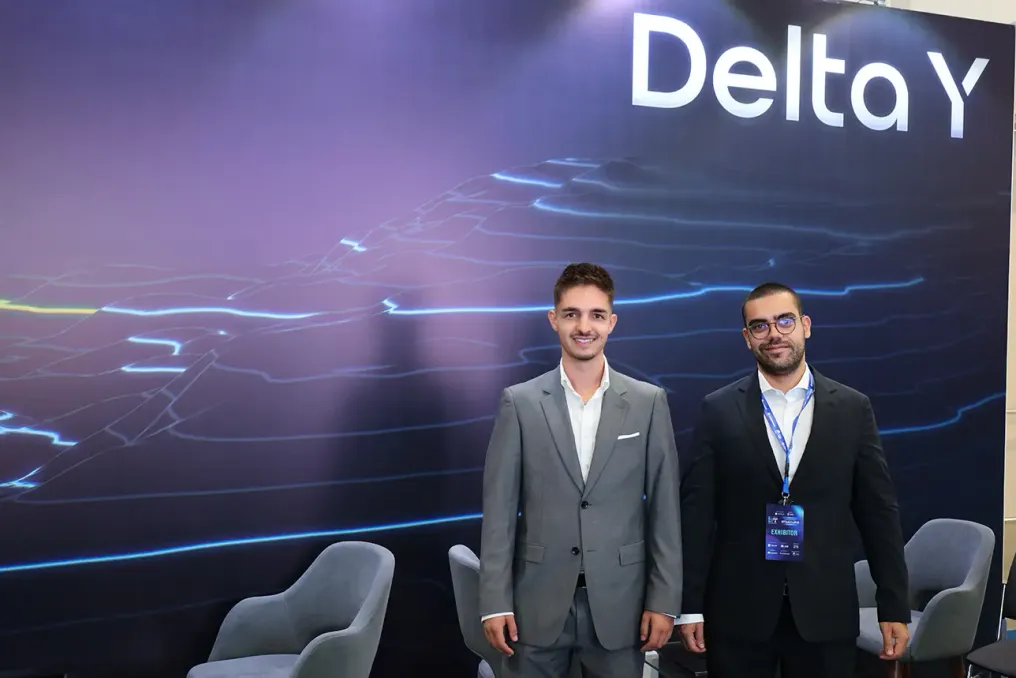
Co-founder of Delta Y, Thiago Neto, and Head of Institutional Relations, Martin Oliveira, discussed this project during an interview with UzDaily.uz at the ICT Week Uzbekistan 2026 event. This platform is the company's first pilot project in Uzbekistan.
The public version of the platform aggregates information from national and regional statistical bodies, the Central Bank of Uzbekistan, and government portals, consolidating all data into a single interface. According to company representatives, AI advisors using this platform can prepare reports and study recommendations. The system models are capable of calculating, for example, optimal locations for opening new hospitals so that the maximum number of residents can reach them on foot within 15 minutes.
Delta Y positions itself as a company that solves the most complex data challenges in cities and countries. Martin Oliveira noted that the team consists of private sector specialists, including fintech unicorns, cybersecurity firms, and major consulting firms. They observed that the analytical depth of the world's largest corporations often exceeds the capabilities of state institutions.
Oliveira emphasized that they have interacted with policymakers in Asia, Europe, and America and found that governmental and regional structures often fail to grasp the full scope of the data they already possess. The company's goal is to become a data partner for economies and societies striving to make the best decisions based on all available information.
He explained that the problem is similar everywhere: millions of new data points are recorded daily but stored across different departments, institutions, and formats. This makes it difficult for governments to form a unified picture because it requires significant technical effort, and the ecosystems are too complex. Consequently, suboptimal decisions are made, often reacting to public opinion, and actions are corrective rather than preventive, as decision-makers see an incomplete picture.
Delta Y's solution is to create a unified overview of the city's economy, demographics, and society, along with their interactions, supplemented by appropriate tools. In Oliveira's view, the administration can use these tools to model consequences, such as how tax incentives will affect employment, resident well-being, or household expenses.
Delta Y co-founder Thiago Neto stated that every new project goes through three sequential stages. The first stage is mapping existing data. At this stage, the company can suggest new, unused sources of information or point out quick wins.
The second step is integrating disparate sources and standardizing data. Neto considers this step a prerequisite for building any analytical system. The third stage is the analytics level itself: this includes a simulation environment for policy, a statistical AI analyst, Geographic Information System (GIS) analytics, real-time dashboards, and other tools tailored to the specific task.
Martin Oliveira described two main scenarios being explored by the Andijan administration. The first is report preparation. Administration staff and the IT Park regularly prepare reports concerning trends in education, graduate numbers, or preschool attendance.
Oliveira explained that a user can request the necessary report from the AI. The value lies in the underlying data: the models are adapted to the region's specific data, ensuring accurate figures and dynamic visualization. The finished report includes text, charts, conclusions, next steps, and suggestions, and it can be edited and exported.
The second scenario utilizes mathematical optimization. For instance, if there is a healthcare issue in the city and the administration wants to open two new clinics, they can ask the AI where to locate them so that the largest proportion of the population lives within a 15-minute walk of the clinic. The system then runs the optimization model and calculates the precise coordinates.
According to Oliveira, the primary users at present are AI advisors to the Khokim. Delta Y is collaborating with the regional Khokimiyat, Khokim advisor Ziyodulla Samatov, and the Andijan IT Park director to form a unified understanding of the region and its future potential.
The platform also has a section intended for businesses. It displays the number of registered companies over the last year and their distribution by industry. Users can ask the AI questions about which sectors grew fastest and how new jobs relate to the region's employment levels, unemployment, and demographic structure.
The company has also developed a platform tailored to investor needs. Oliveira noted that an investor choosing a country or region for investment primarily values transparency and openness. He believes that the economies Delta Y works with can gain a competitive advantage through this.
Thiago Neto mentioned that Delta Y has previously performed similar work. For a city outside Uzbekistan, the company helped create an investment case that attracted approximately $200 million. In the case of Uzbekistan, he said the growth trajectory is already clear: economic growth, population increase, and the presence of outstanding talent.
Delta Y separates public data presented in the public version of the platform from private data accessible only to the regional administration after authorization. Neto stated that they deploy the system on the client's own infrastructure, guaranteeing that the data will never leave the location important to the client. He added that when working with any country, the data remains there: storage, computation, and even AI models can be hosted locally according to the client's preference.
Responding to questions about Uzbekistan's data localization requirements, Neto confirmed the company's compliance with these requirements. Oliveira added that Delta Y consulted with a local law firm regarding the regulatory framework.
Martin Oliveira stressed that accuracy is one of the company's main concerns. He explained that language models are stochastic, not deterministic, so their task is to maximize objectivity and minimize subjectivity. Every answer is accompanied by a link to the source, such as a specific dataset from the National Statistical Committee, allowing users to verify the information against the original source.
Thiago Neto reported that the company dedicates significant time to testing and verifying data quality. Delta Y often invites users to ask the same question on both its platform and general chatbots like ChatGPT or Claude. According to him, people are often surprised by the differences, and chatbots sometimes refuse to answer due to insufficient information.
Oliveira shared that the company has been in contact with partners in Uzbekistan since the beginning of the current year. He admitted that, as a young company, they are confident in their technical capabilities but humble enough to understand that working at a governmental level requires a high degree of trust. Therefore, their initial engagement in a new country usually focuses on solving a specific problem within a limited timeframe, allowing Delta Y to establish itself as a reliable partner.
Delta Y is also discussing cooperation with other regions, ministries, and private enterprises. Representatives of Khokims and AI advisors from several Khokimiyats visited the company's booth at ICT Week.
Neto concluded: