Ford applies Japanese philosophy Gemba in the development of the new Mustang
Read more
AutoPapo
autopapo.com.br

Ford applies Japanese philosophy Gemba in the development of the new Mustang

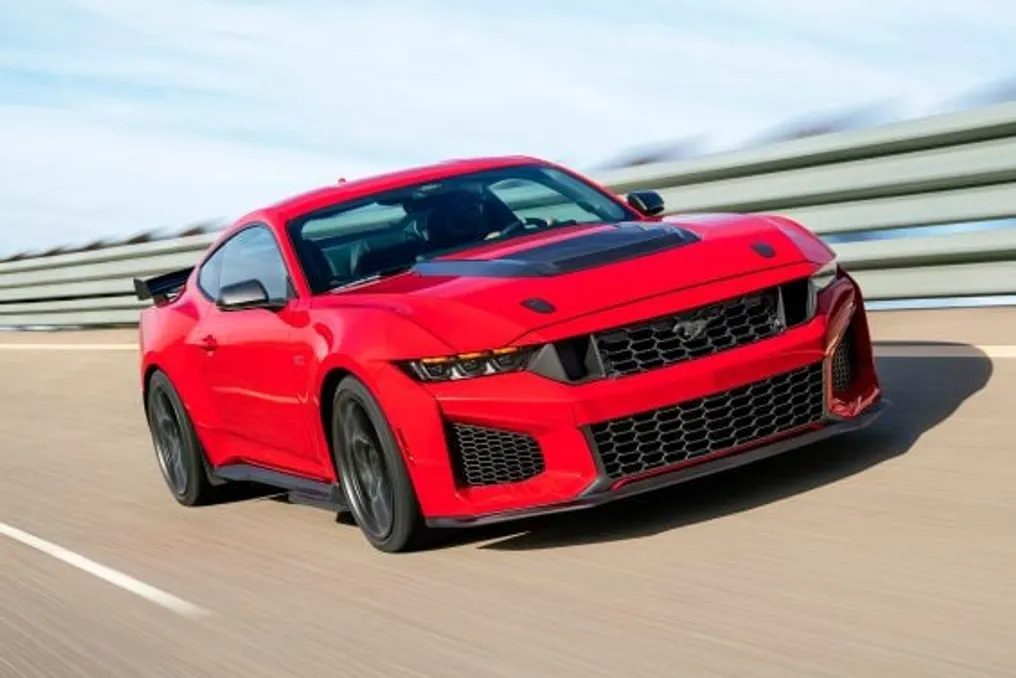
Todd Willing, Ford's head of design, traveled approximately 5,150 km in a Mustang Dark Horse SC prototype, driving from Michigan to California, to experience the vehicle from a customer's perspective. This journey, detailed by him on the company's official blog on Thursday (24), exemplifies the application of the Gemba concept, a Japanese management methodology promoted by Ford CEO Jim Farley.

The term Gemba, which is linked to the Toyota production system, means the place where activities actually occur and, in practice, translates to 'go and see.' The premise is that managers should temporarily abandon reports, digital simulations, and market studies to directly observe the real use of a product.

Willing's final destination was the Laguna Seca track, where he participated in races during Monterey Car Week in August. During the trip, the executive crossed the American Midwest, ascended Independence Pass, a mountain route in Colorado exceeding 3,600 meters in altitude, and passed through locations such as Moab, Death Valley, and Yosemite.

According to his account, the road experience revealed discomforts that would rarely arise in a corporate meeting. Willing mentioned being repeatedly bothered by being behind large vehicles that obstructed the view, and began paying closer attention to the details of the interior finish and the fit of each part. He noted, for example, that the seat material ceased to be just an item reviewed in designs and began to affect his comfort throughout the trip. Upon returning to Michigan, he compiled a list of points to be evaluated.

This sensory perception, such as the fatigue caused by a rigid seat or the sun's reflection in the cabin, is something no computational model can replicate.

The trip also included visits to brand dealerships: two in Colorado and one in Las Vegas, Nevada. One of these stops occurred without prior planning. Willing reported that simply informing them about the presence of the Dark Horse SC caused salespeople, mechanics, and employees from other departments to gather around the car.

The main conclusion drawn was that the enthusiast consumer is not buying mere technical specifications, but rather a certain attitude, an image, and a connection with Ford Racing, which is Ford's competition division. The tested model is the most powerful version of the Mustang below the GTD, equipped with a 5.2L V8 engine with a supercharger, generating 806 hp and 91.3 kgfm, coupled with a seven-speed dual-clutch transmission. At gas stations, curious people approached to ask questions. Willing arrived at Laguna Seca armed with hundreds of photographs, time-lapse videos of the dashboard, and voice recordings.

Finally, the executive advises other employees to adopt Gemba in their routines, without the need to travel across the entire country. He suggests that it is enough to step out of the usual routine to visit a dealership, talk with customers, or observe how people use the company's products.

Similar stories

US cancels tariffs on specialized medicines imported from India
Read more
timesofindia.indiatimes.com

US cancels tariffs on specialized medicines imported from India

The United States has decided not to impose ad valorem duties on certain specialized medicinal products and related ingredients intended for treating rare medical conditions, which are imported from India and 19 other countries.

The U.S. Department of Commerce published the list of these countries in the Federal Register as part of preparations for introducing a 100% tariff on some patented pharmaceutical imports and corresponding ingredients, which is set to take effect on September 29.

Previously, on April 2, President Trump issued a proclamation establishing tariffs on the import of patented pharmaceuticals, biological agents, and related ingredients into the US as part of measures aimed at stimulating domestic production.

Products falling under the zero percent rate include medicines for treating rare diseases, fertility treatments, cell therapies, gene therapies, antibody-drug conjugates, as well as veterinary pharmaceuticals. The components of these medicines are also exempt from zero percent tariffs.

According to the Department of Commerce notice, generic pharmaceutical products and their components are not subject to pharmaceutical tariffs under Section 232.

Leapmotor B10 REEV launched with up to 900 km range and price lower than the BYD Song Pro
Read more
autopapo.com.br

Leapmotor B10 REEV launched with up to 900 km range and price lower than the BYD Song Pro

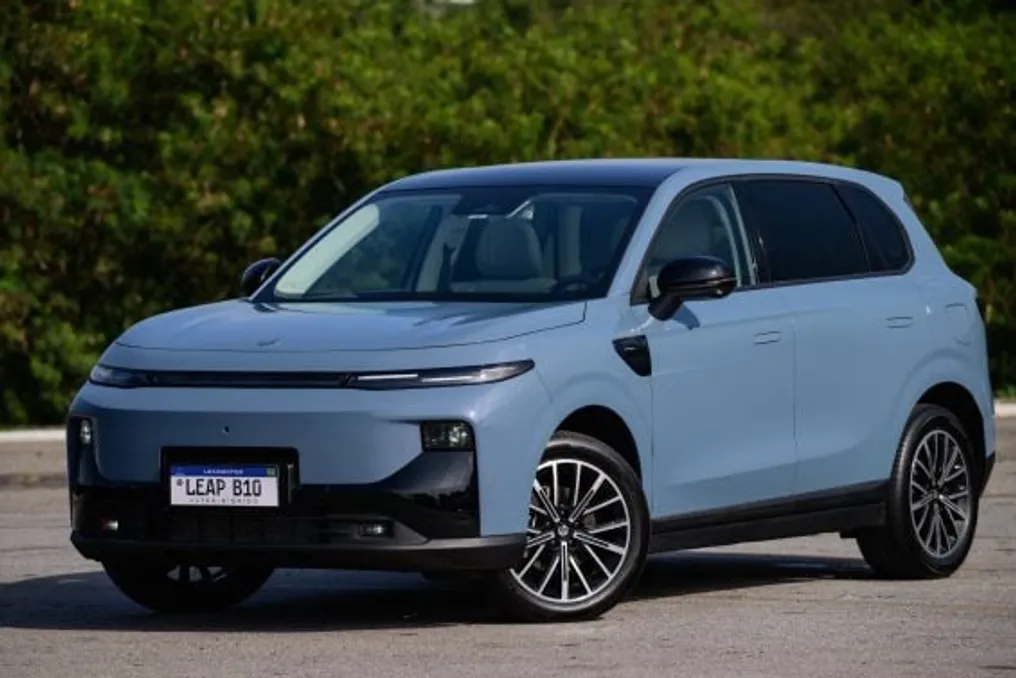
The Leapmotor B10 has received an REEV version, following the example of its higher model. In addition to the electric powertrain assisted by combustion, this mid-size SUV has been equipped with new features to increase its competitiveness in the market.

The launch price of the new Leapmotor B10 REEV was set at R$ 179,990, with no defined deadline for this offer. This price makes it R$ 3,000 more accessible than the purely electric version, at least at this initial stage.

The mechanical system used in the B10 REEV is identical to that used in the C10 REEV. The electric motor located on the rear axle generates 218 hp and 24.5 kgfm, allowing the mid-size SUV to reach 100 km/h in 7.8 seconds. At the front, there is a 1.5 naturally aspirated engine operating on the Atkinson cycle, whose function is only to generate energy, without driving the wheels.

The battery pack for this model is smaller than that of the electric version, containing 18.8 kWh and offering 68 km of range according to the INMETRO cycle. However, Leapmotor informs that the B10 REEV can travel up to 900 km in the European WLTP cycle, using the combustion engine to recharge the battery, which facilitates long trips without the need to plan charging stops.

A notable difference of the Leapmotor B10 in its category is the rear-wheel drive, which provides better acceleration performance and reduces the turning radius to 10.5 meters, optimizing urban maneuvers.

To visually distinguish the REEV model from the electric version, specific details have been implemented: the section connecting the taillights now illuminates, and the car is available in sky blue.

The main innovations are concentrated in the cabin, where the front seats now have electric adjustment and ventilation. Trim options include black or light gray, and the trunk is equipped with electric opening. Regarding safety, the list of items remains unchanged, maintaining Level 2 ADAS, seven airbags, and a 360° camera. However, some disadvantages persist, such as the absence of a conventional key fob and the dependence on the multimedia center to adjust the rearview mirrors or open the panoramic sunroof.

The Leapmotor B10 REEV can already be ordered through the authorized network, whose expansion is planned to reach 80 points by 2027. Additionally, both the vehicle and the rest of the line now come with a 6-year warranty for the automobile and an 8-year warranty for the electric mechanical system.

Amprius receives $75 million grant to produce high-energy batteries for drones
Read more
ventureburn.com

Amprius receives $75 million grant to produce high-energy batteries for drones

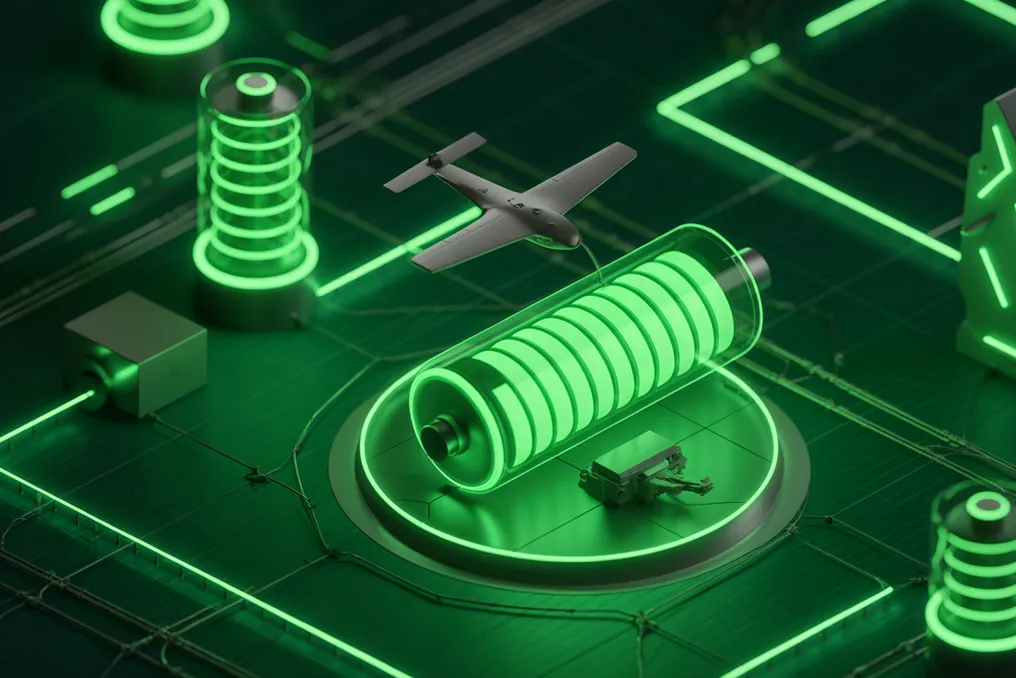
Amprius Technologies has secured a grant of up to $75 million from the U.S. Department of Defense. This funding is intended to support the domestic production of high-density energy batteries required for unmanned aerial vehicles.

The funds are part of the Industrial Base Analysis and Sustainment program. This program supports manufacturing capabilities deemed critical for national defense. Amprius plans to use the grant to modernize its existing production line in the United States.

This line is currently used to manufacture batteries for a major South Korean automotive manufacturer. The project involves converting this facility to create high-energy density cells that will be used in unmanned systems of groups 1, 2, and 3. The conversion itself is expected to cost approximately $100 million, with the company providing additional in-kind investments.

The modernized production line is scheduled to begin operations in early 2028. Following completion, it is projected to produce 12 million Amprius cells annually. These batteries are designed to meet the domestic supply requirements set by the National Defense Authorization Act.

This will enable Amprius to supply compliant batch cells in large volumes and expand the company's existing contract manufacturing partnerships. Amprius currently operates an extensive manufacturing network spanning the United States, South Korea, and China.

The new production capacity aims to meet the growing demand for advanced battery systems and strengthen the company's ability to deliver products to key clients at scale. Amprius specializes in lithium-ion battery technology with silicon anodes, whose batteries provide higher energy density compared to traditional graphite-based cells.

The received grant continues Amprius's recent expansion into the drone aviation market. The company previously introduced its SiCore500 high-energy density cells for unmanned aviation back in September. Furthermore, Amprius already has collaborations with the Defense Innovation Unit.

Previously, the company increased its agreement for advanced drone batteries compliant with NDAA to $18.1 million. This latest project adds another production route for these battery systems and provides additional capacity for future aerospace and defense needs.

CEO Tom Stephen stated that the goal of the grant is to establish a primary source of domestic battery production. He emphasized the synergy between Amprius's technologies and the capabilities of its manufacturing partner. The company utilizes a contract manufacturing strategy to ensure scalable product output, allowing it to increase capacity without building all facilities independently. The company's headquarters in Fremont includes a research laboratory and a pilot production workshop where research on silicon anodes and high-performance battery cells continues.

The new production line will enhance Amprius's capability to supply advanced batteries domestically and support large-scale manufacturing requirements. The project is structured as a fixed-price government agreement with phased payments. A portion of the funds has already been allocated for project activities. The main agreement runs from September 23, 2026, to September 22, 2028, with payments tied to achieved project milestones. It also includes provisions regarding intellectual property rights and data, as well as cybersecurity requirements and restrictions on foreign participation.

Amprius expects the modernized line to become a significant source of domestic production. The company will continue to utilize its international manufacturing network alongside the new US capacity. This project represents another crucial step toward significantly expanding advanced battery production and positions Amprius to support unmanned systems, ensuring compliant domestic supply for these increasingly demanding applications.

Popular