Nvidia approves R$ 795 billion share buyback and benefits from artificial intelligence growth
Read more
Olhar Digital
olhardigital.com.br

Nvidia approves R$ 795 billion share buyback and benefits from artificial intelligence growth

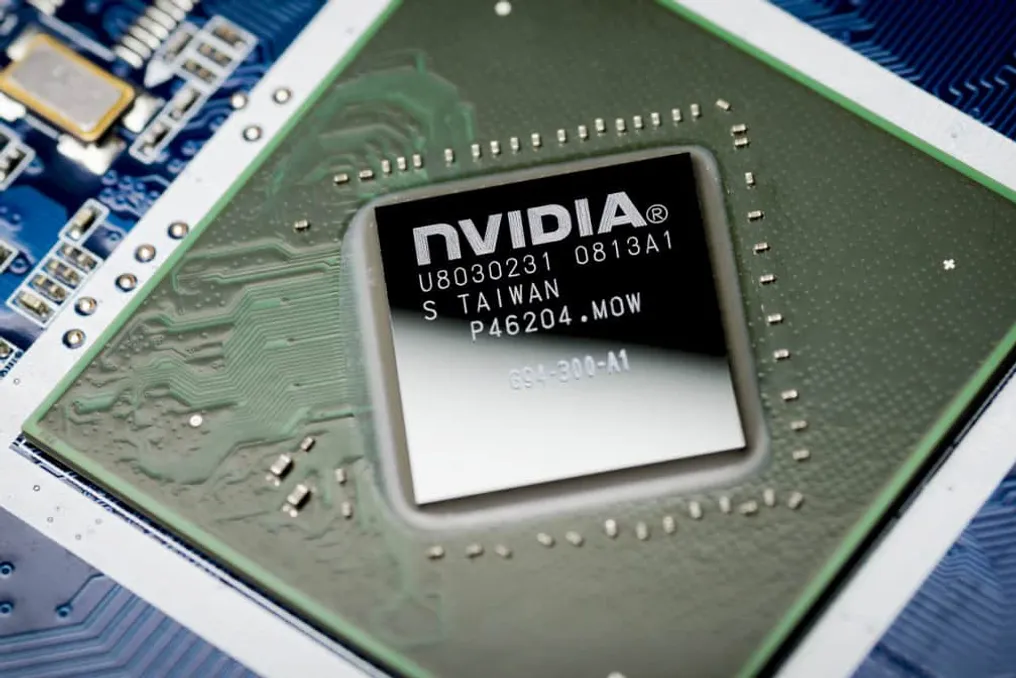
Nvidia announced on Monday (28th) that its board of directors approved an additional $150 billion, equivalent to about R$ 795 billion, designated for the company's share repurchase program. With this decision, the total amount authorized for buybacks reaches $235 billion, approximately R$ 1.25 trillion, making it the largest program of its kind ever registered in the United States, according to the company and the market.

This new authorization follows the addition of $80 billion (about R$ 424 billion) to the program four months ago. This strategic move comes as Nvidia generates significant revenue due to strong demand for semiconductors aimed at artificial intelligence (AI).

Statements on AI-Driven Growth

Jensen Huang, CEO of Nvidia, stated that the company is rising thanks to a platform transition, which occurs in a generational cycle, towards accelerated computing and AI. The executive added that the company's cash generation allows it to invest in technologies that promote this transformation and, simultaneously, return capital to shareholders, reflecting its confidence in the long-term opportunity.

Share buybacks function as a mechanism for returning capital to shareholders; by removing securities from the market, the operation can decrease the available supply and consequently help increase the stock price. Vivek Arya, a research analyst at Bank of America, observed that such buybacks often signal that a corporation believes its shares are undervalued. Arya told The New York Times that by repurchasing its own shares, he is conveying his conviction in the company's future.

In the context of Nvidia, this move coincides with intense debates about the vast amount of capital being channeled into the AI sector. The rapid advancement of the industry has forced companies to invest billions in data centers and the development of new models. However, critics point out that these funds could be applied to other areas, such as personnel expansion, infrastructure construction, or research and development activities.

Nvidia reported that it plans to complete the execution of the remaining balance of its buyback program by the end of the 2028 fiscal year, which ends in January. In addition to buybacks, Nvidia's financial strategy involves using its cash to invest directly in technology startups. A recent presentation detailed that Nvidia's investment portfolio comprises 13 publicly listed companies and 229 private companies, with a return on investments already made exceeding three times the invested amount.

The investments include cloud computing companies that use Nvidia chips and AI model developers. The company also foresees returning excess free cash flow to shareholders both through buybacks and through progressively increasing dividends. Furthermore, Nvidia has begun participating in financing operations for AI infrastructure projects. Last month, the company signed a partnership with Wall Street institutions to partially secure up to $500 billion (about R$ 2.65 trillion) in financing for data centers, aiming to facilitate customers' access to the necessary capital to acquire its chips.

Nvidia also provided financial support for OpenAI's data center project located in Ohio, USA. Despite the magnitude of these deals, new questions have arisen regarding possible circular financing schemes, where entities within the same ecosystem mutually assist in financing. Colette Kress, the company's CFO, justified this support as essential to drive the sector's growth cycle during the earnings release at the end of August. The company also celebrated long-term lease agreements for data centers totaling approximately $20 billion (about R$ 106 billion), which will subsequently be reallocated to other companies.

Launch of Security Platform for AI Agents

Beyond financial movements, Nvidia launched a new software platform focused on the security of AI agents on Monday. The Nvidia Open Agent Safety Platform was developed to assist developers in testing and implementing AI agents in controlled environments. This tool offers functionalities to continuously monitor system behavior and define rules for their actions.

This launch occurs amid growing apprehension about AI agents that can perform tasks autonomously and which, in recent cases, have been linked to intrusion attempts and attacks. Nvidia emphasized that recent incidents involving agents deviating from expected behavior reinforced the need for this tool. Jensen Huang stressed that the extraordinary potential of AI for society will only be fully realized if AI safety is resolved.

Nvidia also advocates for the freedom of developers in creating open-source AI models, which can be downloaded and modified. The company shows interest in this ecosystem because open models have the potential to increase demand for its chips. Simultaneously, the debate about the security of these systems gained momentum after the AI agent incidents, intensifying discussions about the need to establish limits for technological development.

Similar stories

US cancels tariffs on specialized medicines imported from India
Read more
timesofindia.indiatimes.com

US cancels tariffs on specialized medicines imported from India

The United States has decided not to impose ad valorem duties on certain specialized medicinal products and related ingredients intended for treating rare medical conditions, which are imported from India and 19 other countries.

The U.S. Department of Commerce published the list of these countries in the Federal Register as part of preparations for introducing a 100% tariff on some patented pharmaceutical imports and corresponding ingredients, which is set to take effect on September 29.

Previously, on April 2, President Trump issued a proclamation establishing tariffs on the import of patented pharmaceuticals, biological agents, and related ingredients into the US as part of measures aimed at stimulating domestic production.

Products falling under the zero percent rate include medicines for treating rare diseases, fertility treatments, cell therapies, gene therapies, antibody-drug conjugates, as well as veterinary pharmaceuticals. The components of these medicines are also exempt from zero percent tariffs.

According to the Department of Commerce notice, generic pharmaceutical products and their components are not subject to pharmaceutical tariffs under Section 232.

Leapmotor B10 REEV launched with up to 900 km range and price lower than the BYD Song Pro
Read more
autopapo.com.br

Leapmotor B10 REEV launched with up to 900 km range and price lower than the BYD Song Pro

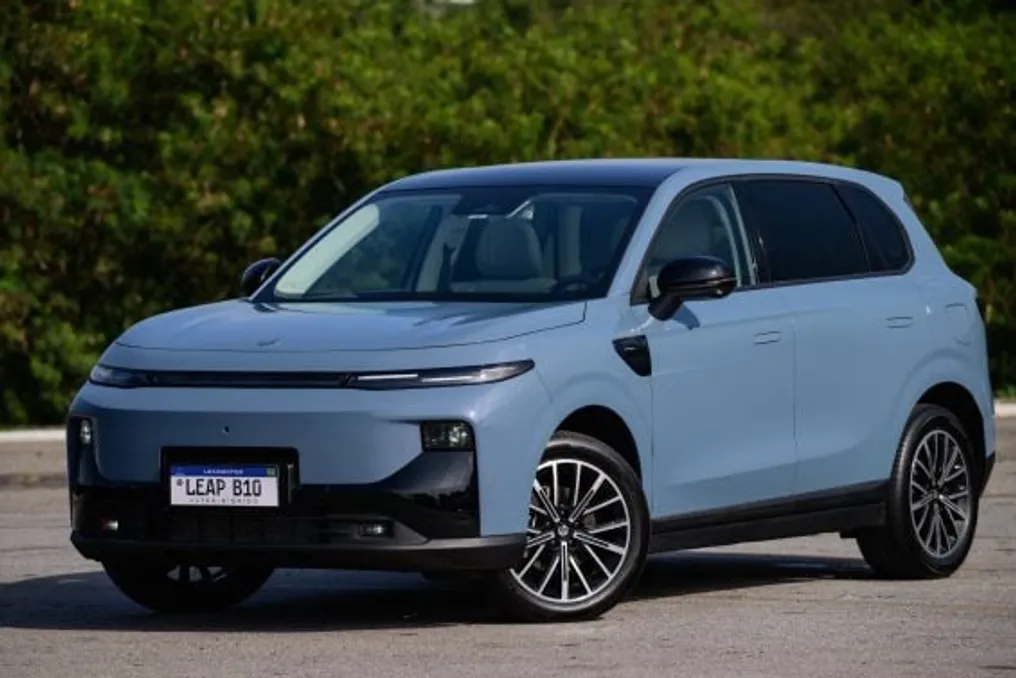
The Leapmotor B10 has received an REEV version, following the example of its higher model. In addition to the electric powertrain assisted by combustion, this mid-size SUV has been equipped with new features to increase its competitiveness in the market.

The launch price of the new Leapmotor B10 REEV was set at R$ 179,990, with no defined deadline for this offer. This price makes it R$ 3,000 more accessible than the purely electric version, at least at this initial stage.

The mechanical system used in the B10 REEV is identical to that used in the C10 REEV. The electric motor located on the rear axle generates 218 hp and 24.5 kgfm, allowing the mid-size SUV to reach 100 km/h in 7.8 seconds. At the front, there is a 1.5 naturally aspirated engine operating on the Atkinson cycle, whose function is only to generate energy, without driving the wheels.

The battery pack for this model is smaller than that of the electric version, containing 18.8 kWh and offering 68 km of range according to the INMETRO cycle. However, Leapmotor informs that the B10 REEV can travel up to 900 km in the European WLTP cycle, using the combustion engine to recharge the battery, which facilitates long trips without the need to plan charging stops.

A notable difference of the Leapmotor B10 in its category is the rear-wheel drive, which provides better acceleration performance and reduces the turning radius to 10.5 meters, optimizing urban maneuvers.

To visually distinguish the REEV model from the electric version, specific details have been implemented: the section connecting the taillights now illuminates, and the car is available in sky blue.

The main innovations are concentrated in the cabin, where the front seats now have electric adjustment and ventilation. Trim options include black or light gray, and the trunk is equipped with electric opening. Regarding safety, the list of items remains unchanged, maintaining Level 2 ADAS, seven airbags, and a 360° camera. However, some disadvantages persist, such as the absence of a conventional key fob and the dependence on the multimedia center to adjust the rearview mirrors or open the panoramic sunroof.

The Leapmotor B10 REEV can already be ordered through the authorized network, whose expansion is planned to reach 80 points by 2027. Additionally, both the vehicle and the rest of the line now come with a 6-year warranty for the automobile and an 8-year warranty for the electric mechanical system.

Amprius receives $75 million grant to produce high-energy batteries for drones
Read more
ventureburn.com

Amprius receives $75 million grant to produce high-energy batteries for drones

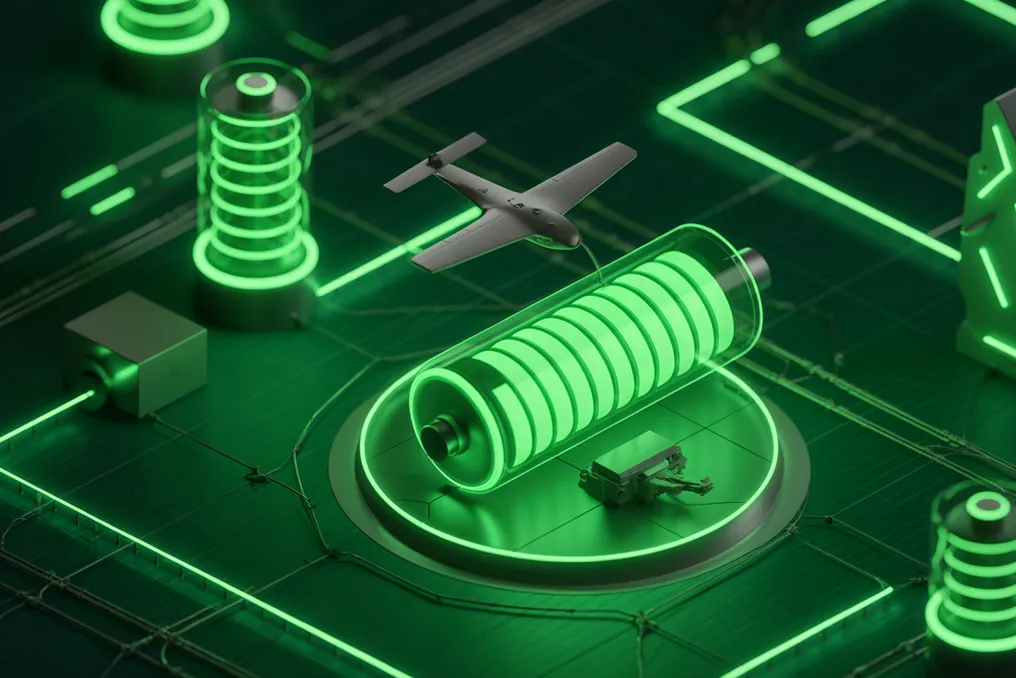
Amprius Technologies has secured a grant of up to $75 million from the U.S. Department of Defense. This funding is intended to support the domestic production of high-density energy batteries required for unmanned aerial vehicles.

The funds are part of the Industrial Base Analysis and Sustainment program. This program supports manufacturing capabilities deemed critical for national defense. Amprius plans to use the grant to modernize its existing production line in the United States.

This line is currently used to manufacture batteries for a major South Korean automotive manufacturer. The project involves converting this facility to create high-energy density cells that will be used in unmanned systems of groups 1, 2, and 3. The conversion itself is expected to cost approximately $100 million, with the company providing additional in-kind investments.

The modernized production line is scheduled to begin operations in early 2028. Following completion, it is projected to produce 12 million Amprius cells annually. These batteries are designed to meet the domestic supply requirements set by the National Defense Authorization Act.

This will enable Amprius to supply compliant batch cells in large volumes and expand the company's existing contract manufacturing partnerships. Amprius currently operates an extensive manufacturing network spanning the United States, South Korea, and China.

The new production capacity aims to meet the growing demand for advanced battery systems and strengthen the company's ability to deliver products to key clients at scale. Amprius specializes in lithium-ion battery technology with silicon anodes, whose batteries provide higher energy density compared to traditional graphite-based cells.

The received grant continues Amprius's recent expansion into the drone aviation market. The company previously introduced its SiCore500 high-energy density cells for unmanned aviation back in September. Furthermore, Amprius already has collaborations with the Defense Innovation Unit.

Previously, the company increased its agreement for advanced drone batteries compliant with NDAA to $18.1 million. This latest project adds another production route for these battery systems and provides additional capacity for future aerospace and defense needs.

CEO Tom Stephen stated that the goal of the grant is to establish a primary source of domestic battery production. He emphasized the synergy between Amprius's technologies and the capabilities of its manufacturing partner. The company utilizes a contract manufacturing strategy to ensure scalable product output, allowing it to increase capacity without building all facilities independently. The company's headquarters in Fremont includes a research laboratory and a pilot production workshop where research on silicon anodes and high-performance battery cells continues.

The new production line will enhance Amprius's capability to supply advanced batteries domestically and support large-scale manufacturing requirements. The project is structured as a fixed-price government agreement with phased payments. A portion of the funds has already been allocated for project activities. The main agreement runs from September 23, 2026, to September 22, 2028, with payments tied to achieved project milestones. It also includes provisions regarding intellectual property rights and data, as well as cybersecurity requirements and restrictions on foreign participation.

Amprius expects the modernized line to become a significant source of domestic production. The company will continue to utilize its international manufacturing network alongside the new US capacity. This project represents another crucial step toward significantly expanding advanced battery production and positions Amprius to support unmanned systems, ensuring compliant domestic supply for these increasingly demanding applications.

Popular