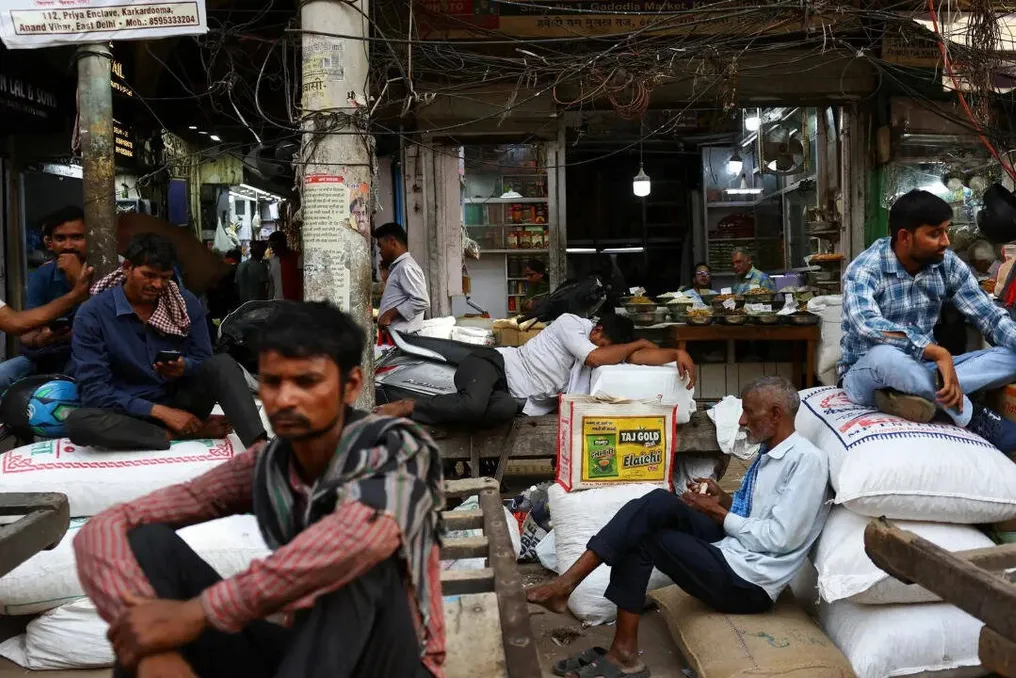
According to a new report conducted in three southern Indian states, nearly 72% of surveyed migrant workers believe that moving for work has improved their standard of living. More than half (about 57%) plan to continue working in the destination state.
Nevertheless, over 86% of workers do not have signed employment contracts, and many face various difficulties, including issues with accessing social services and basic necessities, as well as barriers related to language, communication, and social adaptation.
Decisions about migration are largely driven by livelihood instability and limited employment opportunities. Migrants cited low wages in their places of origin, lack of jobs, and the presence of better opportunities, irregular employment, poverty, and debt burden as the main reasons for moving.
These findings are part of the South Indian Inter-State Migration Survey (SIIMS) 2026, which provides unprecedented data on the changing nature of migration within India and how workers from other states (mainly northern and eastern) live and work in Karnataka, Kerala, and Tamil Nadu.
The study covered 1824 migrants and included sectors such as agriculture, fishing, and maritime labor, as well as daily labor in all three states. Hospitality sectors in Kerala, textile and garment industries in Tamil Nadu, and scrap metal collection in Karnataka were also examined.
More than 92% of migrants came from West Bengal (26.2%), Bihar (21.8%), Assam (17.1%), Odisha (12%), Uttar Pradesh (9.6%), and Jharkhand (5.6%).
The research was carried out by the International Institute for Migration and Development (IIMAD) with support from the United Nations Population Fund (UNFPA) in collaboration with the International Organization for Migration (IOM).
It was found that over 77% of surveyed workers were hired through informal channels, about 58% receive payment in cash, with an average monthly wage of 17640 rupees and an average workday duration of 9.87 hours. The report also highlights gender disparity: women earn approximately 3313 rupees less per month than men.
The data shows that only slightly over 19% of migrants can easily access benefits when moving between states; 35% can do so partially, and about 45% can do so with difficulty.
Furthermore, it was established that over 73% face problems obtaining social benefits, and 69% face problems accessing healthcare.
The survey found that although 88.2% of migrants are included in formal financial services, the exclusion rate was higher in Karnataka (26.8%) and among scrap metal collectors (31.3%).
As recommendations, the study suggests developing a 'One Nation—One Food Card' system so that social benefits follow the worker, creating multilingual helpdesks and hotlines, strengthening labor inspections, and improving inter-state coordination.
Andrea M Wainar, UNFPA representative in India and Country Director in Bhutan, noted: 'Highlighting critical gaps in the portability of social guarantees, access to healthcare, and workplace protection, this study provides a clear roadmap for stakeholders to turn data into targeted action.'