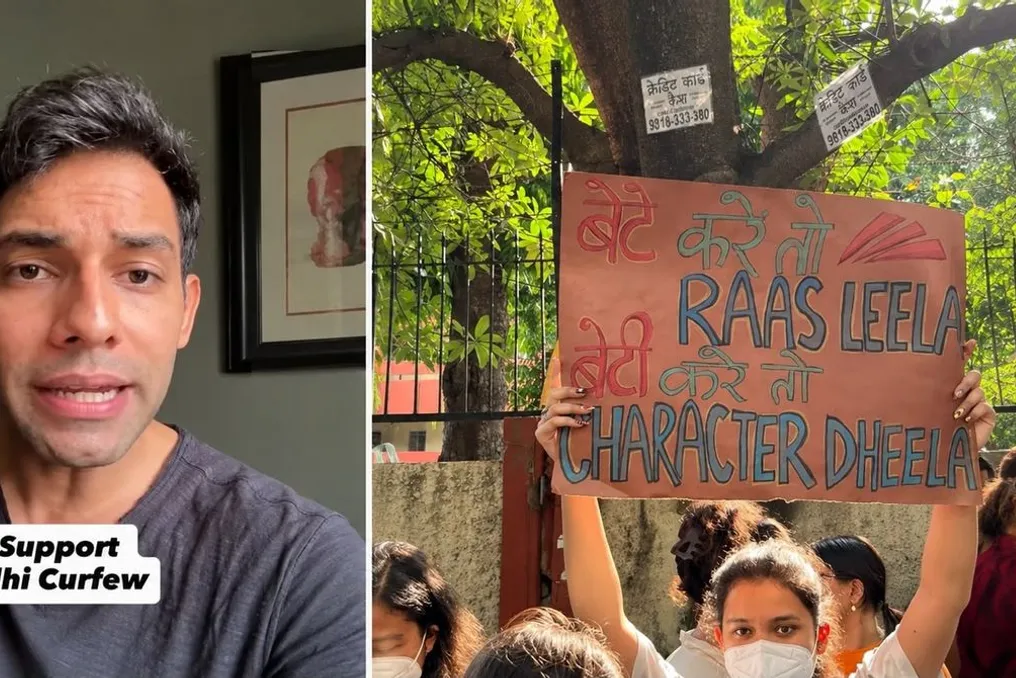
Discussions about women's safety in India encompass a wide range of measures, from proposals for imposing curfews on men to calls for deep systemic reforms. These debates intensified following recent incidents, such as the attack on a girl near the Kalkaji temple in Delhi.
In September 2026, the Supreme Court took note of several cases, including the Kalkaji incident and an alleged assault on a minor in a moving sleeper bus. Judges J.B. Pardival and K. Vinod Chandra noted that these cases raise serious questions regarding law enforcement and recalled the Nirbhaya case of 2012.
During the investigation of the September 21 incident, three men posing as police officers were accused of sexually assaulting a 17-year-old girl in Aastha Kunj park in southeast Delhi. The police arrested all three accused on September 22, and the case was registered under the Bharatiya Nyaya Sanhita and the POCSO Act.
The recent case is not isolated; ThePrint reported at least 13 cases of rape and sexual violence in the Delhi-NCR region in the first three weeks of September alone. These crimes occurred in various locations—homes, shops, hotels, and neighborhoods—and perpetrators ranged from relatives and neighbors to strangers.
What the numbers say before the arguments begin
According to the National Crime Records Bureau, approximately 80 cases of rape are reported daily in India. In 2024, 29,536 cases of rape were registered out of a total of 441,534 crimes against women. The crime rate in Delhi is roughly double the national average, where 130.7 crimes per hundred thousand women were recorded, compared to the national figure of 64.6.
According to NCRB data for 2024, in 96.8% of rape cases, the victim knew the perpetrator, including family members, friends, neighbors, employers, and partners. Cases involving strangers, like the Kalkaji case, are exceptions.
The NARI 2025 survey, conducted among 12,770 women in 31 cities and published by the National Commission for Women, showed that a quarter of urban women do not feel safe, with Delhi being among the least safe cities. Furthermore, two-thirds of incidents never reach the police station.
For every conviction, nearly three acquittals
In 2024, cases of crimes against women resulted in 45,832 convictions and 123,340 acquittals.
Public discussions on the causes of violence are divided into several main areas:
"Women should change"
One of the loudest and oldest reactions online claims that women can prevent violence by changing their appearance, manner of speech, and movements. In a video circulated by edgenewsin, a woman argued that men react to women's behavior and clothing, and that a boy will not grab a woman's hand if she does not speak to him first. Another commentator, who shared a video via soonali_singh, pointed to the interviewer's bare arm and compared it to her sleeve, claiming that showing skin distracts men.
Conversely, in a video from jist.news, a woman from the beginning of the article blames clothing for the rape and then blames parents when asked about children.
"Keep women indoors after dark"
The initial state reaction followed a similar logic but was more restrictive. Two days after the attack, the Delhi Development Authority (DDA) announced that entry into parks with multiple gates would only be permitted through specific gates after sunset. New signs were installed recommending staying in well-lit areas. The DDA also ordered an increase in CCTV cameras, lighting, security personnel, and night patrols, as well as conducting a week-long audit of park safety. The state governor ordered a similar audit of all Delhi parks.
Residents of welfare associations near Aastha Kunj pointed to poor lighting, broken fences, and weak security in the 142-acre park. While these issues are being addressed, critics argue that restricting entry and advising on routes places the burden on victims.
"Keep men indoors instead"
At the opposite end of the spectrum, some people changed their argument, proposing the introduction of a curfew for men and boys if it helps women. This idea has history: in 2017, then Minister for Women and Children Maneka Gandhi, defending early curfews in women's hostels, suggested applying the same timings to boys. In 2022, a Kerala High Court judge expressed similar views.
"Fix the city and the system"
On September 23, students from Delhi colleges, including Lady Shri Ram College, Miranda House, Gargi College, and Kamala Nehru College, marched near the LSR campus. Their demands were clear: improved lighting, functioning CCTV cameras, reliable police, and safe routes to and from studies. One content creator, mainirmalhoon, supported the students, arguing that safety should not mean surveillance, monitoring, locking up in parks, or dictating clothing and return times. He insisted on safer streets, better public transport, and decisive action against harassment.
"We stand with them"
Not all responses are arguments; some are simply acts of solidarity. Many messages express support for the protesters, reminding them that they are not alone, while part of the discussion focuses on what women should or should not do.
What conversations can do and where they stop
Public discourse matters. The anger following the Nirbhaya case in 2012 prompted India to revise its rape laws over several months, leading to the replacement of the Indian Penal Code with the Bharatiya Nyaya Sanhita. However, laws and hashtags have failed to bridge the gap between the commission of a crime and the delivery of justice, as two-thirds of assaults remain unreported.
Conversation can change people's minds, but it cannot single-handedly fix a streetlamp, retrain a police station, or change a 14-year-old boy's perception of respect at home. This work requires more time; it is less viral, but it is already underway.
The people already doing the work
The Better India highlights examples of people turning this conversation into concrete action. For instance, artist Indu Antony in Bengaluru achieved street lighting repairs after an incident by working with Anganwadi women to map attack locations and replace broken lamps. She also opened the public space Namma Katte. Another example is the Safetipin app, created by Kalpana Vishwanath, which rates streets based on lighting, sidewalks, and transport accessibility, helping users see safer routes.
Furthermore, The Better India, in collaboration with the Equal Community Foundation, developed the guide 'Raising Boys Right' for parents and teachers on raising consent, empathy, and respect. A lawyer from Chennai, Kirthi Jayakumar, created the Saahas app, which catalogs verified organizations providing medical and legal aid to victims.
The conversation will continue
Students who participated in the Delhi march demanded not another debate about sleeves or curfews, but working lights, functional buses, responsive police, and the freedom to go out after dark without needing explanations. They demand not protection, but a city that does not need protection in itself.