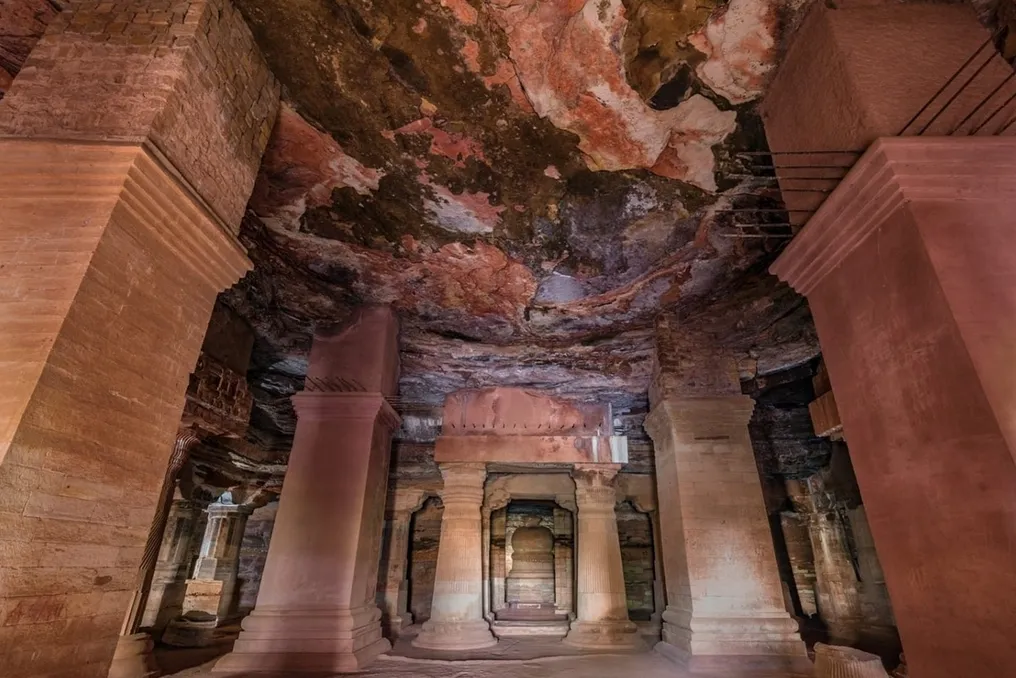
The rich historical and cultural heritage of the state of Madhya Pradesh has received further international recognition: four historical sites in the region have been added to the UNESCO Tentative List. These sites include the Bagh Caves frescoes in Dhar, the Ginnaurgarh Fort in Sehore, the Batshewar-Padavali-Kakramatha temple complex in Murai, and the Udaigiri Caves in Vidisha.
According to official UNESCO data, these four locations were submitted by India to the Tentative List on July 8, 2026. Currently, India has 78 sites registered on the Tentative List. It is important to note that inclusion in the Tentative List does not automatically mean entry into the UNESCO World Heritage List; it is merely a significant initial step toward potential inclusion in this list.
Each of these four sites in Madhya Pradesh possesses unique characteristics. Some demonstrate evidence of ancient art and religious traditions spanning thousands of years, while others represent medieval temple architecture and the architectural heritage of the Gond people's rule.
Bagh Caves: The history of Buddhist art captured in stone
The Bagh Caves, located along the Bagh River in the Vindhya hills in the Dhar district, comprise a group of nine rock-cut Buddhist caves. According to UNESCO, they developed approximately between the 4th and 6th centuries AD. The main feature of these caves is their frescoes. Cave number 4, known as Rang Mahal, is particularly famous for its murals.
These images reflect the life of that time, religious themes, music, dance, and social activity. According to UNESCO records, a large number of ancient inscriptions have also been found here, indicating a connection with the political and administrative activities of the Gupta era.
Ginnaurgarh Fort: A strong identity of Gond heritage
Ginnaurgarh Fort, situated in the Ratapani area amidst the forest landscapes of the Sehore district, is an important site related to the Gond heritage of Madhya Pradesh. This fort is significant not only from the perspective of military defense but also due to its natural geographical structure and the water management system surrounding it.
The fort's structure and surrounding historical remains are considered vital for understanding the political system, architecture, and water resource management traditions during the Gond rule in Central India. The registration of Ginnaurgarh Fort on the UNESCO Tentative List is also dated July 8, 2026.
Batshewar-Padavali-Kakramatha: Three historical temple complexes in one place
The Batshewar, Padavali, and Kakramatha temple complex, located in the Chambal area of the Murai district, was included in the Tentative List as a single heritage site. According to UNESCO information, these temples primarily formed between the 8th and 11th centuries and illustrate the development of early medieval Nagara temple architecture in Central India.
Batshewar is known for its large temple complex, while the carvings in Padavali and the architectural features of Kakramatha help to understand the traditions of temple construction throughout this region. UNESCO notes that visiting these three sites together allows one to see a picture of regional temple architecture and artistic traditions that developed in the Chambal valley.
Udaigiri Caves: Religious and political heritage of the Gupta era
The Udaigiri Caves, located near Vidisha, are important testaments to the religious and political expression of India during the Gupta period. Here, rock-cut caves, sculptures, and inscriptions reveal both ancient religious traditions and the connection with the state power of that time. Among the most famous images in Udaigiri is the massive statue of Varaha, which is considered important for studying the Vaishnava tradition and the state ideology of the Gupta era.
Udaigiri Cave No. 1 was also included in a separate UNESCO application in 2025 as part of the Serial Nomination of Gupta Period Temples of North India.
These four new entries expand the representation of the state's heritage on the international stage. Other sites associated with the state are also listed in official UNESCO records, including Gwalior Fort, Bhojeshwar Mahadeva Temple, Orchha Historical Complex, Dhamnar Historical Complex, Huni Bhandara, and Gond monuments in Ramnagri.
The state's heritage list includes both natural and cultural sites. The Bedaghat-Lametaghat Sanctuary and Satpura Tiger Reserve are also registered on the UNESCO Tentative List.
Inclusion in the UNESCO Tentative List indicates that the respective country is considering nominating it for the World Heritage List in the future. This is followed by the nomination, evaluation, and further actions according to established UNESCO procedures. Thus, the appearance of these four sites on the Tentative List is not the attainment of final world heritage status, but an important step in that direction.
From the Bagh frescoes to the Gond architectural heritage of Ginnaurgarh, the Chambal temple complexes, and the Gupta-era caves of Udaigiri—the features of these four sites reveal different layers of Madhya Pradesh's history. The inclusion of all four sites in the official UNESCO list is a significant achievement in presenting the state's archaeological and cultural heritage internationally.