What started as a simple game concept involving collecting, exploring, trading, and battling has evolved into a shared experience appealing to different generations. Today, many people—whether players, collectors, traders, or investors—are connected to Pokémon, which is remarkable considering how an ordinary game achieved such a massive scale.
When Pokémon Red and Blue first appeared in Japan in 1996, the idea was quite straightforward: players traveled through a fictional world, caught creatures, trained them, and battled other Pokémon. After thirty years, Pokémon has long surpassed the realm of video games; it encompasses games, trading cards, animated television, films, toys, apparel, collectibles, mobile games, and collaborations with major brands.
Why is Pokémon still everywhere after 30 years?
Franchises have an expiration date. Attempts are sometimes made to save a franchise by releasing a film, series, or new product to create hype, but most franchises and their associated buzz fade within a few years. However, Pokémon seems almost invincible.
The longevity of Pokémon is due to a combination of several factors. The simple concept, initially focused on collecting, exploring, trading, and battling, transformed into a social experience that attracts various generations, allowing parents who grew up with Pokémon to introduce it to their children.
How did Pokémon begin?
The original Pokémon games were developed by Game Freak and published by Nintendo. The first titles, Pokémon Red and Green, were released in Japan in February 1996 for the Game Boy. These games introduced the basic formula that remains central to the franchise: catching Pokémon, training them, battling them, and trading them with other players.
The Game Boy link cable was innovative and stood out at the time because it allowed players to exchange Pokémon between different games, turning collection into a social process rather than something confined to a single console.
Anime turned Pokémon into a global phenomenon
The animated series played a key role. The show helped introduce the characters to audiences who might never have played the Game Boy games. This was particularly relevant for residents of South Africa, many of whom remember tuning in on SABC 2 and ETV to watch the show. Even if they didn't have access to a Game Boy, it was the anime that initially made them love the franchise.
Although fictional, Ash Ketchum and Pikachu became recognizable names, and the television series gave Pokémon personality and stories, whereas initially they existed primarily as game characters. This allowed Pokémon to transcend being just a game product and become a broader entertainment brand.
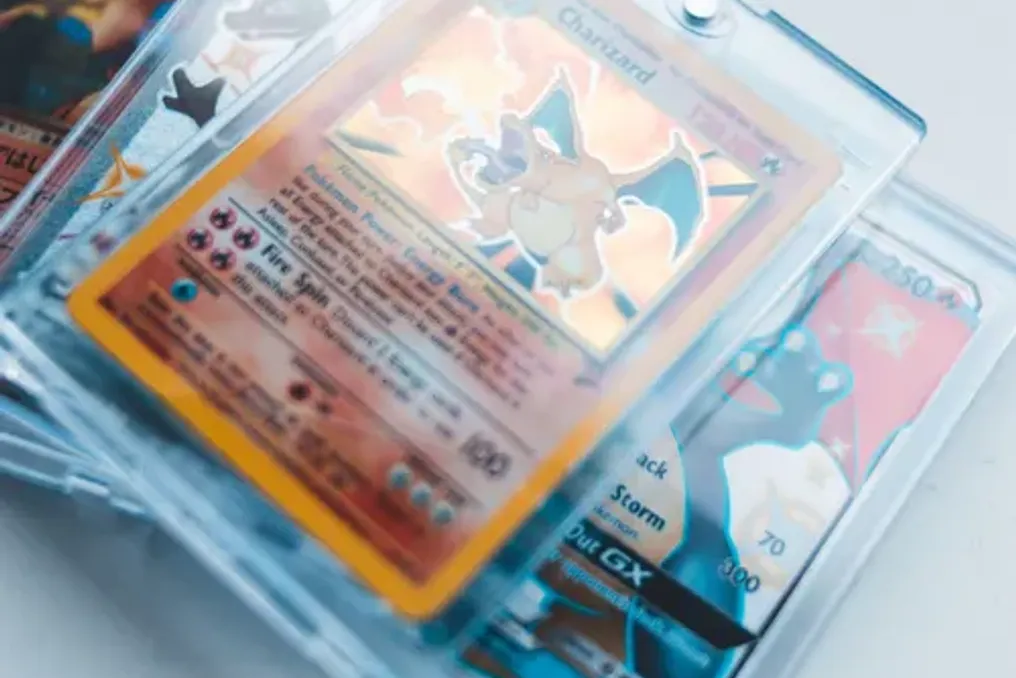
The trading card game created another way to collect Pokémon. While early collectors may not have known it, Pokémon added the Pokémon Trading Card Game (TCG) to its franchise. Players could collect cards, trade them, and compete with decks. Over time, some cards became highly sought-after collectibles. This step was interesting because it created a Pokémon audience who did not necessarily need to own a video game to participate in the franchise. This is what appeals to older fans today, who may be more interested in the financial aspect. Collectible cards can yield huge profits due to the existence of desirable items.
Nostalgia has become an important part of Pokémon's appeal, but the franchise has not remained stuck in the 1990s. The core idea may be familiar, but newer generations of games feature new Pokémon, regions, and gameplay mechanics. The franchise has also expanded into mobile games, such as Pokémon Go.
Pokémon remains visible among adults because people who encountered the franchise in the 1990s and early 2000s grew up with it. By now, these adults may have their own children who can also become mini-fans of the franchise. Thus, the franchise has managed to attract both a new generation of children and adults who grew up with Pokémon. For those who played Pokémon on the Game Boy as children or watched the anime on TV, seeing Pikachu, Charizard, or the original games can evoke childhood memories—a place we all love to return to because life was simpler then. For some, it is not just a show, or 'just a game', or 'just cardboard.' For them, it embodies childhood, good memories, and fun times with loved ones.