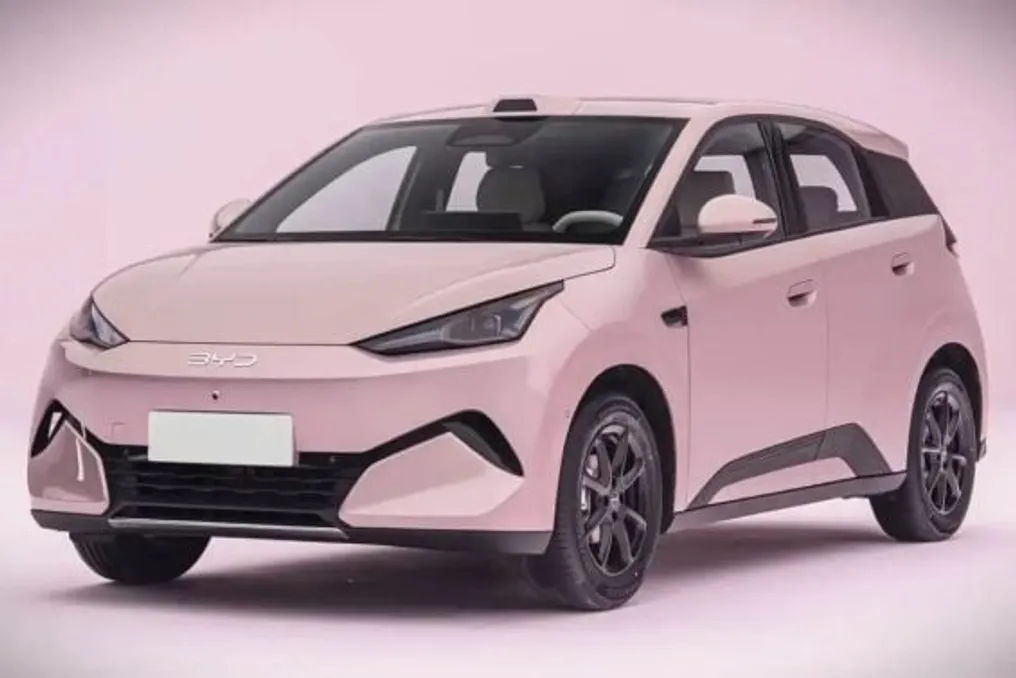
Second generation of the BYD Dolphin Mini gains 129 hp and is set to arrive in Brazil in 2027
Read more
AutoPapo
autopapo.com.br

Second generation of the BYD Dolphin Mini gains 129 hp and is set to arrive in Brazil in 2027

More details have been released about the second generation of the BYD Dolphin Mini, known as Seagull in China, shortly before its official launch. This new model will be larger and feature a rear engine, with its debut in Brazil scheduled for late 2027.

The compact car has received significant mechanical improvements. The electric motor, manufactured by BYD itself, will be moved to the rear axle, providing the vehicle with rear-wheel drive. The TZ164XYB powertrain will have 129 hp, a considerable increase from the 75 hp of the current model. Furthermore, the top speed has been raised from 130 km/h to 150 km/h.

The shift to the rear engine will allow for the inclusion of a front trunk. Another important change concerns the rear suspension, which will transition from a torsion beam to an independent multi-link architecture. The wheels will now be 16 inches, equipped with 205/60 tires.

The battery, made of lithium iron phosphate (LFP) and supplied by FinDreams, BYD's battery division, will offer two configurations: 30 kWh and 39.2 kWh. These options provide ranges of 320 km and 420 km, respectively, according to the Chinese CLTC cycle. These specifications are registered with the MIIT, although final confirmation from BYD is pending at the time of launch.

According to MIIT data, the dimensions of the new Dolphin Mini will be 4.21 m in length, compared to the current 3.78 m; 1.81 m in width and a wheelbase of 2.65 m, up from the previous 2.50 m. In China, the vehicle will accommodate five passengers instead of four. These new measurements bring the model closer to the Geely EX2, which has a length of 4.14 m and the same wheelbase.

Its competitor, marketed in China as Xingyuan, is currently cited as the best-selling car in the country. In August, it recorded 39,651 units sold in the Chinese market, almost four times the volume of the Seagull's 10,103 units, according to compilations from the CarNewsChina website.

Internally, the main innovation is the elimination of the traditional instrument cluster. The speedometer, odometer, and range information will be displayed on the multimedia center, which will be larger, fixed, and located at the top of the dashboard. The gear selector will be relocated to the steering column, and physical controls have been reorganized into a row located under the central air vents.

One of the registered versions includes an optional LiDAR sensor installed on the roof, integrated into the driving assistance system called God’s Eye B. The exterior design has been completely renewed while maintaining the model's identity. The front features a new bumper and redesigned headlights, while the side presents a new C-pillar and a more prominent plastic trim.

In the Brazilian context, the arrival of this new version is scheduled for late 2027. It is important to note that this new generation will not replace the existing Dolphin Mini, which is produced in Camaçari (BA); both models will coexist in the BYD lineup, positioned below the Dolphin GS.
Similar stories

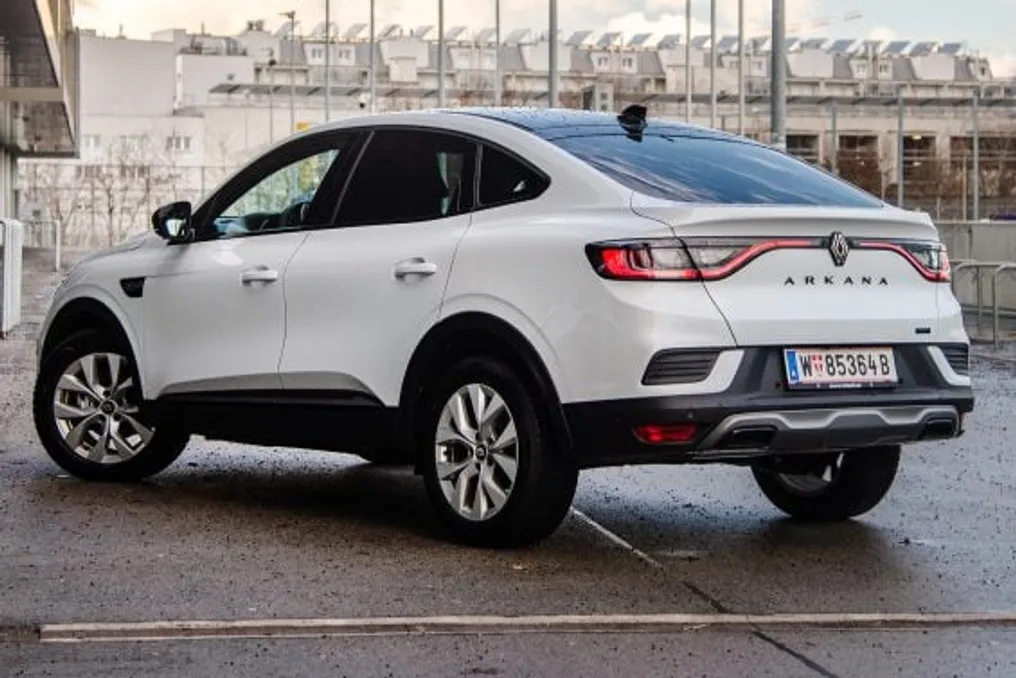
Next generation of the Renault Arkana will be manufactured in Brazil based on the Geely EX5 platform
Read more
autopapo.com.br

Next generation of the Renault Arkana will be manufactured in Brazil based on the Geely EX5 platform

The new version of the Renault Arkana will begin production in Brazil starting in 2027, utilizing the GEA platform, which is the same architecture employed in the Geely EX5. This information was first disclosed by the portal Autos Segredos, which identified the coupe SUV as the model resulting from the investment announced by Renault Geely in Brazil.

In a meeting held on Tuesday (15th), the joint venture confirmed an additional financial contribution of R$ 2 billion destined for the Ayrton Senna Complex, located in São José dos Pinhais (PR). This amount is added to the R$ 3.8 billion previously communicated in November 2025, raising the total investment to R$ 5.8 billion.

Fabrice Cambolive, president of the Renault Geely Council of Brazil, stated during the event that the new vehicle will be electrified and will incorporate technology provided by the Chinese partner, although the company has not yet disclosed the specific name of the car.

On the same day, domestic production of the Geely EX5 EM-i began, representing the first model to use the GEA platform in the country. According to Autos Segredos, the debut of this new model is expected at the end of 2027, and the Arkana will inherit the plug-in hybrid system from the EX5 EM-i, presenting a crucial distinction: flex technology, allowing the use of ethanol and gasoline.

The portal also reported that the SUV will be equipped with the two LFP battery options from the Chinese model, with capacities of 18.4 kWh and 29.8 kWh, in addition to offering three driving modes: Electric, Hybrid, and Sport. Current data for the EX5 EM-i, provided by the manufacturer, sets a benchmark for what can be expected: a combined power of 262 hp and 38.7 kgfm of torque, generated by electric motors totaling 215 hp and 26.7 kgfm, working together with a 1.5-liter four-cylinder engine, whose main function is to act as a generator. There is an expectation of a small performance increase when using ethanol.

The GEA architecture allows for various mechanical configurations, which prevents the vehicle from being just a renamed EX5. Although the final design has not yet been presented, it is expected to have its own visual identity, aligned with Renault's current aesthetic and the sporty body characteristic of the Arkana name.

In terms of dimensions, the EX5 has a length of 4.74 m, a width of 1.91 m, a height of 1.68 m, and a wheelbase of 2.75 m. These measurements are comparable to those of the current European generation of the Arkana, positioning the coupe SUV in a higher category than the Boreal in the brand's Brazilian catalog.

Previously, Renault had evaluated the Arkana in Brazil, either through the importation of the current generation or through the development of a C-segment coupe SUV based on the RGMP platform, which also serves the Kardian, Boreal, and future Niagara pickup models.

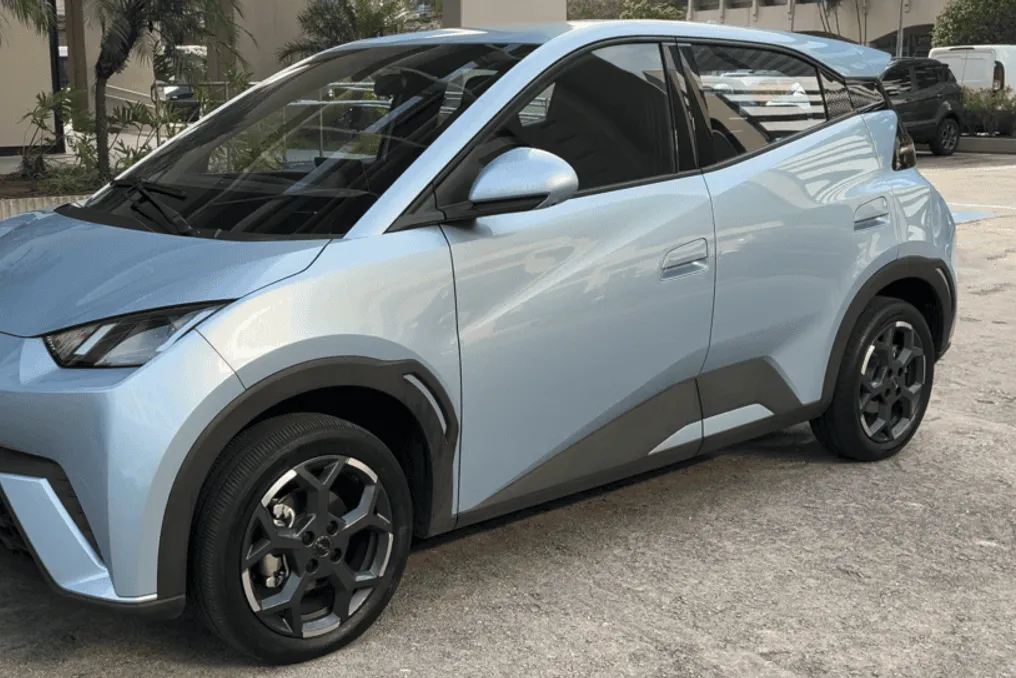
BYD Dolphin Mini, the best-selling electric car in Brazil, evaluated in São Paulo
Read more
olhardigital.com.br

BYD Dolphin Mini, the best-selling electric car in Brazil, evaluated in São Paulo

Those considering purchasing a new vehicle or changing cars should consider electrified options, given that the Brazilian market for light electrified vehicles has more than doubled in twelve months. According to the Brazilian Electric Vehicle Association (ABVE), between January and June 2026, sales totaled 215,023 units, representing a 125% increase compared to the same period in 2025 (which registered 95,493 units). The average monthly sales during this semester was 35,837, and electrified vehicles achieved a 16% market share in the first half.

Analysis of the BYD Dolphin Mini on the streets of São Paulo

The Olhar Digital portal tested the BYD Dolphin Mini, which led sales in the segment, accumulating 35,680 sales in the analyzed period. The dimensions of the BYD Dolphin Mini are notably compact: 3.78 meters in length, 1.72 m in width, and 1.58 m in height, with a wheelbase of 2.50 m and a ground clearance of 155 mm. Despite its reduced size, the interior accommodates five passengers, and the trunk offers 230 liters, expandable to 930 liters with the rear seats folded down.

In urban environments characterized by heavy traffic, narrow streets, and parking difficulties, the car's size under four meters provides significant advantages, facilitating maneuvering and positioning, which generates a sense of control while driving.

Despite being a compact model, the comfort in the driving position was perceived as satisfactory, and the interior space is well utilized. The seats also contribute to this perception, and the driver can adjust the seat electrically in six positions, with the upholstery made of premium ecological leather. Although the author is 1.85m tall, he did not feel disproportionate to the steering wheel, but noted that a trip in the back seat would be uncomfortable for someone of his height.

The suspension, equipped with a McPherson setup in the front and a torsion beam in the rear, surprisingly performed well. The adjustment is smooth, and when driving through São Paulo's roads, the car handled the asphalt imperfections well, without excessively transmitting impacts and irregularities to the cabin, despite its inherent physical limitations due to its size.

Urban Focus and Performance

It is crucial to understand the niche market of the Dolphin Mini: it was not designed for off-road trails or long highway trips; its vocation is fundamentally urban. In this context, many decisions made by BYD make sense. The front electric motor generates 75 hp and 135 Nm of torque. Technical data indicates acceleration from 0 to 100 km/h in 14.9 seconds and a top speed of 130 km/h, in addition to offering four driving modes: Eco, Normal, Sport, and Snow.

However, the driving experience showed that maximum power does not entirely define an electric car focused on the city. In São Paulo traffic, the Dolphin Mini proved to be quite intelligent, responding promptly to the accelerator at low speeds, performing well at traffic lights, and having enough agility for typical urban maneuvers like overtaking and lane changes. Its dynamism lies precisely in the most common situations for the city driver.

The combination of reduced dimensions, light steering, and the immediate response of the electric motor makes driving the Dolphin Mini pleasant in the urban environment. Another aspect reinforcing its urban character is the battery, available in two configurations: 30.08 kWh or 38.88 kWh, offering declared PBEV ranges of 224 km and 280 km, respectively. AC charging reaches 6.6 kW, and DC charging can reach 30 kW in the smaller version and 40 kW in the larger one.

The vehicle also features VTOL functionality, allowing the battery to supply energy to external equipment. For daily commute trips, the range is adequate, enabling several days without needing a recharge, depending on mileage. If access to a charger at home or work is available, the value of the Dolphin Mini increases, as it can remain charging while parked.

The proposal to be a simple urban car did not imply neglecting technology or finishing quality, which differentiates the Dolphin Mini from competitors with similar prices but more basic interiors. The dashboard has a 7-inch screen, and the multimedia center has a 10.1-inch screen. The DiLink system supports Apple CarPlay and Android Auto, 4G connectivity, and voice commands. Furthermore, there are six speakers, two USB ports, and digital air conditioning. Some versions include inductive charging, although the author suggested a more discreet location for this in the São Paulo context.

Additional features include a 360-degree camera, which facilitates parking in tight spots, and three rear radars. In terms of safety, the car is equipped with ABS, stability and traction control, electronic braking distribution, hill start assist, tire pressure monitoring, electronic parking brake, and cruise control. Front and curtain airbags are present, and front side airbags are optional on the GS configuration.

After testing it in São Paulo, the best assessment is not to force the car to be something it is not. It is not ideal for those seeking high performance, large luggage capacity, or constant highway travel; it is a vehicle conceived primarily for the city. Within this proposal, the set works very well: it is externally compact, comfortable to drive, agile in traffic, easy to maneuver, and presents an attractive technological and finishing package for its class.

Although the term 'affordable' is difficult to apply to any new car in the current Brazilian scenario, considering the finish, embedded technology, driving experience, and the focus of the Dolphin Mini, it offers a highly competitive package. Its main strength is not trying to be a universal electric vehicle, focusing instead on being an excellent vehicle for daily urban life.

Popular