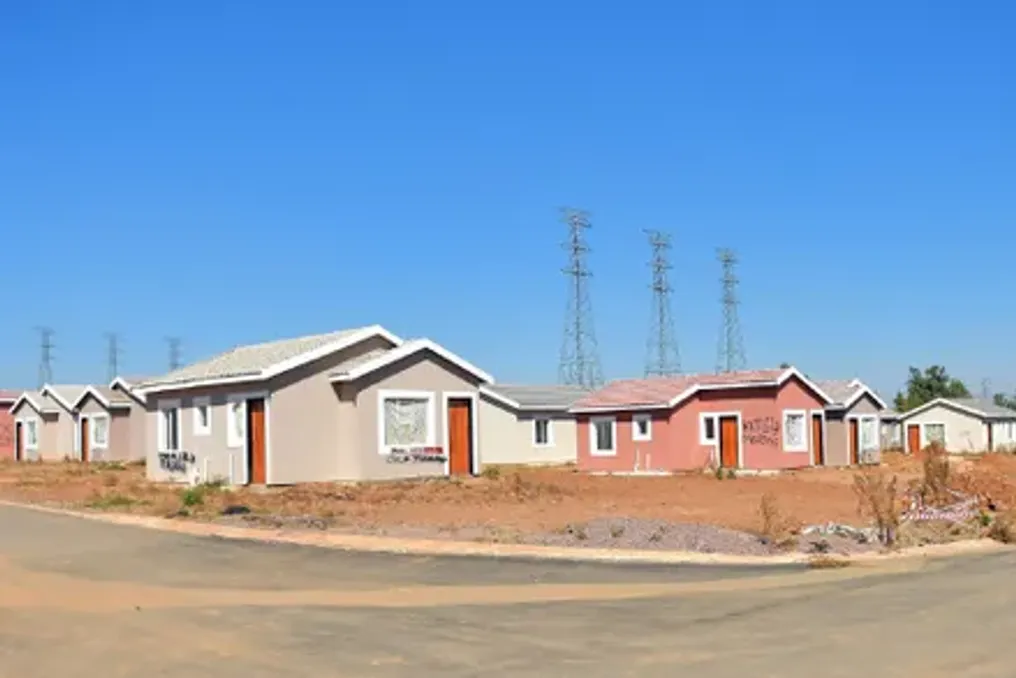
Minister of Human Settlements Thembi Simelane indicated that limited availability and high cost of land in good areas, as well as financial constraints and reduced grant funding, hinder the government's ability to offer alternative housing models such as social and affordable rental housing.
Simelane reported in March that the national housing deficit has reached approximately 2.6 million units, affecting over 12 million people. She noted that suitable plots near workplaces, transport networks, and social facilities are scarce and expensive. Furthermore, the release and development of strategically located land are often delayed due to issues with property rights, planning permits, zoning change processes, and infrastructure requirements.
These statements were made in response to a parliamentary question by MKP MP Shumnugama Ramsamy Mudli, who inquired about the reasons why the Simelane department has been unable to significantly accelerate and expand alternative housing provision models, including social housing, affordable rental housing, and serviced plots, alongside fully subsidized housing, especially in well-located urban areas where the demand for affordable housing is highest.
Simelane also linked the slowdown to financial constraints and the decrease in the value of grant funding. She emphasized that expanding social housing, affordable rental housing, serviced land, and financed housing requires significant capital investment, while the department remains obligated to assist vulnerable households eligible for fully subsidized housing.
The Minister cited budget cuts, insufficient funding, rising construction costs, inflation, and weak economic growth as the main factors affecting large-scale implementation. She added that annual grant transfers are decreasing, which impacts the distribution of funds among executive agencies and the financing of services and large-scale infrastructure.
Another obstacle to providing alternative housing is the limitation of large-scale infrastructure. The development of well-located land depends on additional capacity in water supply, sanitation, electricity, roads, and transport. In several municipalities, existing large-scale infrastructure has reached or is approaching its maximum load. The cost of this infrastructure is not always fully covered by the housing project budget, while municipalities may have limited capital budgets and weak tax bases, delaying both public housing projects and private investment in affordable housing.
Simelane explained that alternative housing models typically involve numerous stakeholders, such as provinces, municipalities, housing settlement structures, social housing institutions, lenders, and private developers. Delays in zoning changes, settlement creation, building plan approvals, land allocation, and infrastructure agreements affect project readiness and can render them financially unviable as they pass through land acquisition, planning, environmental protection, procurement, financing, regulatory, and municipal approval processes.
The department has also identified fragmented planning, inadequately prepared project portfolios, regulatory delays, procurement inefficiencies, and lack of skilled personnel as systemic obstacles to housing settlement implementation. Simelane noted that social and affordable rental projects must remain accessible to tenants while generating sufficient income to cover operating expenses, maintenance, debt servicing, and long-term asset management. She warned that high costs for land, construction, infrastructure, security, and municipal services could make projects unviable at a rent affordable to low-income households.
Furthermore, there are limitations related to the institutional and financial implementation of the rental fund, the content of the state rental fund, high rental rates, inadequate regulations governing some private sector participants, and insufficient cooperation in the allocation of state land and buildings.
Simelane's written response also showed that the government provided 183,788 units of fully subsidized housing over five fiscal years from 2021/22 to 2025/26. During the same period, only 2,199 hostel units and 72 institutional units were provided, along with 159,033 serviced plots and 14,128 units of social housing from 2021/22 to the end of June of the current year. The government supported 11,170 families through its First Home Finance program, designed to assist households that earn too much for fully subsidized housing but might not qualify for adequate mortgages without subsidies.