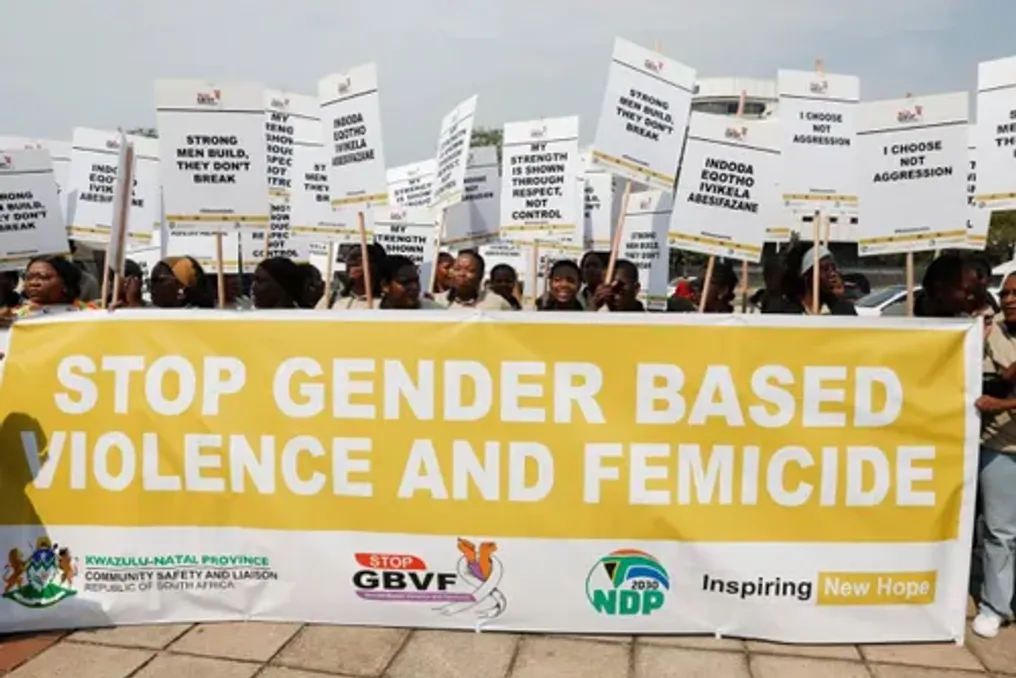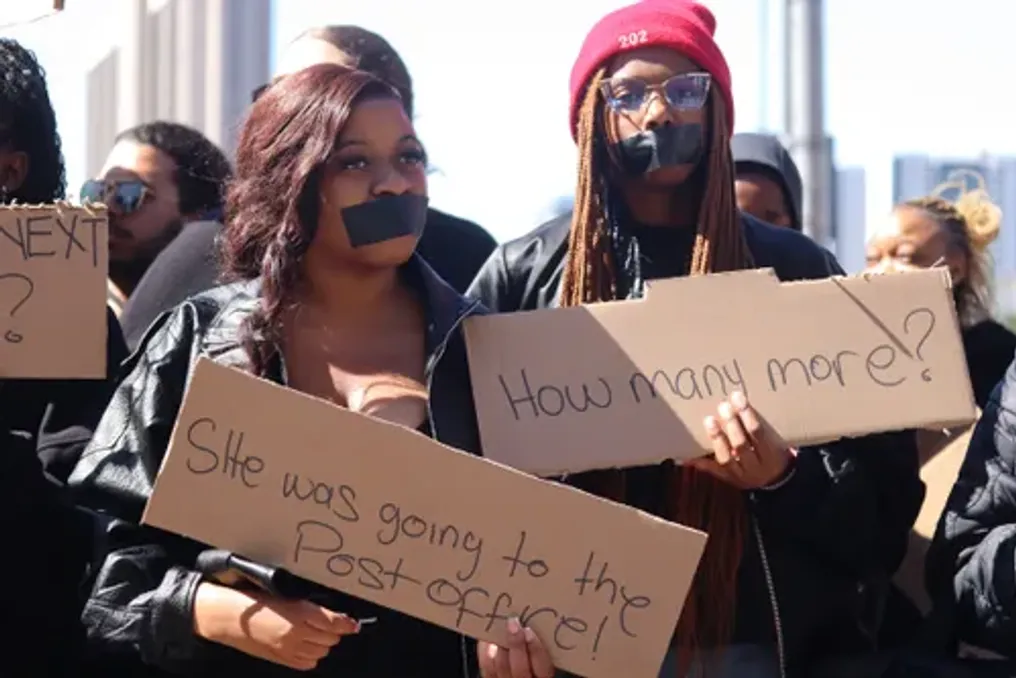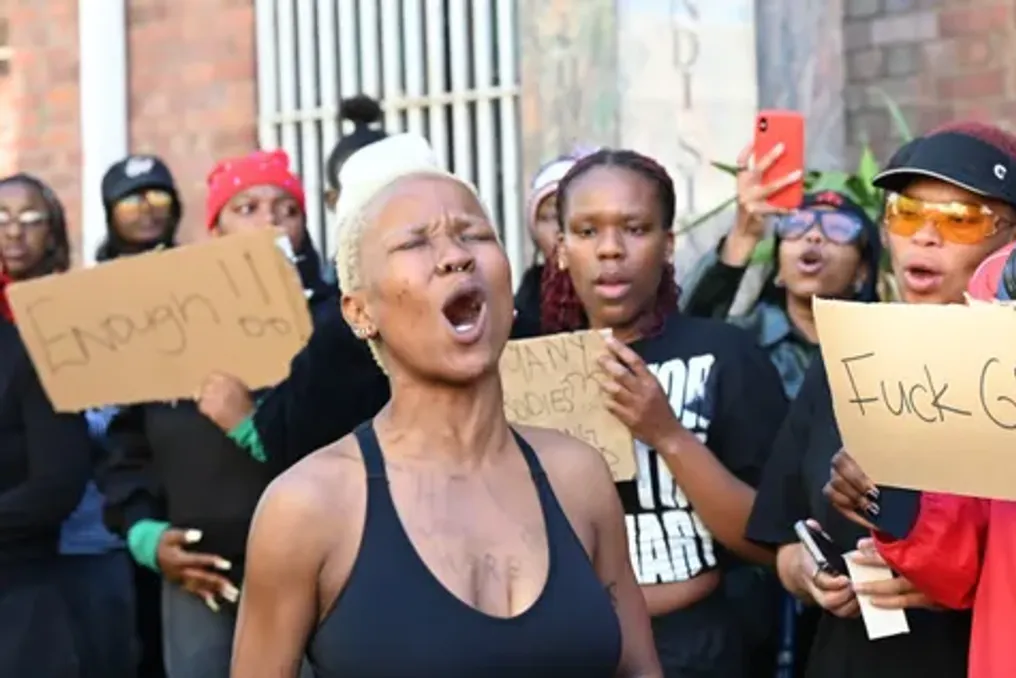
Residents of South Africa took to the streets to pay tribute to the women murdered in eKhuruleni, accompanied by growing demands for action against gender-based violence (GBV). Despite the existence of laws, institutions, and strategies in the country to combat gender-based violence and femicide, prevention remains unattainable until threats are taken seriously, survivors receive protection, and the government is held accountable before violence becomes fatal.
South Africa recognizes gender-based violence and femicide as a national problem, and the country is aware of the causes and statistics. There are laws, policies, institutions, shelters, courts, police structures, and civil society organizations. Nevertheless, women continue to be subjected to rape, assault, violence, and murder.
The discovery of the eleventh woman's body in eKhuruleni has once again drawn public attention to the issue of femicide. The police are investigating the circumstances of the deaths but have not determined if all cases are linked. Regardless of whether the deaths are connected or not, each woman represents a lost life and a family left in mourning.
It is impossible to protect a woman after she has been killed. Therefore, the question is not just how to investigate a murder after it has occurred; it is also necessary to find out what could have been recognized earlier, what warning signs were missed, whether threats were reported, whether protection was provided, whether perpetrators were known, and whether institutions acted before the violence became fatal.
This is the central question of the GBVF crisis in South Africa. The crisis is real, as is society's responsibility towards it. Behind every number is a woman, a family, and a community. The women whose bodies were found in eKhuruleni are not just statistics; their deaths serve as a reminder that femicide is not an abstract national problem, but violence that reaches homes, relationships, streets, and communities, ending in the irreversible loss of human life.
Broader data is also shocking: between April and June 2026, official police figures recorded 569 women murdered and 1052 women attempted to be murdered. In the same quarter, 9201 victims of rape were registered, of which 8814 were women and children. These figures do not reflect all the violence that remains unregistered, but they clearly demonstrate the scale and urgency of the crisis.
South Africa has officially acknowledged the seriousness of the situation: gender-based violence and femicide were classified as a national catastrophe in November 2025, placing the National Executive Body at the center of a coordinated national response. The National Council on Gender-Based Violence and Femicide, established under the National Council on Gender-Based Violence and Femicide Act of 2024, has been formed, and members have been appointed for a three-year term starting in August 2026. The Council is authorized to provide strategic direction and coordinate multi-sectoral and inter-sectoral responses to GBVF.
Frameworks exist, institutions exist, policies exist. The question is whether they work early and effectively enough to prevent the next woman from becoming a victim.
A woman who reports a threat should not disappear into the system. A protection order must mean protection. A repeated threat must be treated as a warning, not just another incident. Survivors must have access to help before the violence escalates. And if an institution fails in its duties, this failure must have consequences.
We are accustomed to counting violence after it has happened. We record murders, rapes, assaults, arrests, and court cases. These measures are important because they show the scale of the problem. However, they also tell us what happened after the woman was harmed.
It is much harder to understand what happens before the crime: how many women were threatened before the attack? How many sought help? How many were afraid to leave? Were perpetrators previously registered? Were restraining orders issued? Were any warning signs known to family, neighbors, schools, workplaces, or authorities? How many opportunities existed for intervention before the violence became fatal?
We cannot prevent every act of violence, but we can create a system that is much better at recognizing danger and responding before the final act. Prevention means early risk identification, taking threats seriously, connecting survivors with appropriate services, follow-up monitoring, and ensuring that institutions fulfill their duties.
Femicide does not begin at the moment a woman is killed. The final act may be murder, but the path to it can include control, intimidation, stalking, threats, assault, isolation, coercion, and repeated violence.
Serious gender-based violence can occur in relationships and places that should provide safety. This means that prevention cannot only begin when a woman enters a police station or hospital; it must start much earlier, in the homes and families where children learn what relationships should look like.
Children learn by watching the adults around them. They absorb whether anger is expressed through violence or self-control, whether refusal can be accepted without humiliation, whether strength means dominance or responsibility, and how women are treated with dignity. This makes responsible fatherhood and positive male role models part of the conversation about prevention.
The 2024 State of Fathers report for South Africa, based on 2023 data, showed that 35.6 percent of children in South Africa lived in the same household as their biological father, while 64.4 percent lived separately. This figure should be viewed carefully: living in separate households does not automatically mean the father is absent from the child's life. A father can live elsewhere and still be involved, caring, and responsible.
However, this underscores the importance of consistent adult presence and guidance in children's lives. Fatherhood is more than biology or cohabitation; it is a continuous responsibility. It means caring, listening, guiding, setting boundaries, showing affection, demonstrating self-control, and taking responsibility for one's children's well-being. It also means treating one's children's mother with dignity, regardless of whether the parents stay together.
This is especially important for boys. They need to see men who demonstrate that strength is not equal to dominance, that refusal does not justify anger, that jealousy is not possessiveness, and that violence is never an expression of masculinity. They need to see that a man can disagree without humiliation, assert authority without abuse, and take responsibility when he is wrong. These lessons must be taught in homes, schools, sports clubs, youth organizations, workplaces, and religious communities. The point is not to blame fathers or condemn men, but to recognize that responsible fatherhood and positive male role models can contribute to a culture of respect and responsibility necessary for prevention.
There is an important distinction between personal safety and shifting responsibility onto women. Women can take reasonable precautions if they wish. But a woman should never be expected to change her appearance, place of work, travel times, whether she exercises, walks alone, or leaves abusive relationships solely because men might want to harm her.
A woman going to work is not a problem. A woman exercising is not a problem. A woman traveling alone is not a problem. A woman leaving an abusive relationship is not a problem. The person choosing violence bears responsibility for that choice. Therefore, society must ensure that safety advice does not become another way to restrict women's freedom. The goal is not to teach women to live a more modest life, but to create a country where women can lead ordinary lives without having to organize their lives around fear.
The focus on violence against women and girls must remain central, as women face specific forms and patterns of GBVF, including intimate partner violence and femicide. At the same time, men and boys can also be victims of violence and abuse, and children require special protection. Recognizing this does not weaken the crisis faced by women. The central question remains the same: how to prevent violence, protect those in danger, and hold perpetrators accountable? Men and boys must be part of the answer.
Men should be encouraged to talk about anger, refusal, relationships, fatherhood, alcohol, consent, and emotional responsibility before these issues become crises. Boys must learn that masculinity does not require control over women. They must learn that 'no' means 'no'. They must learn that jealousy is not love. They must learn that refusal is painful, but never justifies violence. They must learn that asking for help is not weakness. And they must learn that responsibility is a form of strength. The goal is not to create another conversation where men are simply told what not to do; the goal is to develop a culture where responsible masculinity is visible, respected, and expected.
Communities cannot replace the state. The police must investigate. Prosecutors must prosecute. Courts must hear cases. Medical services must treat survivors. Social workers must intervene. Shelters must provide protection. Municipalities must support infrastructure and a safer public environment. The government must coordinate these responsibilities and publicly report on its work.
Classifying GBVF as a national catastrophe and establishing the National Council provides institutional mechanisms for coordination and accountability. However, institutions cannot be judged solely by their existence; they must demonstrate the fulfillment of their duties. The existence of a protection order means little if it is not enforced. The existence of a police station means little to a woman in danger if her complaint is not taken seriously. The existence of a shelter means little if a survivor cannot access it. The existence of a national strategy means little if its implementation does not reach the streets. This is where accountability is critically important.
Every institution involved in combating GBVF must know what it is responsible for, what resources it has, what it has achieved, what remains undone, and who needs to act next. Where something fails, that failure must be identified and corrected. Where something works, it should be strengthened and replicated.
The government cannot be on every corner, enter every home, or know what is happening in every relationship. This is where responsible citizenship becomes important. However, community actions must never turn into vigilantism. Ordinary people should not investigate crimes, confront violent offenders, or attempt to administer justice themselves. Their role is different. A neighbor can call for help when a woman is in danger. A shopkeeper can provide a safe place for a frightened woman.