Before weather applications, people relied on observing the surrounding landscape to predict the weather. Generations of farmers, tourists, fishermen, and rural residents across the country learned to closely study nature. Clouds gathering over a mountain, a sudden change in wind direction, the smell of damp earth, or changes in animal behavior can serve as clues about current atmospheric processes. It is important to understand that these observations do not replace modern meteorology, but they serve as a reminder of nature's constant reaction to atmospheric changes.
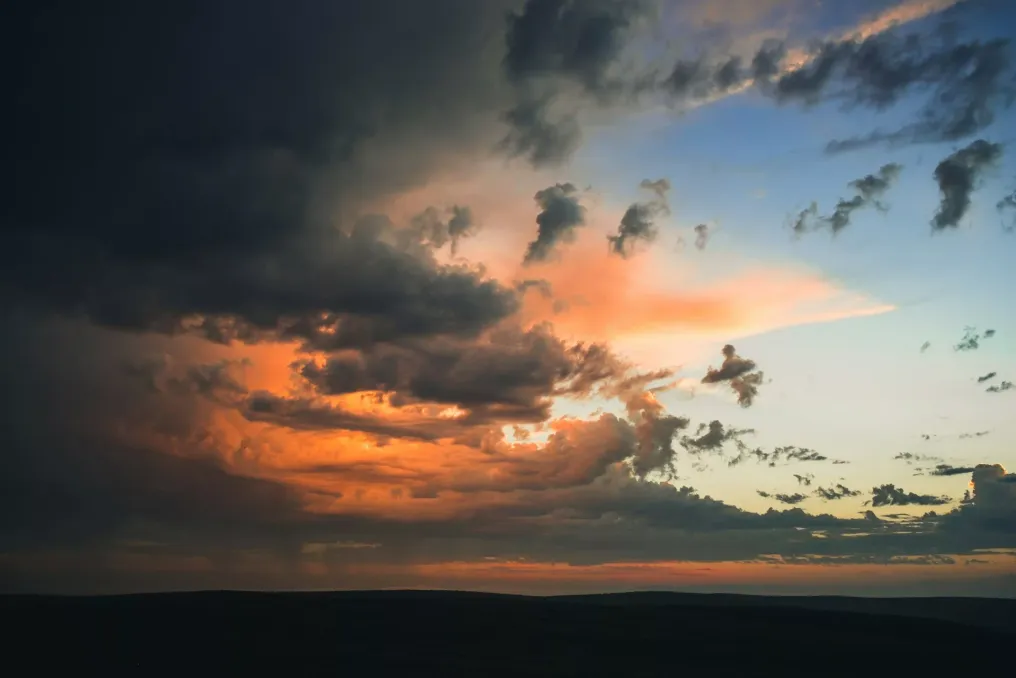
Clouds are one of the oldest indicators of weather; their shape, height, and movement can reveal much about the atmosphere. In the Drakensberg, high cumulonimbus clouds can signal the approach of summer thunderstorms. Near Cape Town, the familiar phenomenon of a cloud blanket flowing over Table Mountain has earned its own nickname—the 'tablecloth.'
Cloud observation also has practical significance. Dark, vertically developing clouds, especially those accompanied by thunder, indicate storm formation. High cirrus clouds can foreshadow atmospheric changes, sometimes appearing before a weather system arrives. The key is to view clouds as part of the overall picture, rather than as a guarantee of a forecast based on one specific formation.
South Africans have devised very evocative names for their winds, which provide a lot of information about regional weather. The famous 'Cape Doctor' in Cape Town is a southeasterly wind that blows through the city in the summer. Strong winds are capable of dispersing clouds, altering coastlines, and affecting fires, while the direction and strength of the wind elsewhere can influence temperature and precipitation levels.
Inland mountain winds (berg winds) are another example. These hot, dry currents occur when air descends from high altitudes to the coast, causing a sharp rise in temperature. For people living near the ground, noticing a familiar wind blowing from a certain direction can be useful information, although today it can be measured at a weather station, whereas previously it served as an experiential guide.
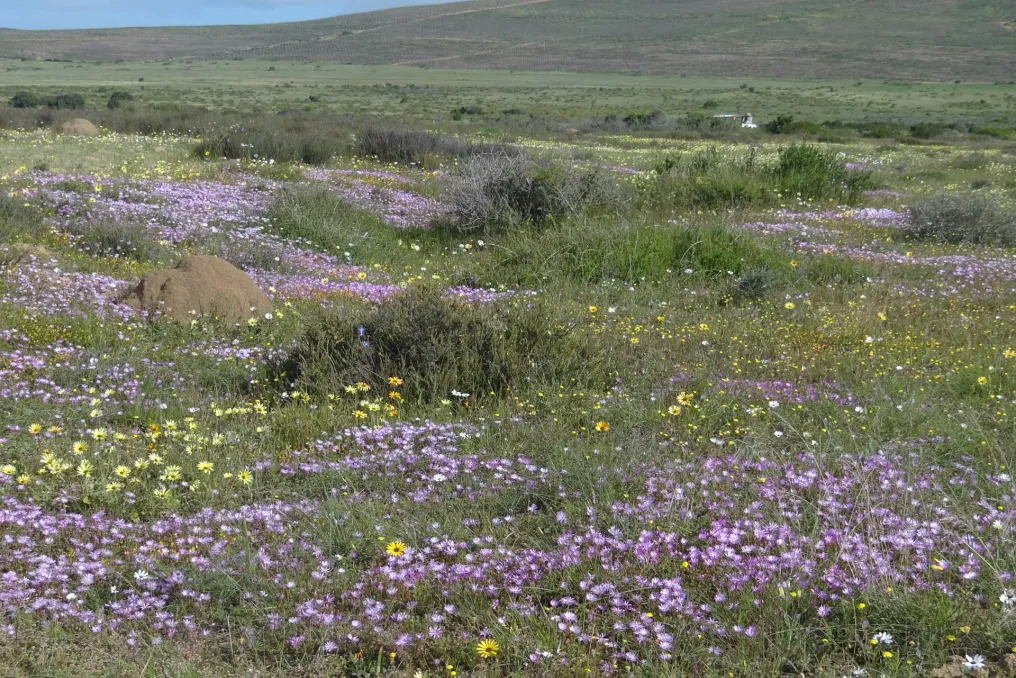
Plants also follow their own seasonal calendar. Flowering, bud bursting, fruiting, and leaf fall depend on factors such as rainfall, temperature, and daylight duration. In South Africa, where the climate varies from winter rainfall in the southwest to summer rain in most inland and eastern regions, seasonal changes look different depending on the location.
A striking example is the flowering of the Namakwa veld after good winter rains. In the Highveld and bushveld, the arrival of summer rains can transform dry landscapes astonishingly quickly, initiating new plant growth and a chain of activity among insects and other animals.
Weather Mythology
Local weather lore is particularly interesting. There were claims that animals become restless before storms, insects appear in greater numbers before rain, and birds behave differently when the weather changes. There is a scientific basis for the broader idea that animals react to environmental changes related to weather. Many species are sensitive to air pressure, humidity, temperature, wind, and changes in food availability. These signals can affect shelter seeking, migration, and feeding.
However, this does not mean that an animal can reliably predict tomorrow's forecast. A bird sheltering before a storm might be reacting to conditions that have already changed. An insect appearing after the rain might simply be responding to humidity and temperature. The animal reacts to its environment, not consulting its own miniature weather application.
Some of the most useful signs are surprisingly mundane: damp soil, dust moving along the road, changes in visibility, sudden cold, or clouds forming over a distant mountain can tell an experienced observer a lot about the current situation.
In the Sedberg, Drakensberg, and Golden Gate Highlands areas, mountain weather can change rapidly. Along the Wild Coast, wind, clouds, and ocean conditions can alter the character of the coastline within hours. In the Kalahari, a growing mass of storm clouds on the horizon can indicate the likelihood of severe summer storms. Since the landscape differs in each place, knowledge becomes local.
Modern forecasts provide what previous generations could not obtain: detailed data, radar images, satellite imagery, and numerical predictive models. They are extremely useful, especially when harsh weather is approaching. But there is something captivating about realizing that the landscape itself is full of information.
Next time you hike in the Drakensberg, stand under Table Mountain, or watch the clouds over the Kalahari, put your phone down for a moment. Look at the sky. Pay attention to what the plants and animals are doing. You may not know for sure what tomorrow will bring, but you can start noticing that the landscape has been giving you clues all along.