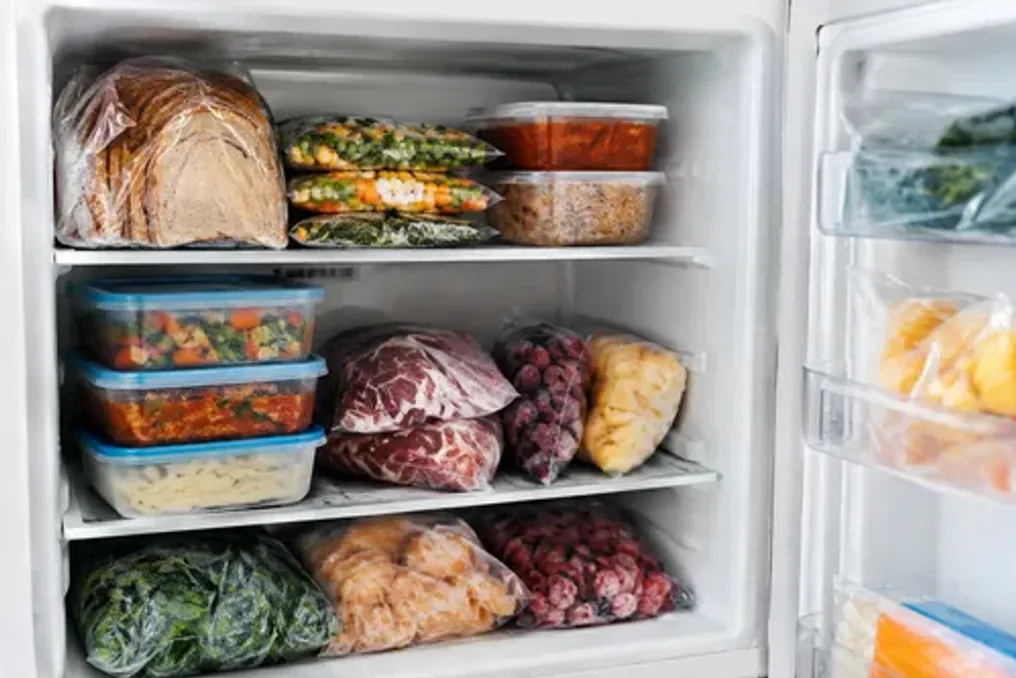
Smart use of a freezer can help reduce the amount of food thrown away. Although the freezer is one of the busiest appliances in the kitchen, many people only use a small part of its potential. Usually, it stores meat, frozen vegetables, ice, and perhaps a loaf of bread. However, with proper application, the freezer can become a simple tool for reducing food loss and stretching the food budget.
The key to success lies in changing the approach: the freezer should not be seen merely as a place to store surplus food.
Freeze food before it turns into waste
If you have half a loaf of bread left that no one will finish, you should freeze it. Bananas that are starting to ripen too much can be peeled and frozen for smoothies or baking. Wilting fresh herbs can be chopped and frozen in small portions.
It is also worth freezing leftovers from cooked meals that probably won't be eaten the next day. Instead of leaving them in the refrigerator until they have to be thrown away, they should be divided into portions and frozen. The timing is important: freezing is most effective when the product is still fresh, not when it is already spoiled.
Prevent unnecessary purchases if you already have something
The freezer helps tackle one of the most costly shopping habits—rebuying what you already have at home due to forgetfulness. To avoid this, similar products should be stored together, making existing supplies visible. If you have three packages of chicken, a container of mince, and several portions of leftover curry, the likelihood of unnecessarily buying food for the next meal decreases.
A quick check of the freezer contents before going to the store can help save money without needing to create a complex meal plan.
Freeze in portions
There is no point in freezing a huge container of food if it is known that it will only be needed by one or two people. Leftovers, prepared mince, soup, stew, rice, or other suitable dishes should be divided into portions before freezing. Smaller portions are also easier to defrost and can be taken out individually.
For items like bread, it is better to freeze slices instead of a whole loaf, as only the necessary amount can be taken. Flat freezer bags save space when storing soups and sauces because they can be stacked after freezing. Food must always be portioned before being placed in the freezer.
Use the freezer for practical bulk buying
Buying a large volume does not guarantee savings if part of the product ends up in the trash. The freezer makes bulk purchasing more realistic, but only if you know in advance that you will use the product. Meat can be divided into portions corresponding to the size of one meal before freezing. Grated cheese can also be frozen in portions, and fruits that probably won't be eaten on time can be prepared and frozen for later use.
Savings are achieved by using what has been bought, not just by increasing the volume of purchases.
Give leftovers a second life
One of the simplest ways to reduce food waste is to stop viewing leftovers as a dish intended for only one specific meal. Cooked vegetables can become part of a frittata or soup. Leftover roasted meat can be divided into portions and frozen for another dish. Extra prepared mince can serve as a base for pasta, cutlets, or another quick dinner.
It is not necessary to decide in advance what the food will turn into after freezing. It is enough to label the container with the contents and date, and make the decision later.
Freeze ingredients you regularly throw away
Think about what constantly ends up in your household trash bin. If it is fresh greens, freeze them. If it is bananas, freeze them. If you regularly use only part of a package of grated cheese, freeze the remainder if the product is freezer-friendly. If you buy a large pack of bread but never finish it, freeze half immediately upon arriving home.
This is where freezer usage methods become truly useful. Instead of changing your entire shopping routine, you change the fate of the food that you know tends to spoil.
Safe freezing of leftovers
Freezing does not destroy harmful bacteria; it only stops their multiplication while the food remains frozen, so food still needs to be handled correctly before and after freezing. Perishable leftovers should be refrigerated or frozen within two hours. Large volumes should be divided into shallow containers so they cool down faster before freezing. The safest option for thawing is in the refrigerator, not on the kitchen counter.
It is important to remember that freezing is not a magic solution for food that is already spoiled. If something has been in the refrigerator for a long time or shows signs of spoilage, freezing only postpones the problem. Your freezer is not just a cold storage unit. With conscious use, it can help you shop more mindfully, waste less, and get more meals from the food you buy.