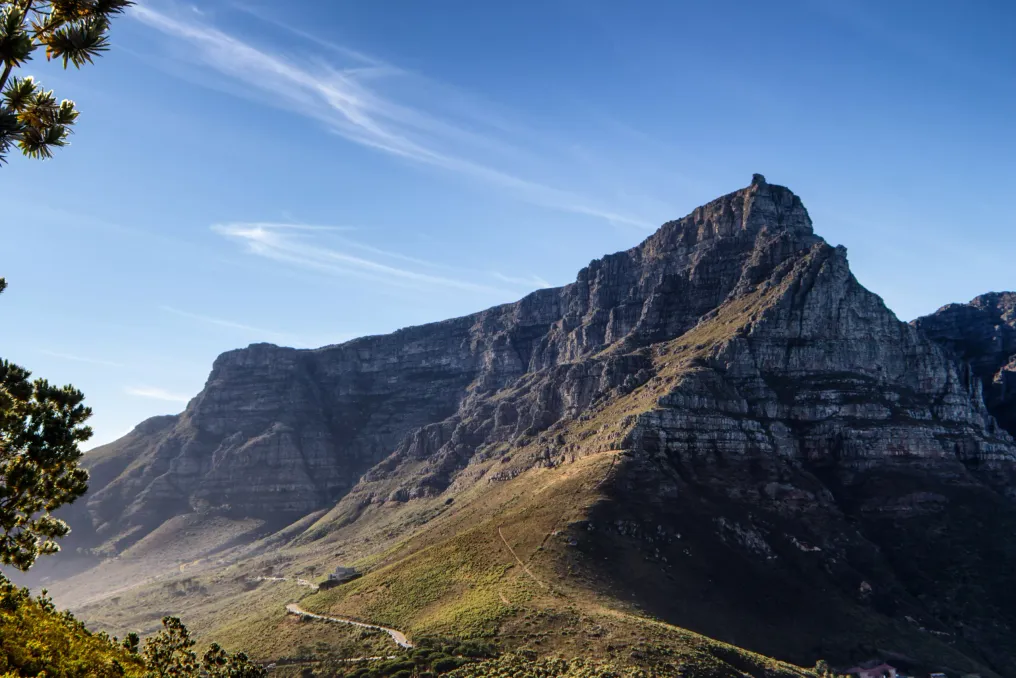
A 47-year-old tourist who was having difficulty descending Table Mountain safely left it thanks to an unusual technology. The woman was part of a family that was climbing the Platteklip Gorge on Saturday afternoon.
By the time they reached the summit, the Table Mountain aerial cableway had closed for the day, leaving the family with a long descent in fading daylight. Instead of waiting for the situation to worsen, the family contacted the Wilderness Search and Rescue (WSAR) at 021 937 0300 to report their intention to descend and their possible need for assistance.
This early call proved important later in the evening. A small rescue team, including a paramedic from the Western Cape government's health and welfare service, ascended the mountain to meet the family.
After a long day on the mountain, the 47-year-old mother was exhausted and found it difficult to continue the descent down the steep gorge. The rescue team then deployed one of WSAR's newest devices—the Hypershell Exoskeleton.
This lightweight, battery-powered device, worn around the hips and upper legs, is designed to support natural user movements. It provides mechanical assistance while walking, helping to reduce the strain on tired legs. After fitting the device, the woman's movements became more stable, and her confidence increased.
With the support of the rescue team, she was able to continue descending the Platteklip Gorge independently using the exoskeleton. The family eventually left the mountain safely, and the rescue operation concluded shortly after 11:00 PM.
The rescue effort also marked an important milestone for WSAR, as it was the first time an exoskeleton was used during a rescue operation in South Africa. For this rescue organization, the technology offers an additional option when determining the required type of patient assistance; in this case, it allowed the exhausted tourist to regain enough strength and confidence to complete the descent on her own.
The device did not eliminate the need to walk but merely supported the tourist's movement while the rescue team remained nearby. Although the unusual equipment was the main feature of the rescue, WSAR also highlighted another aspect of the incident that may be equally important for tourists: the family requested help before the situation escalated into an emergency.
They realized they might face difficulties descending and contacted the rescue service while they were still able to communicate and move. This allowed rescuers to meet them on the mountain and assess exactly what kind of help was needed. WSAR advises tourists to start early, check cable car schedules, and carry a flashlight, water, and warm clothing. The emergency contact number is 021 937 0300. The successful operation concluded with the entire family leaving the mountain safely, and the new technology making its debut in South African mountain rescue operations.