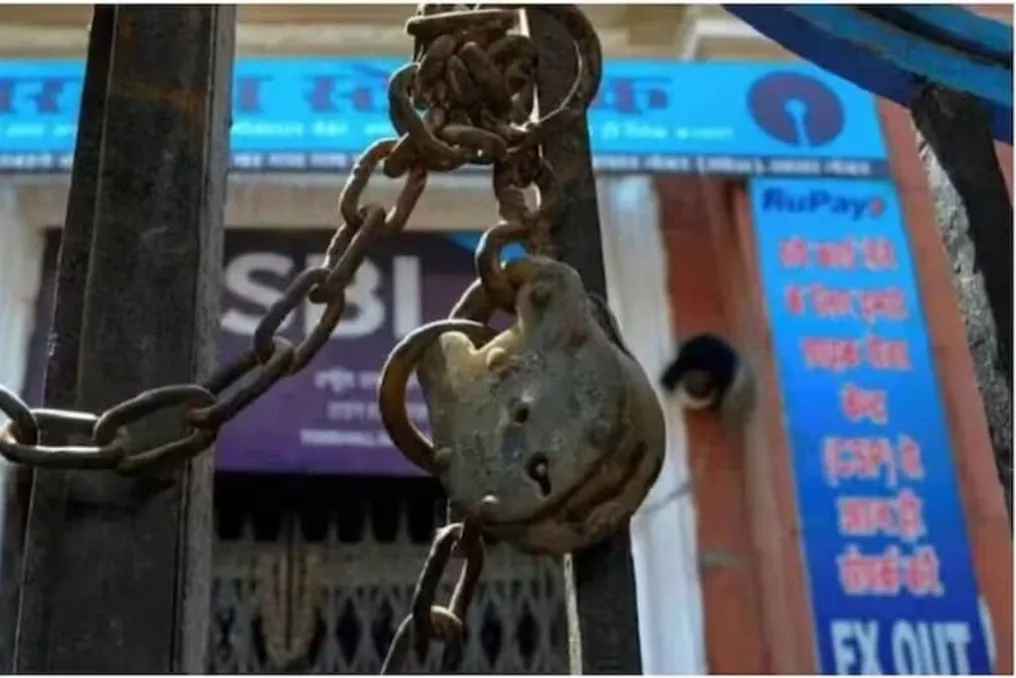
Three-day bank strike canceled after overnight talks between unions and banking association
Read more
Aaj Tak
www.aajtak.in

Three-day bank strike canceled after overnight talks between unions and banking association

The planned three-day nationwide bank strike has been called off. Following discussions held late Sunday evening, the Union of Banking Trade Unions (UFBU) suspended the strike, which was scheduled to take place from September 28 to 30. This means that banking services will operate as usual on the planned dates.

The reason for the sudden cancellation of the alleged protest by bank employees was the opening of a dialogue on issues that were the subject of preparation for the movement by employees and bank management. An important meeting between IBA and UFBU took place late on September 27, around 9:30 PM. After this meeting, UFBU issued a circular stating: 'Understanding has been reached with IBA; our strike and movement are postponed.'

The Union of Banking Trade Unions (UFBU) serves as a common platform for employee and management organizations of nine banks. The UFBU circular emphasized that an agreement had been reached with the Indian Banking Association (IBA) on the main issues underlying the strike, leading to the decision to temporarily postpone the planned strike and protest.

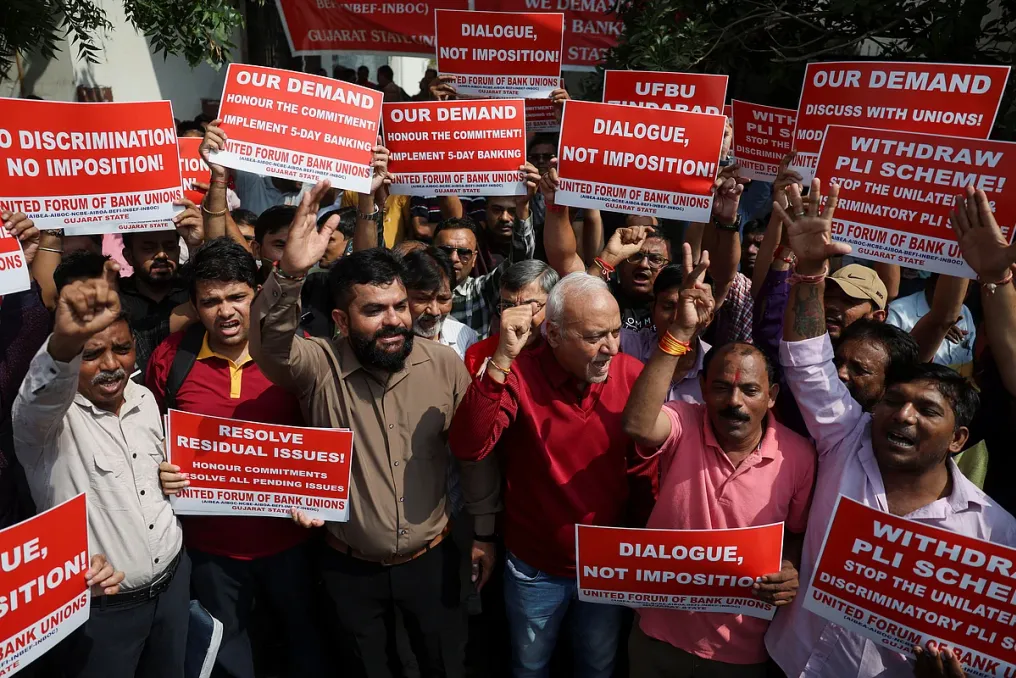
The primary demand of the banking trade unions was the implementation of a five-day work week, meaning five working days and two days off. Currently, banks close on the second and fourth Saturdays, but the unions have long insisted that a day off should be established every Saturday, in addition to Sunday.

During the overnight meeting, it was decided to create a special commission that will examine all possible options for providing a day off every Saturday. This commission will also negotiate with various parties to find a solution acceptable to everyone, including customers. It was this key point that prompted the unions to decide on the temporary cancellation of the strike.

It is important to understand that the agreement reached on Sunday evening does not mean automatic approval of implementing a five-day work week in the banking sector. It was only decided to create a commission for further discussion on this issue. The commission will study various options and consult with relevant parties, so the final decision on the five-day banking schedule has not yet been made.

Among the issues that triggered the strike were also matters regarding the performance-linked incentive (PLI) scheme for bank executives at Scale IV and above. The unions and management organizations voiced objections to this. Discussions are now underway regarding the start of negotiations involving the government on this matter, meaning that instead of direct confrontation over PLI, the path of dialogue will be chosen.

According to UFBU, negotiations will continue on other issues recorded in the minutes of March 8, 2024. Among the broad demands of the banking organizations were issues related to pensions and inflation allowances. Furthermore, part of the movement included demands to amend the National Pension System and restore the old pension system. The overnight agreement opened the way for advancing negotiations on these issues, although no final decision on any of them has been announced yet.

The most immediate benefit went to bank customers. The planned bank strike on September 28, 29, and 30 will no longer take place, eliminating potential inconvenience associated with bank closures on those dates. Nevertheless, this should not be seen as a complete resolution of all demands of bank employees; negotiations on contentious issues will continue.
Similar stories

Banking unions canceled strike, which was a relief for the public
Read more
www.aajtak.in

Banking unions canceled strike, which was a relief for the public

Following a meeting between the Indian Bankers Association (IBA) and the United Forum of Bank Unions (UFBU), the strike in the banking sector was called off, bringing significant relief to ordinary citizens.

On Sunday evening, around 9:30 PM, a meeting took place between representatives of the IBA and UFBU concerning the banking strike. During this discussion, important topics, including reforms in the banking sector, were addressed. After prolonged negotiations, both sides reached an agreement on several decisions.

Regarding the issue of declaring a Saturday holiday, a special high-level commission will be formed under the IBA and UFBU. This commission will review all possible options and hold discussions with stakeholders to find a solution that causes no inconvenience to anyone. The commission will strive to find a compromise acceptable to both banks and customers.

Furthermore, due to objections and proposals from unions and associations regarding the PLI (Performance Linked Incentive) scheme for employees at Scale IV and above, a dialogue will commence with the IBA about submitting a proposal for changes to the government. The parties will also negotiate to resolve remaining issues recorded in the minutes of the March 8, 2024, meeting.

Three-Day Bank Strike in India: Information for Indian Citizens Residing in the UAE
Read more
www.khaleejtimes.com

Three-Day Bank Strike in India: Information for Indian Citizens Residing in the UAE

Banking services in India may face disruptions for three days, from September 28 to 30, after the United Forum of Banking Trade Unions (UFBU) announced a general strike. The reason cited by the union is the demand for a five-day work week.

The proposal for a five-day work week in the banking sector has been under consideration for over two years. The Indian Banks' Association (IBA), which represents banks in India, has agreed to this demand and submitted it to the government for approval.

The main concern among Indians living in the UAE is whether the strike will affect remittances to their home country, payments, cash withdrawals, or bank transactions on accounts held in Indian banks. Customers should know the following.

Reasons for the Indian Banking Union Strike

UFBU, which serves as the umbrella body representing bank employee unions and other associations in public sector banks, along with regional rural banks, called for the strike, demanding the implementation of a five-day banking week and the abolition of the Performance Linked Incentive (PLI) scheme.

The Indian government has stated that it has decided to keep the PLI scheme in abeyance following discussions with the unions, thereby satisfying one of the two main demands. Despite several rounds of conciliation talks, a one-day strike took place on September 11, and a three-day strike is scheduled for September 28 to 30. An indefinite strike starting October 26 has also been proposed due to the remaining demand for a five-day work week.

Currently, branches of Indian banks are closed on the second and fourth Saturdays, but they usually operate on the first, third, and fifth Saturdays, if applicable. The unions insist that all Saturdays become holidays.

Other key demands from the unions include an exemption from income tax on an additional 4 percent of contributions made by banks to the National Pension System (NPS); increasing the retirement benefit ceiling according to the Pension Act; pension updates; establishing a unified Dearness Allowance (DA) to pensions; and reviewing the lump-sum payment to pensioners effective from November 2022.

How Will This Affect Banking Operations?

Services provided at branches are expected to be disrupted in public sector banks and regional rural banks directly affected by the strike call. Private banks are not expected to be affected to the same extent, but customers are advised to check information with their respective banks.

The Indian government noted that the strike from September 28 to 30 coincides with the semi-annual bank closure on September 30, which is significant for data reconciliation, provisioning, and treasury and market operations.

It was stated that the strike, combined with preceding holidays, could effectively lead to a five-day closure of banking services, affecting customers, businesses, government transactions, and international banking operations.

To provide an additional banking day before the strike, the Ministry of Finance announced that public sector banks and regional rural banks would operate on Sunday, September 27, subject to approval from the Reserve Bank of India (RBI) for the functioning of branches, offices, ATM-related units, and cash vaults.

What Indian Citizens in the UAE Need to Know

Public sector banks have issued notifications urging customers to complete all necessary banking operations in advance and utilize digital services wherever possible to avoid inconvenience during the three-day strike.

Remittances from the UAE to India will not be affected by the strike. Al Ansari Exchange stated that its operations supporting transfers to India will continue as usual, and customers can use digital channels 24/7 or visit their branches across the UAE during operating hours.

According to Ali Al Najjar, CEO of Al Ansari Exchange, the UAE is the second-largest source of remittances to India, accounting for 19.2 percent of incoming transfers reported by banks.

Digital account access may remain available, however, services requiring physical presence at a branch or staff intervention may be impacted.

What Has the Indian Government Done for the Welfare of Bank Employees?

Measures taken to improve the status of bank employees include salary and allowance increases, expansion of managerial positions, and recruitment. The government reported that public sector banks hired approximately 4.82 lakh employees between the fiscal years 2014-15 and 2025-26, with recruitment doubling in the last three years. As of July 1, 2026, 95.84 percent of officer positions and 92 percent of subordinate/reward personnel positions were filled.

Other steps include improving transfer and promotion processes, special leave provisions for female employees, review of family pensions, improved medical insurance for pensioners, and increased travel allowance for employees with disabilities.

The government has also initiated negotiations for an upcoming bilateral agreement ahead of the November 2027 deadline, stating that this initiative aims to ensure timely review of salaries and allowances for bank employees.

The government emphasized that the remaining demand for a five-day work week continues to be studied and strongly urged employees to ensure uninterrupted banking service while resolving the issue through constructive dialogue.

Popular