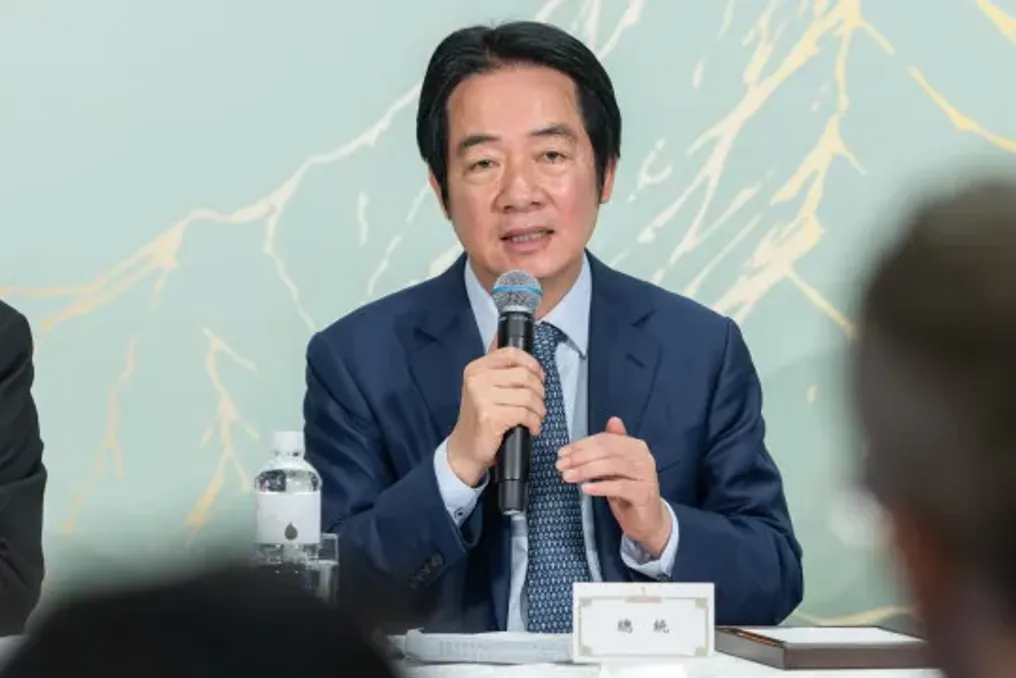
According to the broadcaster Radio Taiwan International (RTI), Lai made statements during the inauguration of new facilities at the National Chung-Shan Institute of Science and Technology (NCSIST), the island's main entity responsible for armament development, and at the start of construction of an aerospace and drone park in Chiayi County.
The head of state stated that everything was ready, pending only parliamentary support for the release of these funds. He explained that these resources would allow the Ministry of Defense to make acquisitions from Taiwanese manufacturers and foster autonomous sector development.
The new NCSIST complex, built with an investment exceeding 1.1 billion New Taiwan Dollars (equivalent to 31 million euros), will be dedicated to research, testing, and production activities of military drones.
Additionally, the neighboring industrial park will receive an estimated public investment of 6.9 billion New Taiwan Dollars (about 194 million euros) and is scheduled to be completed in 2028, according to RTI.
Lai argued that Taiwan has the capacity to establish itself as the 'Asian center of the democratic drone supply chain,' leveraging its semiconductor and information technology industries.
The focus on unmanned vehicles has solidified as a pillar of Taipei's 'asymmetric warfare' strategy. This military concept stipulates that the weaker side in a conflict with a large imbalance of forces, resources, or technology avoids direct confrontation, using unconventional tactics to exploit the adversary's vulnerabilities.
The parliament, which is controlled by the opposition, had reduced the extraordinary Defense budget proposed by the executive branch in May, excluding specific funds for locally produced drones. However, in August, a separate plan worth 240 billion New Taiwan Dollars (6.7 billion euros) was approved for the acquisition of these systems over six years, prioritizing those manufactured on the island.
This strengthening of domestic production occurs parallel to uncertainty regarding a US arms package for Taiwan, valued at $14 billion (12 billion euros), which is still awaiting approval from the Donald Trump administration.
Following the recent summit between Trump and Chinese leader Xi Jinping in Washington, Taipei argued that advancing these sales would be of 'vital interest' to the United States.
Beijing maintains the view that Taiwan is an inseparable part of its territory and does not rule out the use of force to take control of the island, while the Taiwanese government insists that only its citizens can determine its political future.
In June, China warned Taiwan that 'seeking independence by relying on the United States or resorting to military force is a dead end.' In turn, Washington approved the sale of arms to Taiwan amounting to $11.1 billion (10.3 billion euros) in December.
On Sunday, the US ambassador to China, David Perdue, emphasized that this agreement demonstrated that the Trump Administration had provided 'more weapons to Taiwan than any other President since 1979.'
Arms transactions for Taiwan remain a sensitive issue between Washington and Beijing. The United States has a legal obligation to provide Taiwan, governed by a democratically elected president and parliament, with arms that ensure the island's defense.