Banker Rajesh Sharma, working at a branch in central Mumbai, starts his workday daily at 7:45 AM, leaving his home in the Mumbai suburbs while his children are having breakfast. He has to handle customer service, check performance indicators, manage loans, review suspicious transactions, and submit compliance reports. Additionally, before closing the branch, he must reconcile cash in the vault.
Despite the set office hours, banking business rarely adheres to a strict schedule. By the time Sharma returns home, dinner is cold, and his younger child is already asleep. For years, his family's life has revolved around his branch's operating schedule. He regularly comes to work on the first, third, and sometimes fifth Saturdays of the month, putting on the same formal shirt and carrying the same office briefcase.
This situation leads to missed parent-teacher meetings, rescheduled medical appointments, and postponed professional training. Sunday is also not a full day off; it is often filled with grocery shopping, family duties, unfinished tasks, and preparation for the next demanding week.
Sharma is not alone in this issue. A 2024 study conducted among 282 bank employees in the Kollam district of Kerala state revealed a moderately high level of burnout among 82.2 percent of participants. It was found that long working days have a significant impact: employees working more than eight hours a day were 2.39 times more likely to experience burnout and 3.37 times more likely to experience stress compared to colleagues working fewer hours.
All this occurs against the backdrop of Indian banks leading one of the world's most significant digital transformations. This raises the question of whether it is time to implement a five-day work week that recognizes the importance of employee well-being. Such a schedule should complement other human resource management measures, including improved compensation, bank-supported self-development programs, and transparent promotion and transfer policies. Customer service and financial efficiency should not come at the expense of staff well-being.
Transitioning to a five-day work week would allow bank employees to align with the standards of workers in other government institutions. Central government offices, along with the Reserve Bank of India (RBI), have maintained a five-day schedule since June 1985. Financial sector regulators and stock exchanges also operate five days a week. The Life Insurance Corporation of India switched to a five-day week in 2023, and the General Insurance Corporation follows the same schedule.
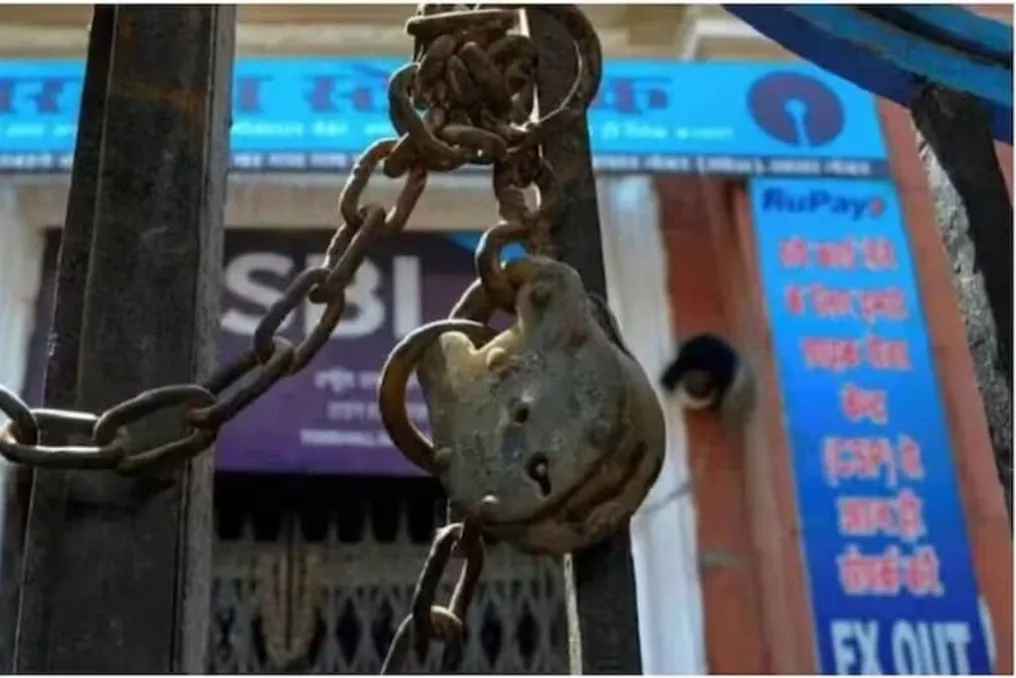
At the time of writing this column, there is discussion about the proposal for a five-day work week in banks, and a three-day nationwide bank strike is looming, scheduled for September 28 to 30. In addition to demanding a five-day work week, the United Forum of Bank Unions insists on the abolition of the performance-linked incentive scheme. A conciliation meeting on September 22 failed to resolve the deadlock. The government and the Indian Banks' Association, the industry body representing bank management, have called for continued dialogue.
The Unified Payments Interface (UPI) in August 2026 processed a record 24.51 billion transactions worth ₹29.82 trillion. This was the highest monthly volume in history, equivalent to approximately 791 million transactions per day, or about 9,150 every second. In the financial year 26, UPI processed 241.62 billion transactions worth about ₹314 trillion, nearly 13,000 times more than the 178 million transactions recorded in financial year 17, its first year of operation. In the first half of financial year 25, digital methods accounted for 99.8 percent of India's payment volume, and this share has likely increased since then.
Of course, bank branches have not lost their relevance. As of March 2026, there are 168,624 bank branches—public, private, foreign, small financial, and regional rural banks. Elderly citizens, rural customers, small businesses, and people needing loans, KYC updates, cash services, and documentation assistance still require human support. However, routine payments, fund transfers, balance inquiries, and many other services no longer depend on a physical bank counter.
In addition to UPI, ATMs, money remitters, business correspondents, call centers, mobile applications, and internet banking can ensure continuity of operations on Saturdays when branches are closed. A money remitter is a device that counts, authenticates, stores, and reissues cash. Check processing is also becoming increasingly technology-driven. Under the RBI's permanent clearing system, introduced in October 2025, check images are submitted electronically throughout the day, and settlements occur after confirmation by the paying bank. According to RBI data, the number of checks presented for clearing decreased by approximately 8 percent in both financial year 24 and financial year 25. Critical functions such as clearing, treasury, cybersecurity, data centers, and international operations can continue to run through specialized or rotational teams, even when customer branches are closed. Moreover, stock, money, and currency markets are closed on Saturdays anyway.
Bank employees are responsible not only for loans, deposits, and cash withdrawals—they are also involved in fraud prevention, cybersecurity alerts, regulatory compliance, audits, financial inclusion programs, government lending schemes, and debt collection, assisting retail customers with savings, pensions, and debts.
They must remain vigilant. A missed warning, an incorrect entry, or a hasty check can have serious financial consequences and damage the bank's reputation. Two-day weekends would help employees recover physically and mentally. They would return to the branch, which requires patience, judgment, and accuracy, better prepared.
A five-day week could also make the banking sector more attractive to young professionals, supporting talent acquisition, staff retention, and employee morale. It would demonstrate that the industry values productivity and responsibility while acknowledging that sustainable work requires rest.
Customer inconvenience is a real issue, but it can be solved. Extended weekday hours should be uniform across all banks, widely announced, and used thoughtfully, especially for customers who cannot visit branches during regular business hours. Banks can open more teller windows for priority services, implement better token systems, and offer special assistance to the elderly and people with disabilities.
In areas with low digital access, additional support should be provided to business correspondents, money remitters, and digital literacy assistance. Banks should also study transaction patterns for each branch instead of assuming that the needs of urban, semi-urban, and rural customers are identical. Critical functions will still require coverage on weekends, as fraud monitoring, cyber incident response, network operations, data centers, treasury settlements, and emergency hotlines cannot stop.
A five-day week will benefit banks in another way. Keeping all branches and administrative offices open requires electricity, air conditioning, lighting, generators, official transport, cleaning, security, printing, and other consumables. Closing them for two extra Saturdays in most months—and three in some—will not eliminate fixed costs like rent and salaries, but it may reduce variable operating costs. Estimates suggest that banks could save at least 8 percent on electricity and fuel if offices were closed for approximately 28 Saturdays a year, when they currently operate. With rising crude oil prices due to the conflict between the US and Iran, saving gasoline and diesel fuel would also help reduce India's import bill, albeit slightly.
Saving variable costs is important as banking operational expenses are under pressure. In February, CareEdge reported that the cost-to-income ratio for 19 listed commercial banks rose to 47.7 percent in the third quarter of financial year 26, with operating expenses increasing by 9.5 percent year-on-year to ₹0.81 trillion. A May 2026 report from the consulting firm McKinsey, 'Indian Banks: Navigating through the Turbulence,' notes that the cost-to-asset ratio of Indian banks in financial year 25 remained almost twice as high as that of their global competitors, while technology and compliance costs continued to rise.
The change could begin with a six-month monitoring period to assess branch queues, complaint volumes, digital system uptime, check processing, employee attendance, customer satisfaction, and actual cost savings. If certain regions face operational difficulties, the staff and correspondent network can be appropriately reinforced.
Currently, banks are closed on the second and fourth Saturdays and open on the others, a policy implemented in September 2015. Eleven years have passed since then. Has any survey been conducted on its impact on customers? If the current arrangement has not caused noticeable difficulties, extending the weekend to all Saturdays is a logical next step. This is not just about unions, but about 1.8 million bank employees. Let all Saturdays be holidays, and extend working hours from Monday to Friday to compensate.
If this happens, Sharma will be able to join his family on Saturday morning. He can return to his branch on Monday rested, focused, and ready to work. Meanwhile, his customers can still transfer funds, withdraw cash, and make payments through the full range of 24/7 digital channels.