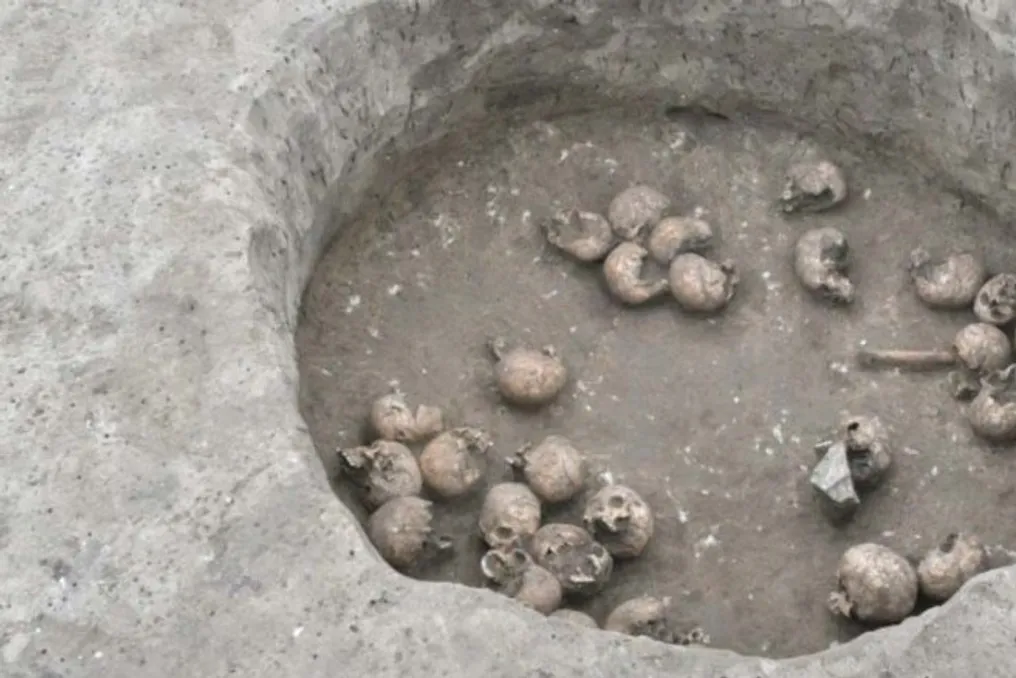
Paleogeneticists extracted DNA from skulls found in the refuse pit of the Chekups-2 settlement
Read more
N+1
nplus1.ru

Paleogeneticists extracted DNA from skulls found in the refuse pit of the Chekups-2 settlement

Russian paleogeneticists analyzed DNA extracted from the skulls of sixteen ancient individuals discovered in the refuse pit of the Chekups-2 settlement. These skulls showed numerous signs of damage.

The study established that all the found remains belonged exclusively to males, and they were not close relatives to each other.

Y-chromosomal haplogroups were determined for ten of these individuals. The data indicated that these men might have originated from the local population of the Eastern Black Sea region through the paternal line.

The results of this research were presented in a scientific article published in the journal 'Vestnik Moscow University. Series XXIII. Anthropology.'
Similar stories

Geneticists from Novosibirsk studied the DNA of a representative of the Afanasev culture
Read more
nplus1.ru

Geneticists from Novosibirsk studied the DNA of a representative of the Afanasev culture

Geneticists from Novosibirsk sequenced and conducted a detailed analysis of the DNA of an individual belonging to the Afanasev culture. This person was buried about five thousand years ago in the territory of the Altai Mountains.

The study allowed researchers to determine that the remains belonged to an adult male. It was confirmed that he carried mitochondrial haplogroup T1, which is widely distributed in Western and Central Eurasia. Furthermore, Y-chromosome analysis showed the presence of haplogroup R1b-M269, indicating a low level of diversity among the paternal lines of the Afanasev people.

The results of this scientific study were presented in an article published in the journal 'Problems of Archaeology, Ethnography, Anthropology of Siberia and Adjacent Territories.'

Popular