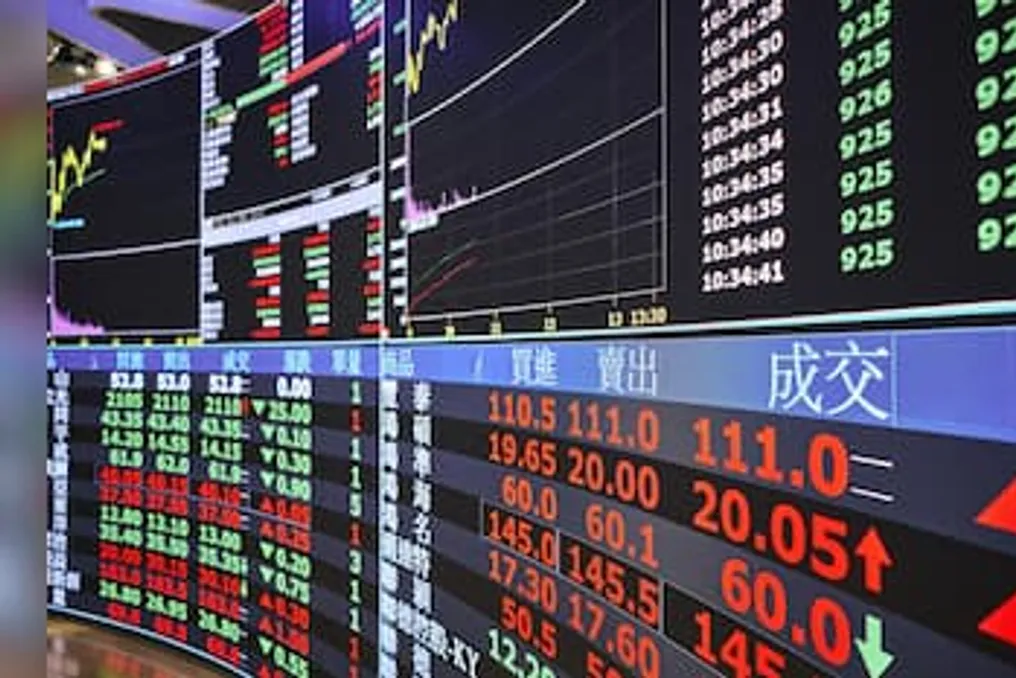
Indian indices Sensex and Nifty fall amid rising oil prices and geopolitical tensions
Read more
Business Standard
business-standard.com

Indian indices Sensex and Nifty fall amid rising oil prices and geopolitical tensions

Indian benchmark indices began the Monday trading session with subdued sentiment, continuing their decline after the longest weekly losing streak since 2020. The dip in investor sentiment was driven by rising crude oil prices and increasing global bond yields following President Donald Trump's rejection of Iran's latest proposal.

The BSE Sensex barometer fell by 900 points, representing 1.21 percent, reaching 72,995. Concurrently, the NSE Nifty 50 benchmark index lost 284 points or 1.22 percent, dropping to 22,856. Negative momentum was observed across all sectoral indices at the start of trading. Broader markets also faced significant selling pressure, as small and mid-cap indices declined by 1 percent each.

Dr. V. K. Vijayakumar, Chief Investment Strategist at Geojit Investments, noted that 'Brent crude oil price at $106 and the 10-year US Treasury yield at 5.2 percent are serious headwinds putting pressure on markets. Institutional Portfolio Investors (FPIs), who were buying in July and August, have once again become sellers in September. This scenario is likely to sustain market pressure in the near term.'

Several factors contributed to the decline in the Indian stock market. Firstly, concerns over the Middle East conflict. US President Donald Trump rejected Iran's proposal to resume operations in the Strait of Hormuz and cease hostilities, while Iran insisted that only diplomacy could resolve the conflict with the US and Israel. This impacted global equity, oil, and bond markets.

Most Asian markets traded in the red: South Korea fell by 2 percent, and Japan's Nikkei dropped by 0.10 percent. Chinese markets also showed declines of more than 1 percent.

Secondly, the rise in oil prices by 2 percent. Concerns over supply issues amid the lack of resolution to the Middle East crisis supported high oil prices. The higher cost of crude oil threatens to increase inflation and the current account deficit for India, which remains the world's third-largest oil importer. Brent crude futures rose by 2.2 percent to $106.6 per barrel, and US WTI crude jumped by 1.45 percent to $93.76 per barrel.

Thirdly, the jump in bond yields. Selling resumed in bond markets amid rising oil prices and heightened inflation fears. According to a Bloomberg report, the yield on two-year US interest-rate sensitive bonds rose by five basis points to 4.90 percent, and the ten-year yield climbed by four basis points to 5.20 percent. Higher rates reduce the attractiveness of riskier emerging markets like India.

The fourth factor is the resumption of selling by FPIs. After being net buyers in July and August, foreign portfolio investors turned sellers this month, offloading shares worth 17,131 crore rupees, leading to a total year-to-date sales volume of 2.41 trillion rupees, according to NSDL data.

Vijayakumar added that 'from a market perspective, an important trend is that even though FPIs are selling large-cap stocks, they continue to buy mid and small-cap stocks despite their elevated valuations. Momentum is present in the broader market. This is likely to be a short-term phase.'

The technical outlook, according to Osho Krishnan, Chief Manager of Technical Research and Derivatives at Angel One, remains extremely weak, as the weekly RSI offers limited support, and the overall macroeconomic backdrop continues to reinforce bearish sentiment. He warned that 'the level of 23,000 remains a key support and a critical level that bulls must defend. A decisive break below this level could accelerate the decline towards the 22,800–22,700 zone in the medium term.' Furthermore, Krishnan noted that a bearish breakout around 23,280–23,350 is expected to serve as an immediate hurdle and may limit any attempts at recovery.


Similar stories

Indian indices Sensex and Nifty decline due to rising bond yields and oil prices
Read more
business-standard.com

Indian indices Sensex and Nifty decline due to rising bond yields and oil prices

Indian benchmark indices began the trading session on Thursday with a decline, which was caused by rising bond yields, increased crude oil prices, and selling in the banking and insurance sectors.

The BSE Sensex index lost 707 points, or 0.94 percent, reaching a daily low of 74,120.62 points. By 9:25 AM, the three-component index had fallen by 575 points or 0.77 percent, standing at 74,251 points. Meanwhile, its counterpart on the NSE, Nifty 50, plummeted by 241 points or 1.02 percent, reaching the level of 23,205. According to the latest data, it was at 23,245, down by 201 points or 0.86 percent.

Most sectoral indices, with the exception of pharmaceuticals, showed a significant decline. The shares of the banking and financial sectors exerted the greatest pressure on trading.

Dr. V K Vijayakumar, Chief Investment Strategist at Geojit Investments, noted that the sharp rise in Brent crude oil prices above $102 and the increase in US 10-year bond yields to 5.11 percent would negatively affect the market. He added that as long as these two global risk factors persist, the prospects for a reasonable market recovery seem unlikely.

Key reasons for the stock market crash

There are several factors explaining today's stock market fall. Firstly, there was a surge in global bond yields, which caused concern among stock market investors. The yield on US 10-year bonds stabilized at 5.11 percent during the Asian trading session after increasing by 15 basis points in the previous session, marking the highest level since 2007. At the same time, the yield on Japanese government bonds rose by 8 basis points to 3.06 percent, a level not seen since August 1996. Higher rates reduce the attractiveness of riskier assets, such as emerging market stocks, like those in India.

Secondly, oil prices remain high. Despite a slight softening in oil prices during the day, they continue to hold above the $102 per barrel mark. Brent crude futures rose by 4 percent in the previous session due to the ongoing rift between Iran and the United States regarding the completion of their war. The Iranian President told the UN General Assembly that Tehran would never surrender to US pressure, according to Reuters.

Thirdly, the probability of an interest rate hike by the Fed is growing. US Federal Reserve officials maintained a hawkish tone amid rising inflationary pressures caused by higher oil prices. Federal Reserve Governor Michael Barr stated on Wednesday that the central bank's recent rate hike was part of efforts to adjust borrowing costs and signaled the possibility of further increases, according to a Reuters report. Now, CME FedWatch predicts a 69 percent probability of a Fed rate hike at the next meeting, up from 44 percent a month ago.

Fourthly, shares of banks and financial companies exerted downward pressure. Shares in the banking and financial sector faced intense selling pressure after IRDAI proposed reforming commission rules to limit payouts, tie them to product complexity, and extend insurer commissions for up to the first year of the policy.

Among the biggest losers in the Nifty 50 package today were HDFC Life, Bajaj Finance, Axis Bank, and Bajaj Finserv, which lost up to 8.5 percent. The banking and financial sectors constitute the largest weight in the Nifty 50 package.

Technical forecast

Shrikant Chauhan, Head of Equity Research at Kotak Securities, noted that Nifty formed a small bullish candle on daily charts and maintains a range-bound movement during the day. He added that the current market structure has no definite direction, and traders can expect sideways breakout. 'In the upward direction, the key resistance zone remains 23,500/75,000. Above 23,500/75,000, the market may move towards 23,600-23,650/75,800-76,000. On the other hand, below 23,250/74,300, selling pressure may intensify. Below this level, the market may slide to 23,150-23,000/74,000-73,600.'

Stock Market Crash: BSE and NSE Indices Plummet, Raising Questions About NSE IPO Debut
Read more
www.aajtak.in

Stock Market Crash: BSE and NSE Indices Plummet, Raising Questions About NSE IPO Debut

On Thursday, as the trading session began on the stock market, a crash occurred. Both market indices plummeted. The BSE Sensex index, comprising 30 stocks, fell by more than 700 points from the opening, while the NSE Nifty index, moving in sync with the Sensex, also sharply declined. NSE Nifty lost over 200 points immediately after opening.

Amid this crash, many stocks, including shares of Reliance, HDFC Bank, Axis Bank, and Indigo, were in the red zone. Particular attention was drawn to the NSE IPO, which is set to debut at 10 am amidst this market turmoil.

At the start of trading on Thursday, the BSE Sensex opened at 74,272, lower than the previous close of 74,828. During the entire five-minute trading period, the Sensex began a rapid decline, reaching 74,120 with a drop of over 700 points.

As for the Nifty index, which consists of 50 stocks, it followed the example of the Sensex. Nifty opened at 23,221, below the previous close of 23,446, and then continued to fall, trading at 23,205, losing more than 200 points.

In the context of the stock market crash, shares of companies such as Reliance and HDFC Bank opened in the negative. Among the most heavily falling stocks in the BSE large-cap segment were Bajaj Finance Share (down 5%), Axis Bank Share (down 3.70%), Bajaj Finserve Share (down 3.50%), and Kotak Bank Share (down 2%).

A decline was also observed in the mid-cap category: Policy Bazar Share (down 10%), MFSL Share (down 9.10%), AU Bank Share (down 5%), IDFC First Bank Share (down 3.30%), and Yes Bank Share (down 2.60%).

Despite the devastating events in the stock market, the NSE shares debut will take place. This situation has caused concern among investors. It should be noted that the NSE IPO, valued at ₹22,561.57 crore, was open from September 17 to 21 and received a positive response from investors. Nevertheless, in the 'grey money' market, this IPO signals a sluggish listing, as the NSE IPO GMP is only about 2% just before listing.

The reasons for the stock market decline are linked to deteriorating sentiment in American and Asian markets. In the previous trading day, the Dow Jones fell by 250 points. This was due to US Treasury yields on twenty-year bonds reaching a two-decade high. Furthermore, crude oil prices continue to rise in the international market, trading above $100.

GIFT Nifty fell by more than 100 points; Asian markets show mixed dynamics amid global bond sell-off
Read more
business-standard.com

GIFT Nifty fell by more than 100 points; Asian markets show mixed dynamics amid global bond sell-off

GIFT Nifty signaled a possible decline in the Nifty50 index opening, as the sell-off in global bonds weakened risk appetite. Asian markets showed mixed results on Thursday morning.

According to data from September 24, 2026, most global markets recorded losses after the rise in global bond yields, which was caused by concerns about further interest rate hikes in the US. GIFT Nifty futures traded at 23,268.50, down by 182 points.

Asian-Pacific markets traded with mixed performance on Thursday morning. Japan's Nikkei 225 and South Korea's Kospi rose by 1.47% and 0.9%, respectively. Meanwhile, China's CSI 300 and Hong Kong's Hang Seng fell by 0.73% and 0.68%.

Overnight, the yield on the benchmark 10-year US Treasury bond jumped by 15 basis points to 5.11%. This was the largest single-day jump since Trump announced tariffs in 2025, according to Bloomberg. Robust economic data and hawkish statements from US Federal Reserve Chairman Michael Barr led to increased bets on further monetary policy tightening in the near future.

US Treasury yields rose amid growing expectations of the start of a rate hike cycle. The Dow Jones and S&P 500 closed lower by 0.68% and 0.75%, respectively, while the Nasdaq Composite finished trading down by 1.13%.

Brent crude oil futures traded above the $100 per barrel mark during Asian trading hours, despite a partial retreat from the previous session's gains. September futures were valued at $102.57, which is 0.82% lower on the Intercontinental Exchange. Gold futures remained unchanged, while silver futures fell by 0.79%.

Initial Public Offerings (IPOs)

On Thursday, subscriptions open for Initial Public Offerings (IPOs) of Moneyview, A-One Steels, Green Asia Impex, Peshwa Wheat, and Roopa Screen. On the mainboard section, the second day of subscription opens for IPOs of Adroit Industries, Elevate Campuses, Swastika Infra, and ArMee Infotech. In the SME segment, the second day of subscription opens for Unitec Fibres, S.K.Offset, Liqvd Digital, Pooja Logistics, and Coreintegra Consulting. The last day of subscription will be for the IPOs of Varmora Granito, Anand Seamless, and Himalaya Nutravedics.

Popular