Women's fear persists outside gender-based violence campaigns
Read more
IOL
iol.co.za

Women's fear persists outside gender-based violence campaigns

After Women's Month concluded, when public discourse focused on women's liberation and gender-based violence (GBV) through rallies, speeches, hashtags, and talk shows, the conversations quiet down. There is a feeling that society is waiting for the next calendar cycle—the 16 days of activism against violence against women and children, which will take place from November 25 to December 10.

Recent reports of a possible serial killer in Kempton Park shocked the nation, exposing a chronic problem: South Africa remains one of the most dangerous countries for women. Furthermore, women adhering to personal safety measures alone is not enough for complete protection.

The author points out the problem where attention to the safety of women and children is conditioned only by the cycle of campaigns. This concern is often fleeting, activating on specific dates rather than being a constant commitment. When microphones fall silent, panels end, and hashtags disappear, the discourse sinks into silence. The real work lies in confronting the realities that exist outside public attention.

For many women in South Africa, daily life proceeds anxiously: a hand reaches for a switched-off mobile phone awaiting threats, and keys are tightly gripped. Every step is accompanied by a pre-planned mental map of the route home. Questions like 'Which path is safer?' or 'Should I wait for someone to walk me to the car?' are not the language of freedom, but the language of fear, a daily mantra for survival.

Seventy years ago, Black women fought against a state that sought to control their movement through pass laws during apartheid. Today, the pass book is absent, but the question of whether a woman can move freely and safely in society remains relevant. The author emphasizes that apartheid pass laws and modern gender-based violence are not equivalent: the former was an explicit tool of state power, whereas the latter takes the form of threats, coercion, persecution, partner violence, assaults, and murders.

The essence of the issue is not comparison, but power. Who decides where a woman can go? Who makes her feel that certain streets, places, times, or relationships are too dangerous? Who determines the conditions under which she can realize the freedom that should belong to her as a person and a citizen? These questions cannot be limited to Women's Month.

Handing over the case is not equivalent to justice; successful prosecution makes accountability real. Investigation and prosecution contribute to accountability, but justice depends on what happens after a woman reports violence.

Effective investigations, competent prosecution, and appropriate consequences for offenders are part of deterrence. A hashtag cannot stop a man who expects not to be caught, charged, or convicted. A functioning justice system can do so.

Behind the numbers are women and girls whose lives have been disrupted by violence, intimidation, fear, and death. Violence is often underestimated. Some women never report to the police, never file a complaint, and never appear in statistics.

In intimate relationships, control manifests in multiple forms even before physical violence becomes apparent: isolation, work restrictions, phone monitoring, location tracking demands, financial dependence, threats, and humiliation. By the time violence becomes visible, the woman may have adapted her movements to another person's dictates for months or years.

The notion that women's safety is solely their responsibility raises serious concerns: 'Don't go there,' 'Don't travel alone,' 'Don't come back late,' 'Don't anger him.' Although some of these measures might save a woman's life, it is fundamentally wrong for society to teach women how to anticipate violence better than how to prevent it.

Why should a woman have to calculate risk when exercising ordinary freedom? Why does visiting work, attending a public event, traveling home, leaving an abusive relationship, or walking in public space require a personal safety strategy? We have replaced the bureaucratic checkpoint with an internal one. The state no longer needs to impose restrictions on a document if fear has taught a woman to regulate her movements.

The assertion of constitutional equality for women is insufficient. Freedom is felt by whether a woman can return home without fear, leave a relationship without fearing retaliation, travel without checking who is following her, or occupy public space without calculating whether she will get home safely.

Race, class, geography, and economic power shape vulnerability differently, but fear transcends these differences. Responsibility cannot rest on individual women. Families, communities, schools, institutions, the state, and men must acknowledge their share of responsibility. Men must participate in solving the problem to challenge behaviors and cultures that normalize control, humiliation, and violence. Institutions must stop viewing women's safety as something they should manage individually. Safe public transport, responsive police, accessible support services, effective investigations, and consequences for criminals—these are the conditions for freedom.

If we mark women's struggle for only one month and allow the conversation to fade, we risk turning an ongoing struggle into a calendar event. Memory has value, but memory without accountability becomes a ceremony without transformation. Women who challenged apartheid did not march so that future generations would exchange one form of restriction for another or remain socially conditioned to fear where they go, when they leave, and whether they will return intact.

In a few months, the country will enter the 16 days of activism period. We will hear statistics, promises, and calls to action. But before and after this period ends, women still have to live. This uncomfortable space that we rarely discuss is the ordinary days between campaigns—when there is no microphone, TV panel, or hashtag. This is a conversation we must have now, before the next round of speeches begins. Not just: how do women protect themselves? But why do women still need such strong protection in the first place? The test of freedom is not simply whether the law allows a woman to go somewhere, but whether she can go there without fear. August is over. The conversation must continue.
Similar stories

Financial and Emotional Costs Associated with Women's Safety Measures in South Africa
Read more
iol.co.za

Financial and Emotional Costs Associated with Women's Safety Measures in South Africa

Women from South Africa are forced to bear significant financial and emotional costs to protect themselves from gender-based violence. These expenses include the use of panic buttons, attending self-defense courses, and using safer modes of transport.

For millions of women in South Africa, ensuring personal safety goes beyond simply locking the front door or parking the car in a well-lit area. Necessary safety measures include panic buttons, personal safety apps, pepper spray, self-defense classes, stun guns, as well as extra funds spent on safer transportation and security services. Even if each expense item seems manageable individually, collectively they paint a serious picture of what it can cost a woman just to have a chance of getting home safely.

Specific examples of costs include: emergency assistance subscription—49 rand per month; panic tracker—R2,499 upfront plus R99 monthly; self-defense class—R600; pepper spray—about R160; and stun gun—about R380. Calculating a conservative illustrative basket, including one panic tracker, an annual safety subscription fee, one monthly self-defense class, pepper spray, and a stun gun, a woman could spend thousands of rand in the first year of self-defense attempts. This amount does not account for costs related to safer transport, private security, insurance, home safety measures, or changing travel routes and times.

This is an invisible bill attached to the life of a woman in a country where the fear of violence can accompany her on the streets, in public transport, at work, and even in her own neighborhood.

Daily Safety Expenses

Women are often advised to avoid walking alone, running, or using isolated routes. They are recommended to share their location, carry protective items, remain vigilant, and have emergency service numbers handy. However, each such measure requires a certain price—whether financial, emotional, or both.

While some women try to figure out if they can afford another level of protection, families mourn other women whose lives have already been cut short. Recent cases of women's deaths in eKhuruleni have drawn intense attention to this fear: according to the government's Interdepartmental Committee on Gender-Based Violence and Femicide, nine female bodies were found in different areas between July and September.

These deaths have once again raised questions about women's safety, the responsibilities of the state and society, and whether women should spend their lives waiting for violence before they can move freely in their communities.

When Disappearance Becomes a Lifelong Trauma for the Family

For Ian Cameron, a DA MP and Chairman of the Parliamentary Portfolio Committee on Police, the human cost of violence is familiar. He recalled the case of Clio Diko, a mother of three, who went missing in October 2022. 'I still think about Clio Diko,' he recalls. For three months, her family did not know her whereabouts.

In January 2023, Diko's decomposing body was found hidden under a bed in Mandalay, Cape Town. Cameron reported that there was a rope around her neck, and the body was covered in cement and tiles. She was eventually identified through DNA testing. Cameron noted that his team from Action Society supported Diko's family throughout the entire legal process, observing multiple postponements while the mother dealt with the trauma after finding her daughter's remains. In March 2024, Sandile Jegwa pleaded guilty and was sentenced to 20 years in prison for Clio's murder.

Although the conviction brought justice, Cameron emphasized that it could not erase what the family had gone through up to that point. He stated that 'justice prevailed,' but the period between Diko's disappearance and the verdict was a time of uncertainty and grief that her family had to endure. Diko's story showed that the impact of violence does not end with the discovery of the body or the appearance of the accused in court. It is the 'human cost' of the word 'postponement.'

The case also highlighted another issue in the gender-based violence crisis: what happens to families after a woman disappears or is murdered. For families awaiting answers, any delay means another period of uncertainty, and every postponement prolongs the grief.

A Woman's Dignity Does Not End With Her Death

The Soul City Institute warns that women should not be held responsible for preventing violence committed against them. The organization notes: 'It is deeply disturbing that women are repeatedly found abandoned, injured, partially clothed, and displayed in public places.' Soul City asserts that a woman's dignity does not disappear after her death. 'A woman's body does not lose its dignity because she died. She is not a statistical victim of a crime. She is not a warning. She is not a headline.' She was someone's daughter, mother, sister, partner, friend, and community member. 'She is a person whose dignity must be protected in life and after death.'

Soul City also questioned the approach to giving safety advice to women during police investigations. Police urged women in the Kempston Park area not to walk or run alone, especially in isolated areas, and to travel or exercise in groups. While such precautions may be necessary during an investigation, Soul City believes that women cannot be required to reorganize their lives around the threat of violence. The institute insists: 'The responsibility for violence committed against women cannot be placed on the women themselves.' They argue that safety advice should not turn into another form of victim-blaming, questioning why women should risk being killed just for walking, running, working, or traveling home. 'Women should not have to restructure their entire lives because men decide to commit violence.'

A Crisis Requiring More Than Police

Soul City stated that this crisis cannot be solved by law enforcement alone. The organization called for an urgent coordinated response involving SAPS, municipalities, prosecutors, communities, transport authorities, civil society, and other relevant institutions. Its recommendations include thorough investigation of every death, holding perpetrators accountable, creating safer public spaces, improving lighting and transport safety, as well as adequate oversight and prompt local police patrolling, alongside continuous work with men and boys on issues of power, rights, consent, and healthy masculinity.

Furthermore, the institute called for a survivor and family-centered response that protects privacy, dignity, and emotional well-being, as well as responsible media and social media coverage that does not sensationalize female bodies or disseminate graphic images. Soul City stressed that South Africa must move towards prevention instead of waiting for another woman to die before systems start acting.

The Bill Women Should Never Have Had to Pay

However, for women, the cost of living under the shadow of gender-based violence is already being paid. It is paid through panic buttons and safety subscriptions, self-defense classes, and the use of safer transport. It is paid through the fear that turns a simple walk home into a risk calculation. And for families like Diko's, this bill is paid in years of uncertainty, grief, and the wait for justice. South Africa cannot continue to treat every death as an isolated tragedy while women are forced to bear the financial and emotional burden of self-protection. As Soul City said: 'We must stop normalizing the abnormal.'

Combating violence against women must start in families, parents are urged to take action
Read more
iol.co.za

Combating violence against women must start in families, parents are urged to take action

The appeal to parents and guardians is the necessity of raising more worthy men to improve society. A series of terrible events has occurred in the country, including the brutal murder of nine women in the Ekurukhleni area, whose bodies were found in fields, near roads, and in open spaces. The police are investigating to determine if these murders are connected, but have not yet confirmed the involvement of a serial killer.

The grim situation is exacerbated by the fact that in 2022, the death rate of women in the country was 12.2 per 100,000 people, which is almost six times the global average, equating to approximately seven victims daily.

During 2023/24, the police received 42,569 reports of rape, exceeding 116 cases per day, while it is known that many other cases were never registered. The National Prosecution Service recorded a 74% conviction rate for sexual crimes in 2024/25, but it is important to understand that this percentage only applies to cases that reached a verdict, not to all committed or even registered acts of violence.

The author argues that one cannot continue to question the state of society because such murders of women are not new in South Africa, and if changes do not occur, this will not be the last case. Although the president and public leaders will condemn these actions, and law enforcement agencies promise thorough investigations, such protests often subside until the next act of violence or another body is found.

What is needed are not just words, but decisive action from the government, the justice system, local communities, and most importantly, families. The author believes we live in a 'time without fathers' and calls on men to come home and work on themselves. Men should be taught that strength lies not in dominance, aggression, or control, but in respect, protection, care, and honoring the dignity of women.

An argument was presented that some mothers hinder fathers from interacting with children, but the author addresses fathers with a question about the seriousness of their intentions to be involved. He emphasizes that both men and women have the legal right to defend their rights, and there should be no more excuses.

Raising better men requires five conscious steps: presence that is not only financial but also emotional; demonstrating respect, especially when addressing women; teaching responsibility so that cruelty is not dismissed as 'boys will be boys'; teaching consent and emotional discipline from an early age; and healing internal wounds within the family, as traumatized people hurt others. This is a task for mothers and fathers, men and women. Love, discipline, boundaries, and values must return to families. It is necessary to raise people who build, not destroy; who elevate, not trample upon the dignity, rights, and lives of others. There is a call to speak, but then return home and do this work, becoming a protector, not an aggressor.

Despite declaring GBVF a national catastrophe, murders of women continue in South Africa
Read more
iol.co.za

Despite declaring GBVF a national catastrophe, murders of women continue in South Africa

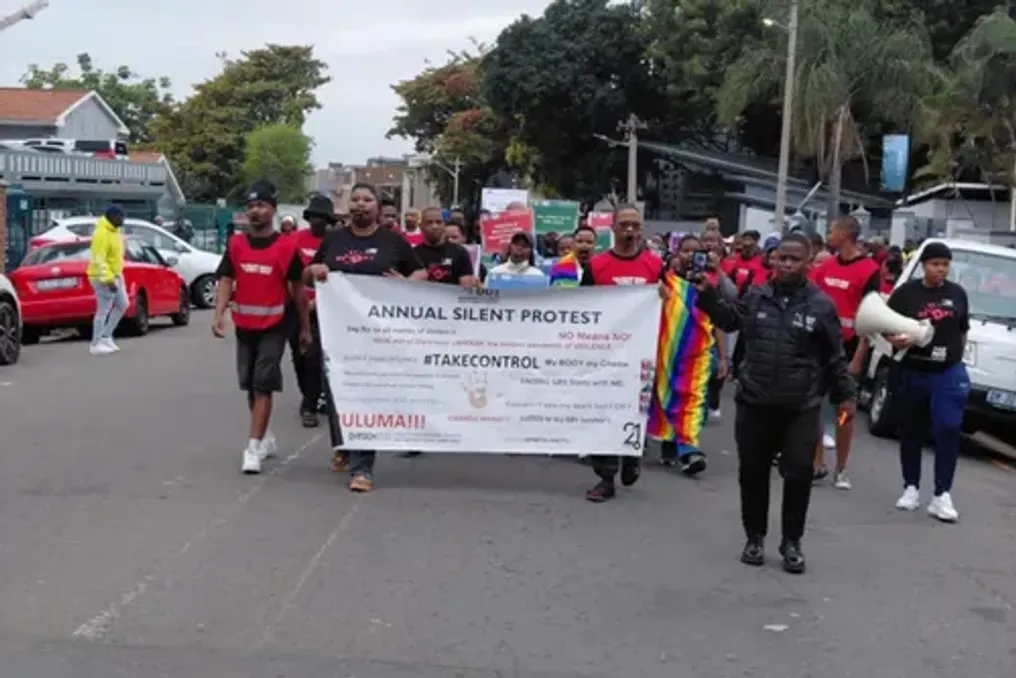
In South Africa, students and staff from DUT marched silently through Durban to honor the memory of victims of gender-based violence and femicide, and to call for an end to violence, fear, and silence.

In the eThekwini area, the body of a sixth woman was found in approximately two months. Police are investigating possible links between these cases but warn that it is too early to speak of a serial killer's guilt.

Nevertheless, this should not distract from the broader crisis. South Africa does not lack reports of GBVF; it lacks consequences, protection, and urgency.

The case of 38-year-old Elizabeth 'Ntontso' Moselakgomo intensified public anger. Moselakgomo, a mother, went missing after going for a run. Her family later identified her body at the Germiston morgue. The police deployed specialized resources to investigate her death alongside other murders.

The circumstances of the deaths are still being determined, and it would be irresponsible to claim that the women were killed by the same person before investigators establish that. However, six bodies in a concentrated geographical area demand an exceptional response.

Police have already involved multidisciplinary investigators and forensic specialists. One suspect is in custody in connection with the first body found in July. Investigators are now working to identify connections between these cases. Therefore, the public needs more than just assurances that investigations are underway; it needs results.

Because for the women living in eThekwini, the question is not whether the authorities will eventually explain what happened, but whether the state can prevent the next woman from becoming another case.

Murders in eThekwini occur against the backdrop of a national crisis. SAPS registered the murder of 569 women between April and June 2026, as well as 9201 rape cases. Over 60% of the rape cases sampled occurred in residential premises, challenging the notion that violence against women is a danger lurking somewhere outside the home.

The scale of this is precisely what led the government to classify GBVF as a national catastrophe in November 2025. This classification was intended to allow the government to coordinate its response, direct resources to the crisis, and strengthen accountability. The government also established a National GBVF Council to coordinate the national response.

However, almost a year after the declaration of the catastrophe, frontline organizations continue to report serious resource issues. The South African National Shelter Movement states that about 90% of shelters supported by them are struggling with funding and other forms of support. These facilities may be necessary for women trying to escape abusive homes, receive counseling, legal aid, or protect their children.

This reveals a fundamental contradiction. If GBVF is a national catastrophe, the infrastructure protecting its victims cannot be treated as a secondary issue.

South Africa is not alone in the fight against femicide. In Cameroon, reports indicate that over 120 women have been killed by intimate partners since the beginning of the year. In response, the government launched a three-month national campaign targeting femicide, domestic violence, gender inequality, and male dominance, focusing on prevention, reporting crimes, and prosecution.

Cameroon's campaign itself does not solve the problem. Campaigns only make sense when backed by functioning institutions. But the comparison raises an important question for South Africa: what does emergency action look like when a crisis has already been officially recognized?

It should mean swift police investigations. It should mean adequately funded shelters. It should mean prosecutors effectively handling cases. It should mean the enforcement of protection orders. It should mean early intervention when patterns of abuse emerge. And it should mean confronting the attitudes among men who normalize control, the right to dominate, and violence against women.

The most dangerous response right now will be another cycle of outrage followed by another declaration. The state has already acknowledged the problem. President Cyril Ramaphosa declared GBVF a national catastrophe, and the government established a status National Council and promised increased policing, survivor support, and prevention programs.

The question is no longer whether the government understands the crisis. The question is whether the system delivers results. This means publishing measurable targets for investigations, prosecutions, convictions, protection orders, shelter capacity, and police responsiveness. It means identifying where resources are lacking and addressing those gaps instead of creating another layer of bureaucracy. And it means that men must become part of the solution, not just receive instructions to condemn violence after another woman dies.

The women found in eThekwini cannot be reduced to statistics. Nor can the 569 murdered women in three months be reduced to statistics. South Africa has already named GBVF a national catastrophe. Now the state must act as if it believes its own declaration.

Popular