South Africa is facing a serious issue with basic education: by the end of the third grade, fifteen percent of students cannot read a single word. This fact calls into question the potential of artificial intelligence (AI) in the country's schools.
This data was obtained as part of the National Survey by the Department of Basic Education's Funda Uphumelele and was noted by the Reading Panel in 2026. The survey covered 27,838 students in 710 schools and showed that only about three out of ten students in the first three grades achieved target reading levels in their home language.
For educational institutions considering the implementation of AI, the question arises as to how this technology can help teachers identify children's difficulties, respond to them promptly, and track learning progress.
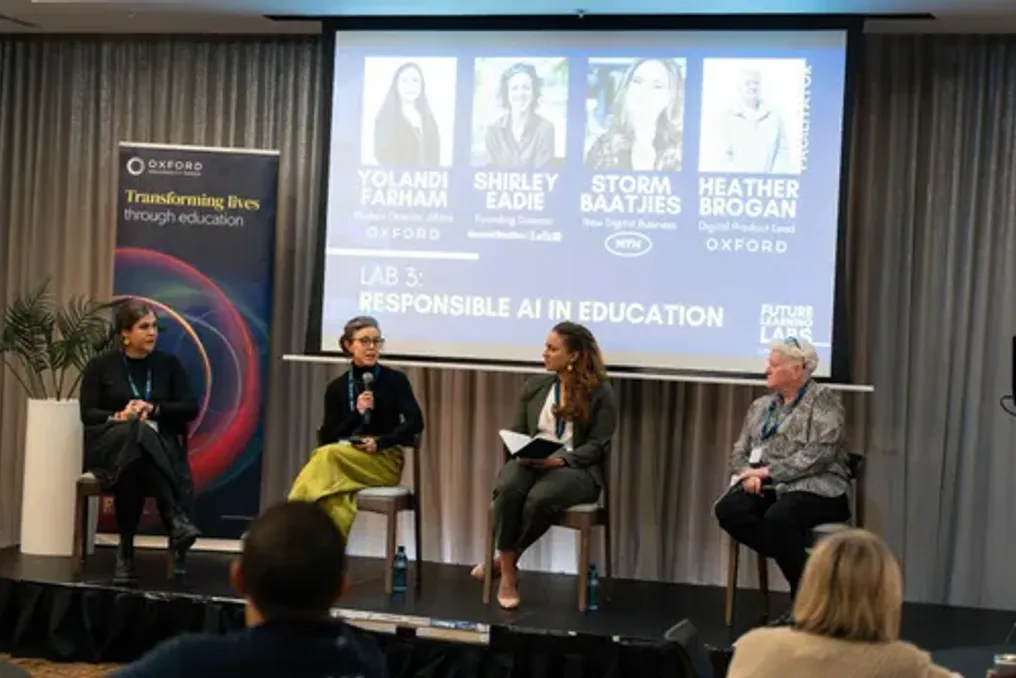
In September, workshops were held in Cape Town and Johannesburg by Future Learning Labs from Oxford University Press South Africa. These events brought together educators, publishing specialists, and researchers to study how digital tools can support the learning process. Discussions linked the possibilities of AI with real classroom requirements, such as identifying knowledge gaps, selecting appropriate support, assessing students' independent abilities, and determining accountability for presented material.
Heather Brogan, Oxford's digital products manager and program moderator, emphasized that the initial stage must involve understanding the people who will use the technology. According to her, it is necessary first to find out exactly what the student is struggling with and what support the teacher requires before responsibly developing solutions for both.
The focus on identifying student difficulties means that the school must first define the problem it wants to solve and then consider whether a specific tool can help and how its contribution will be assessed. This distinction is critical because a completed assignment may only give a limited view of a child's understanding. If AI helped produce an answer, teachers may need additional opportunities to understand how the student arrived at the conclusion and which parts of the work they can explain without assistance.
Post-task discussion can provide this opportunity. Asking students to describe their reasoning, justify the evidence used, or apply the same knowledge to another question helps teachers assess their understanding in greater detail. The value of this exchange lies in revealing whether the student can repeat the answer but needs support to explain it; or if they understand the main idea but struggle with articulating it clearly. Follow-up questions allow the teacher to differentiate these complexities and decide what support to provide.
The question of reading assessment raises a similar issue: how does information received from students influence teaching? Angelique Timmis, Head of Curriculum at Curro Holdings, highlighted the topic of reading comprehension, drawing on Curro's experience in literacy. She stated that reading assessment should help determine what to study next, allowing support to be targeted at areas of difficulty and its effectiveness to be checked. Technology becomes useful when it facilitates this process.
The phrase 'what to study next' gives the assessment a practical purpose. The result becomes meaningful when it helps the teacher make a decision about the response, and subsequent assessment provides a chance to check whether the intervention helped. Applying this approach in digital learning requires schools to look deeper than just the presence or use of a resource; it requires considering what the resource reveals about the learning process and whether teachers can use this information to guide their work.
These reading results are particularly relevant for the early years of schooling. Since many children have not yet reached target reading levels in their home language, the value of any proposed intervention depends on how well it aligns with the skills they are still developing.
Similar attention to comprehension can be directed towards developing AI literacy. Vocabulary knowledge, comprehension ability, and subject knowledge help students analyze the answers they receive, recognize incomplete explanations, and formulate questions that advance their learning. Classroom activities can give children the opportunity to practice these skills: for example, comparing an AI-generated answer with information from another source, identifying unsubstantiated claims, or explaining why one story seems more convincing than another. Such activities give teachers a basis for assessing the logic of the student's conclusions and help integrate the use of AI into a broader process of information verification and questioning.
All these possibilities impose responsibilities on schools and service providers. Decisions regarding AI in the classroom include content suitability, the role of teachers, and procedures for handling problems. Yolandi Farham, Oxford's Africa Product Director, noted that the adoption of technologies must be guided by responsibility towards the students from the outset. She stressed that every decision to implement AI carries responsibility towards the student, requiring clarity on who verifies the content, how teachers guide its use, and how problems are resolved. These responsibilities must be clear from the beginning.
The practical realization of these expectations may require an agreement between school leaders, teachers, and families on what constitutes acceptable assistance. Students must know when to disclose the use of AI and what information can be entered into the tool. Expectations may also vary depending on the type of classroom task: assistance with learning an idea differs from what is permitted when assessing independent understanding. Explaining the purpose of the activity helps students realize the operating boundaries. Teachers will need support to fulfill their oversight duties: training and time to analyze generated material will help assess its accuracy, relevance to student needs, and alignment with the curriculum. Clear procedures for reporting issues are also part of this work, where questions about content or usage must have a defined verification pathway understood by all participants.
The situation in South African classrooms was central to the contribution of Shirley Idi from Human Studios and Lefa AI. She emphasized the importance of involving those affected by technology decisions. Idi stated that South Africa needs an approach based on its own classrooms, where teachers, students, and parents help define both opportunities and risks. Language, accessibility, and the reality of teaching must become part of this dialogue.
Idi's call for a 'classroom-based' approach draws attention to the conditions of using the digital resource. A school considering a tool must verify whether students can use it, if its language and content suit their needs, and if teachers have the necessary support for effective application. Ultimately, the contribution of any technology must manifest in the child's learning itself, approaching the end of the third grade, through growing ability to read, comprehend, explain, and ask questions.