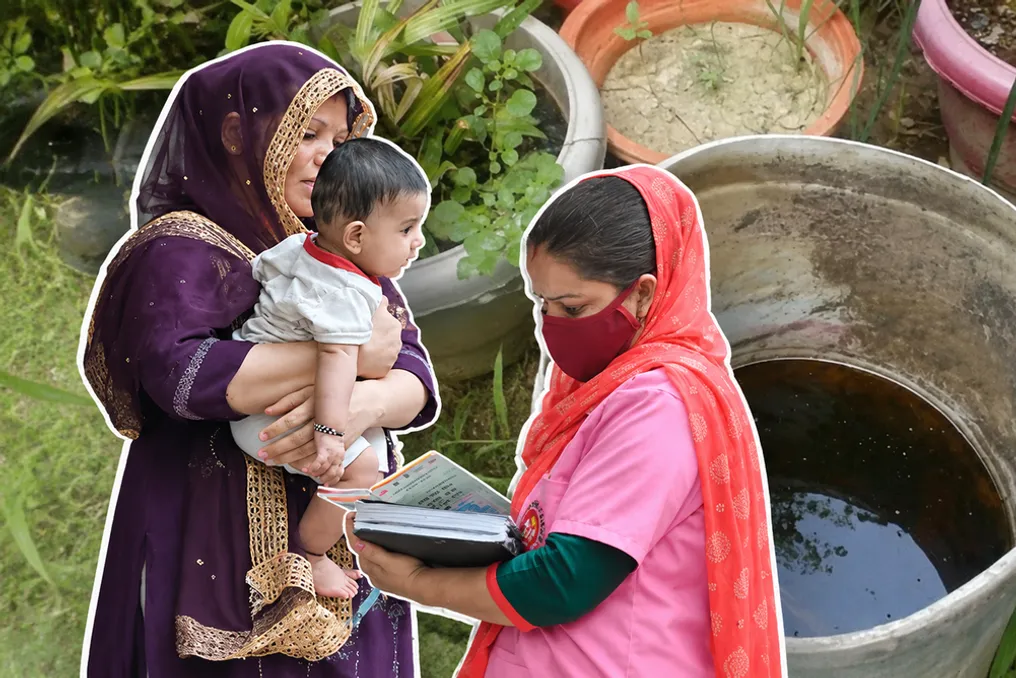
ASHA workers are imparting six vital pieces of knowledge to households regarding the prevention of dengue and malaria. Tilakavati, an ASHA worker with over ten years of experience in Tamil Nadu, emphasizes that a flashlight is better than a phone light for finding mosquito larvae, as weak light does not allow detection of larvae swimming in water barrels. She inspects buckets and reservoirs that families consider clean due to the water's transparency, explaining why seemingly harmless conditions can be dangerous. Upon finding larvae, she administers medicine to destroy them before the water is drained.
This small ritual is performed across the country during the monsoons by women who understand the burden of dengue and malaria in India more deeply than any statistical report. In Delhi, ASHA worker Joshita surveys flooded streets with questionnaires, aware that the disease during the season deprives her of incentivized pay tied to monthly targets. In Karnataka, ASHA worker Rekha spends days visiting homes to check barrels and bathrooms for stagnant water, noting that her work is undervalued, and people often do not believe her when she speaks about her earnings.
Field studies, repeated village after village, consistently reveal the same gaps in household understanding of dengue and malaria. Closing these gaps in many areas is a critical factor between an outbreak and a calm season.
Water for Dengue Should Be Clean, Not Dirty
The most persistent myth Tilakavati encounters during rounds is the assumption that mosquitoes breed only where it looks unsanitary. The Aedes aegypti mosquito, which transmits dengue, prefers clean, still water and can lay eggs in a puddle no larger than a coin. Upper tanks, air coolers, flower pot saucers, and refrigerator drip trays are common breeding sites precisely because they seem too clean to warrant concern.
Anopheles mosquitoes, which transmit malaria, are less selective and breed in both clean and dirty standing water, including open drains and construction site puddles. She notes that while conducting home checks, she explains why prolonged water storage is harmful to health, stating that people think only dirty water needs cleaning, whereas any stagnant water should be removed.
Fogging Kills Mosquitoes, Not the Problem
Municipal fogging vehicles driving through a colony often lead residents to believe the danger has passed. Fog only kills adult mosquitoes upon contact; it has no effect on eggs and larvae in a cooler tray or an old tire, which can hatch again within a few days. Rekha believes that 'fogging is ineffective in controlling dengue and is harmful to health.'
ASHA workers regularly find that houses have been fogged for years, but no one ever drains indoor containers because the visible spray creates a sense of action, even if the breeding source remains untouched.
Dengue and Malaria Require Different Treatments, Not One Home Remedy
Both diseases appear with the rains and both cause fever, so households often treat them interchangeably. However, this is incorrect. According to the World Health Organization (WHO), malaria typically goes through cycles of chills, high fever, and profuse sweating that repeat every two to three days, and it is treated with antimalarial drugs selected according to the parasite confirmed by blood tests. Rekha also points out that 'there is no specific cure for dengue,' only supportive care and careful monitoring of platelet levels.
Under India's National Vector Borne Disease Control Programme, ASHA workers are trained to conduct rapid diagnostic tests that allow for this distinction at the village level, as guessing based on symptoms delays the correct treatment for either disease.
The Most Dangerous Period for Dengue May Start After the Fever Subsides
Families often relax when the patient's temperature begins to drop, assuming the worst is behind them. Rekha warns that dengue complications 'occur after the fever subsides,' not before, which is the moment when many households stop monitoring the condition closely.
WHO clinical guidelines classify this critical window as 24–48 hours immediately following the normalization of temperature, when signs of alarm—such as persistent vomiting, abdominal pain, bleeding, or severe weakness—are most likely to appear. This is the distinction ASHA workers are trained to note during home visits: the period of vigilance is not the period when families instinctively relax.
Papaya and Similar Folk Remedies Do Not Cure Dengue
Papaya juice, kiwi, and various herbal mixtures, which are believed to boost platelet counts, remain widespread folk remedies, says Joshita. She explains: 'There is no evidence that papaya extract improves survival rates in dengue.' ASHA workers warn that the real risk lies in families delaying a hospital visit while waiting for a home remedy to take effect, especially in children and elderly patients with weakened immune systems.
Prevention Is Not Only the Government's Duty
Many households expect the problem to be solved by fog trucks and larvicide application. However, mosquitoes breed inside homes and private colonies just as often as in public places, and municipal services simply cannot reach every terrace reservoir or discarded container on private property. Ritik Kumar, a general practitioner who conducted door-to-door larval inspections in Tamil Nadu with ASHA teams, stated that 'the responsibility lies with all of us to cooperate with the health department.'
Rekha clearly outlines the stakes of this cooperation: 'ASHA workers have played an important role in reducing infant and maternal mortality,' she says, 'but we still receive very low wages.' Weekly draining of stored water, tightly closing containers, and clearing debris that collects rainwater around the house are steps that only residents can consistently take, and no larval inspection can replace them.
Visits That Hold the Line
Behind each of these six points is a workforce that silently shoulders a disproportionate share of India's fight against vector-borne diseases, often managing their own impact and unstable, incentive-based pay during the months they protect everyone else. Studies in dengue-affected areas have shown that most families worry about mosquitoes, but relatively few regularly check their surroundings for breeding sites, leaving word-of-mouth as the primary source of prevention advice for many households. It is this gap that women like Tilakavati, Joshita, and Rekha are trying to bridge through a single flashlight inspection during the season, where one overlooked flower pot saucer can be all it takes.