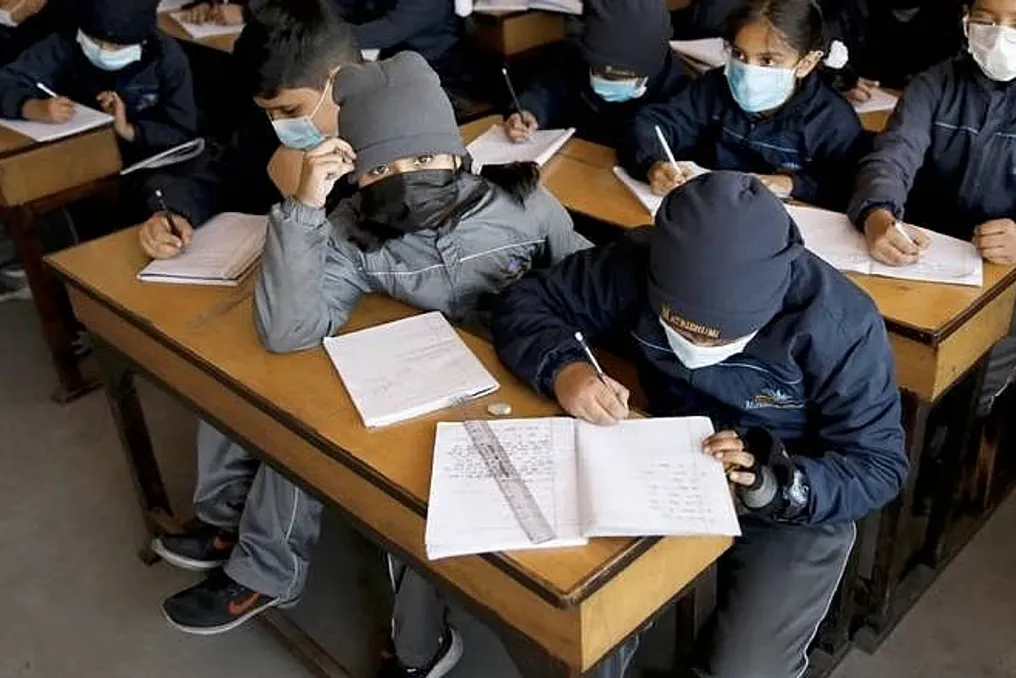
Dubai's private schools have entered the 2026–2027 academic year with an updated quality assurance system from KHDA, as most established educational institutions resumed inspections after a two-year hiatus from full checks.
In June, the Knowledge and Human Development Authority (KHDA) confirmed that quality assurance visits will commence at the beginning of the new academic year, but schools should not expect a return to the previous inspection cycle in exactly the same form.
Under the revised approach, schools may receive either a comprehensive inspection or a more targeted monitoring visit. KHDA will determine the appropriate type of visit using existing data on performance and school information, instead of following a single inspection schedule. Another significant change concerns the notification period: schools will be notified no later than 24 hours before the inspection team arrives. This means that leaders and teachers must maintain readiness throughout the entire academic year, rather than preparing specifically for a scheduled visit.
Currently, the private school sector in Dubai serves approximately 387,000 students from 185 nationalities across more than 220 schools. KHDA has confirmed that quality assurance visits will take place in the 2026–2027 academic year, but there is no single schedule for all private schools in Dubai.
The authority is adopting a more flexible method, determining the time and method of assessment based on individual school data. One category has a clear requirement: private schools completing their third year of operation in Dubai will undergo a comprehensive quality review. Schools in their first or second year will not be subjected to a full inspection.
For well-established schools, the type and timing of the visit will depend on KHDA's assessment of circumstances, performance, and the school's improvement stage. Not every private school in Dubai will undergo a comprehensive inspection in 2026–2027.
KHDA uses a data-driven process to determine which schools require a comprehensive assessment and which are better assessed through monitoring. The information considered includes the school profile, history of previous inspections, student achievements, self-assessment data, and external evaluation data. Education specialists will analyze this information and use moderation to ensure consistency in decisions.
When selecting a school for a comprehensive visit, the assessment will cover the full UAE School Inspection Structural Framework. A detailed report will be issued, and an overall school rating will be published. However, for schools reaching their third year of operation, the comprehensive review is automatic.
A monitoring visit is a more focused form of quality assurance. Instead of examining every area covered by a comprehensive inspection, a smaller group will review specific areas or 'areas of inquiry' identified through KHDA's analysis of the school. The resulting report will indicate strengths and areas requiring further development. Nevertheless, this visit will not result in a new overall KHDA rating.
This means that parents or schools should not automatically interpret a monitoring visit as evidence of poor school performance. It is part of a new system designed to align with the nature of KHDA's interaction with the individual school improvement path. Thus, a school receiving a monitoring visit will retain its existing public overall rating.
Some schools will receive an overall rating and a new published rating during a comprehensive review. Schools selected for monitoring will receive a report on the reviewed areas, but their existing overall rating will remain unchanged. This will lead to a transition period where the last available rating will differ from school to school.
It is important to note that inspection standards remain based on the UAE School Inspection Structural Framework 2015–2016 and the DSIB Inspection Guide. The main change lies in how KHDA allocates its quality assurance resources, which are typically more detailed and conducted by education assessment specialists, culminating in a detailed report that includes an overall school rating and ranking. This does not replace the framework used to assess schools.
Institutions should continue to familiarize themselves with the established inspection standards while preparing for a more flexible inspection process. The UAE Ministry of Education has introduced a new inspection framework for public schools, but this framework does not apply to private schools in Dubai.
The reduction in notification time has been significantly decreased compared to the previous five working days. This step aims to give inspectors a fuller picture of normal school life, rather than allowing schools several days to prepare specifically for an inspection. This means inspectors expect to see teaching, learning, student well-being, and the daily operations of the school under conditions close to normal school routine. For school leaders and teachers, the practical implication is simple: preparation for inspection can no longer be viewed as a process starting a few days before the announced visit.
A key focus area in 2026–2027 will be the impact of schools' improvement work during the two-year inspection hiatus. Inspectors will examine what schools have done during this period and, importantly, whether these actions have led to measurable improvements for students. The emphasis, therefore, is not just on whether the school implemented new initiatives, but on the impact these efforts have had on the students.
Schools participating in the Excel Anywhere program will also undergo progress checks as part of the quality assurance process. This initiative was introduced as part of Dubai's Education 33 strategy to support improvement in schools with a high enrollment of Emirati students. KHDA also indicated that quality assurance work will consider broader circumstances in which schools operated, including recent regional events and disruptions affecting education.
The issue of inclusivity remains an important element of Dubai's school quality assurance system, including support for Students with Special Needs. The UAE School Inspection Structural Framework considers inclusivity alongside areas such as teaching and learning, curriculum, leadership, and student well-being. KHDA data shows that in 2023–24, 76 percent of Dubai's private schools received a 'Good' rating or higher for inclusive education. The focus on inclusivity also aligns with Dubai's broader Education 33 strategy and its All Rise initiative, which aims to strengthen educational opportunities and outcomes for students. For schools, this means that inclusive practice cannot be viewed as a separate area outside the inspection process. Evidence of how schools support diverse learners can be relevant in several quality assurance areas.
School self-assessment remains an important source of information for KHDA. In the previous inspection system, schools provided a Self-Evaluation Form (SEF) before the inspection. Since schools are now notified no later than 24 hours in advance, the role of continuous self-assessment becomes particularly significant. During the inspection hiatus, schools were required to provide regular SEF updates as part of ongoing monitoring. The current KHDA approach requires schools to maintain an accurate picture of their own strengths, weaknesses, and improvement efforts throughout the year. The practical takeaway for school leaders is that evidence of improvement should not only be collected after the inspection announcement.
It is important to distinguish between two concepts: the KHDA Compliance Guide, released in September 2026, establishes a separate process for compliance visits. These may include scheduled annual visits, complaint-driven or request-driven inspections from KHDA or other government departments, follow-up visits, and joint visits with other governmental bodies. Compliance visits may also occur without prior notice. In contrast, quality assurance visits relate to the assessment of educational quality and improvement through a comprehensive or monitoring visit.
This distinction is important for parents: a KHDA visit does not automatically mean that the school's overall educational rating is being reviewed or changed. The type of visit determines what is assessed and whether a new overall rating will be issued. The return of quality assurance visits will gradually provide families with more current information about private schools in Dubai after the inspection hiatus. However, parents should check the type of visit the school received before assuming its KHDA rating has been updated. A comprehensive review provides an overall rating and ranking. A monitoring visit provides a focused report but does not change the school's existing published rating.