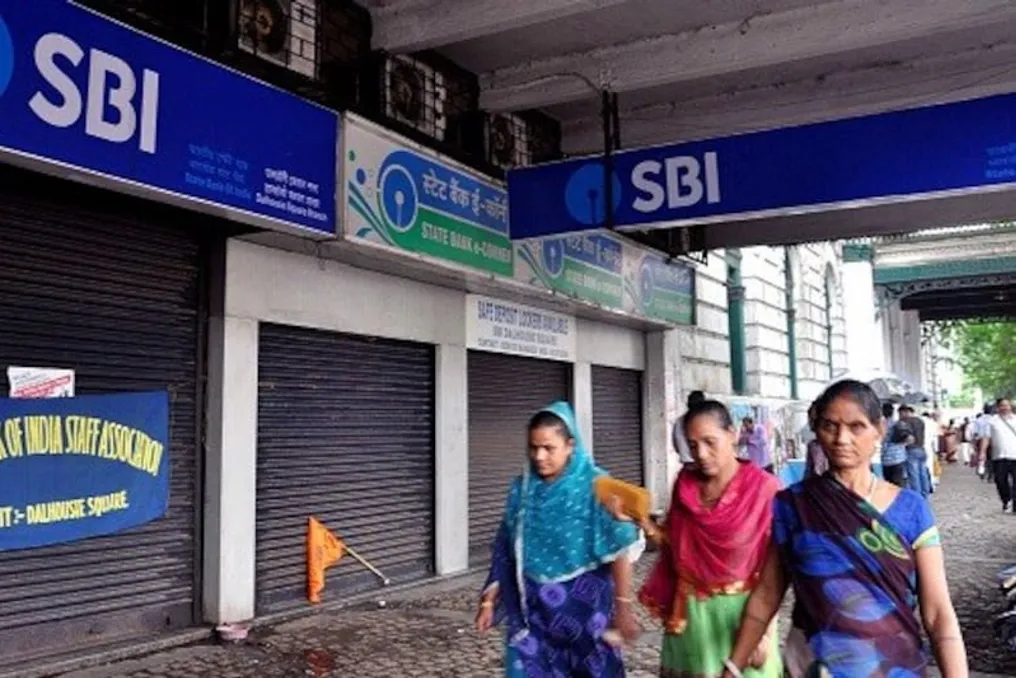
Three-day bank strike cancelled; details of recent negotiations
Read more
Aaj Tak
www.aajtak.in

Three-day bank strike cancelled; details of recent negotiations

Good news for employees who need to visit a bank on Monday: the planned nationwide strike in the banking sector from September 28 to 30 has been cancelled. This means that bank branches are expected to resume normal operations on Monday, and clients will not have to wait until October to resolve branch-related issues.

It was particularly significant that the strike was scheduled during the banks' semi-annual closure period.

The call for the nationwide strike was put forward by the United Forum of Bank Unions (UFBU). Following negotiations held Sunday evening between the Indian Banks Association (IBA) and the United Forum of Bank Unions, a decision was made to withdraw the planned strike. The most important achievement of these negotiations was the agreement regarding the demand to introduce a five-day banking week. It was decided to create a special high-level group to consider this issue. Subsequently, UFBU suspended its other planned activities.

The main question for clients is whether every Saturday will now be a holiday in banks. The answer is currently negative: the five-day banking week has not yet been implemented. Banks continue to have holidays on the second and fourth Saturdays of each month. On other Saturdays, banks operate under normal conditions. A new joint commission will examine the possibility of declaring every Saturday a bank holiday and will also discuss other options. A request for advice from clients and other stakeholders was also mentioned. The UFBU circular does not set a clear deadline for when the commission will present its recommendations, so for now, clients should use banking services according to the existing procedure.

The negotiations discussed more than just the five-day banking week. Both sides agreed to discuss a performance-linked bonus system for employees at Scale IV and above. The Indian Bank Association will propose changes to the government to this scheme to dispel objections raised by the unions. UFBU announced the strike from September 28 to 30 primarily due to the demand to declare every Saturday a bank holiday.

Bank unions argue that long working hours are one of the main reasons, and the demand for a five-day banking week has been raised for a long time. According to the unions, discussions on this matter have been ongoing for over two years. However, government sources state that the five-day banking week was not agreed upon in previous salary negotiations and was not part of the agreement.

Due to concerns about the strike, state and regional rural banks were instructed to open branches even on Sunday, September 27. The goal was to provide clients with an additional opportunity to resolve urgent banking matters before the strike began. Now, following the cancellation of the strike from September 28 to 30, bank branches are expected to function normally on Monday.

This period was very important for banks. Since the semi-annual closure was approaching on September 30, there was a threat of impact on banking services during this time. The Ministry of Finance had previously warned that the strike from September 28 to 30 could disrupt banking services. The cancellation of the strike reduced the probability of potential disruptions during the semi-annual closure. Although the strike was cancelled, all issues between the bank unions and IBA have not been fully resolved. Previous negotiations failed to find a permanent solution to the dispute. If the unions' demands are not met, an indefinitely long strike starting on October 26 has already been proposed.

Similar stories

Three-Day Bank Strike in India: Information for Indian Citizens Residing in the UAE
Read more
www.khaleejtimes.com

Three-Day Bank Strike in India: Information for Indian Citizens Residing in the UAE

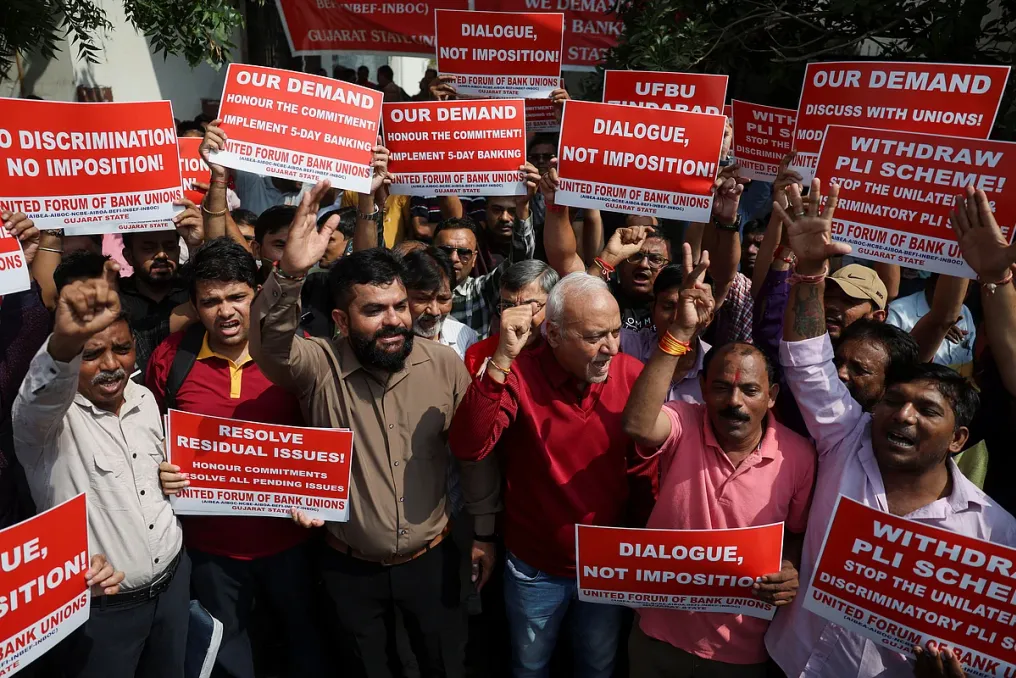
Banking services in India may face disruptions for three days, from September 28 to 30, after the United Forum of Banking Trade Unions (UFBU) announced a general strike. The reason cited by the union is the demand for a five-day work week.

The proposal for a five-day work week in the banking sector has been under consideration for over two years. The Indian Banks' Association (IBA), which represents banks in India, has agreed to this demand and submitted it to the government for approval.

The main concern among Indians living in the UAE is whether the strike will affect remittances to their home country, payments, cash withdrawals, or bank transactions on accounts held in Indian banks. Customers should know the following.

Reasons for the Indian Banking Union Strike

UFBU, which serves as the umbrella body representing bank employee unions and other associations in public sector banks, along with regional rural banks, called for the strike, demanding the implementation of a five-day banking week and the abolition of the Performance Linked Incentive (PLI) scheme.

The Indian government has stated that it has decided to keep the PLI scheme in abeyance following discussions with the unions, thereby satisfying one of the two main demands. Despite several rounds of conciliation talks, a one-day strike took place on September 11, and a three-day strike is scheduled for September 28 to 30. An indefinite strike starting October 26 has also been proposed due to the remaining demand for a five-day work week.

Currently, branches of Indian banks are closed on the second and fourth Saturdays, but they usually operate on the first, third, and fifth Saturdays, if applicable. The unions insist that all Saturdays become holidays.

Other key demands from the unions include an exemption from income tax on an additional 4 percent of contributions made by banks to the National Pension System (NPS); increasing the retirement benefit ceiling according to the Pension Act; pension updates; establishing a unified Dearness Allowance (DA) to pensions; and reviewing the lump-sum payment to pensioners effective from November 2022.

How Will This Affect Banking Operations?

Services provided at branches are expected to be disrupted in public sector banks and regional rural banks directly affected by the strike call. Private banks are not expected to be affected to the same extent, but customers are advised to check information with their respective banks.

The Indian government noted that the strike from September 28 to 30 coincides with the semi-annual bank closure on September 30, which is significant for data reconciliation, provisioning, and treasury and market operations.

It was stated that the strike, combined with preceding holidays, could effectively lead to a five-day closure of banking services, affecting customers, businesses, government transactions, and international banking operations.

To provide an additional banking day before the strike, the Ministry of Finance announced that public sector banks and regional rural banks would operate on Sunday, September 27, subject to approval from the Reserve Bank of India (RBI) for the functioning of branches, offices, ATM-related units, and cash vaults.

What Indian Citizens in the UAE Need to Know

Public sector banks have issued notifications urging customers to complete all necessary banking operations in advance and utilize digital services wherever possible to avoid inconvenience during the three-day strike.

Remittances from the UAE to India will not be affected by the strike. Al Ansari Exchange stated that its operations supporting transfers to India will continue as usual, and customers can use digital channels 24/7 or visit their branches across the UAE during operating hours.

According to Ali Al Najjar, CEO of Al Ansari Exchange, the UAE is the second-largest source of remittances to India, accounting for 19.2 percent of incoming transfers reported by banks.

Digital account access may remain available, however, services requiring physical presence at a branch or staff intervention may be impacted.

What Has the Indian Government Done for the Welfare of Bank Employees?

Measures taken to improve the status of bank employees include salary and allowance increases, expansion of managerial positions, and recruitment. The government reported that public sector banks hired approximately 4.82 lakh employees between the fiscal years 2014-15 and 2025-26, with recruitment doubling in the last three years. As of July 1, 2026, 95.84 percent of officer positions and 92 percent of subordinate/reward personnel positions were filled.

Other steps include improving transfer and promotion processes, special leave provisions for female employees, review of family pensions, improved medical insurance for pensioners, and increased travel allowance for employees with disabilities.

The government has also initiated negotiations for an upcoming bilateral agreement ahead of the November 2027 deadline, stating that this initiative aims to ensure timely review of salaries and allowances for bank employees.

The government emphasized that the remaining demand for a five-day work week continues to be studied and strongly urged employees to ensure uninterrupted banking service while resolving the issue through constructive dialogue.

Bank announces three-day strike; information on internet banking and UPI operations
Read more
www.aajtak.in

Bank announces three-day strike; information on internet banking and UPI operations

The bank notified its clients via a message about the upcoming three-day strike, which will begin on September 28th. The strike announcement was made by the Union of Banks Forums (UFBU).

The strike is scheduled for September 28, 29, and 30, 2026. In connection with this, Punjab National Bank (PNB) sent text messages to customers on Tuesday evening containing important information for user convenience.

PNB advised customers to complete all necessary branch operations before September 25th to avoid inconvenience during the strike.

PNB stated in the message that efforts would be made to maintain access to services such as UPI, internet banking, and ATMs. Furthermore, the bank will try to continue providing services to business correspondents.

There are several operations requiring a visit to a bank branch that may be affected by the strike. These include cash deposits or withdrawals, cheque-related transactions, document submission, and KYC procedures.

The impact of the strike might be prolonged because September 26th falls on a Saturday and September 27th on a Sunday. Consequently, due to the strike from September 28th to 30th, bank branches may remain closed for five days. Punjab National Bank is a well-known bank in India, serving millions of customers across the country.

Popular