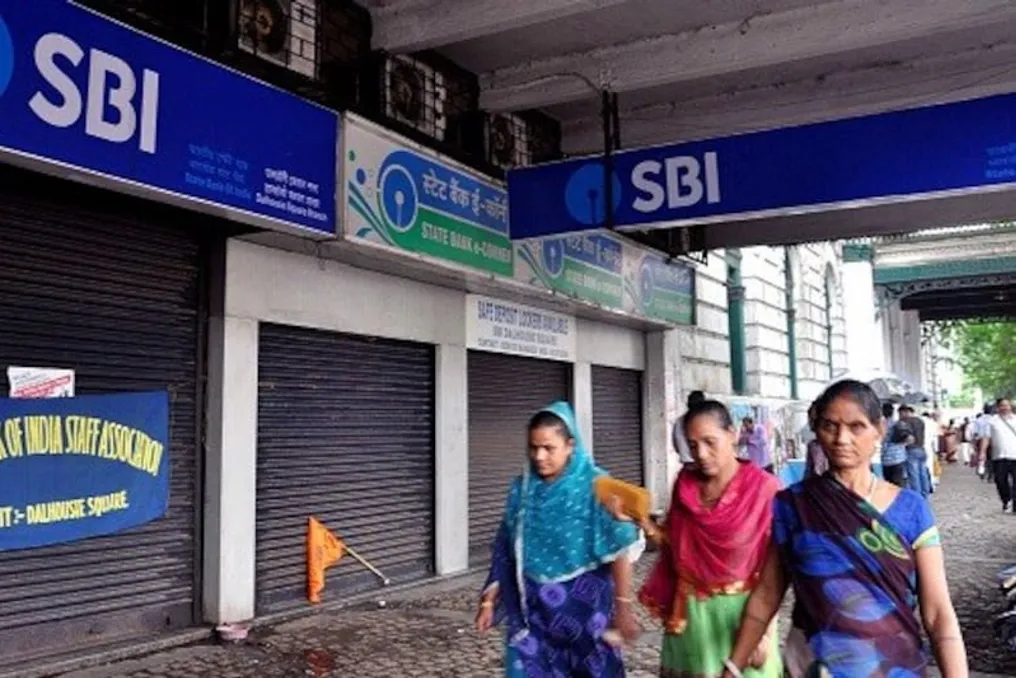
The demand from bank employees for the introduction of a five-day work week has once again become a subject of discussion. Employees argue that since the five-day week has become the norm in most organized sectors of the country, there is no compelling reason to isolate the banking sector from this trend. However, the potential impact of reducing working days in such a vital financial service on customers, especially those living in small towns and rural areas, cannot be ignored.
Thus, this discussion goes beyond simply increasing vacations or reducing working hours; it concerns the modernization of the banking system, making it more productive and customer-oriented.
The request for a five-day week is not a sudden demand from bank workers. Bank trade unions have long insisted on weekends on the second and fourth Saturdays, as well as the complete closure of all Saturdays and Sundays. They point out that the growing use of technology in the banking sector has changed working methods. Thanks to internet banking, mobile banking, ATMs, UPI, and digital payment systems, customer dependence on physical branches has decreased compared to the past.
In this regard, opening branches six days a week can be seen as a sign of an outdated work structure.
Another important argument in favor of the workers is the work-life balance. It is impossible to ignore the constant increase in work pressure on employees of the banking sector, the culture of goal achievement, the monitoring of digital services, and the burden associated with customer service. Getting two continuous days off per week will allow employees to dedicate more time to rest, family, and personal duties. This, in turn, can positively affect their productivity and mental health.
Nevertheless, there is another, equally important side to this demand. Banks are not just offices; they are institutions linked to the basic functions of the economy. There are still many customers, including farmers, small entrepreneurs, pensioners, and the elderly, for whom digital banking seems inconvenient. In rural and semi-urban areas, the bank branch remains a key center of the financial system. If branches are closed two days a week, the question naturally arises as to how this will affect customers who cannot use digital means.
However, this argument also cannot serve as a permanent basis for employees to always work six days for customer service. The main question is whether banking services can be reorganized according to a five-day week in a way that does not harm customer service. Today, technology has made much of this possible. Digital payments can be made around the clock, and ATM and mobile banking services are available constantly. Many banks provide customers with the option to open an account, apply for a loan, or invest through digital channels.
Therefore, the discussion about the five-day week cannot be viewed merely as an 'extra day off.' It should be linked to the reorganization of productivity and service provision in the banking sector. With a five-day work week, clear answers are needed on how to increase working hours and efficiency during these five days, how to manage customer crowding at branches, and how to ensure the availability of digital services.
Furthermore, the bank and trade unions must agree that customer service will not be compromised. If branches are closed on weekends, alternative mechanisms for necessary services can be provided, such as digital support, customer hotlines, and ensuring limited availability of critical services. Special attention will be required for additional measures for customers who rely on pensions, government benefits, rural banking, and cash transactions.
It should also be considered that working hours in the banking sector are determined not only by branch opening times. Bank employees perform many administrative and operational tasks even after branches close. Therefore, before implementing a five-day week, a scientific analysis of the actual workload, staff numbers, branch conditions, and regional needs must be conducted. Solving the problem is not just about increasing vacations but requires better work distribution.
In essence, this discussion reflects changes in the work culture of India. Worldwide, productivity is increasingly assessed not by the number of hours worked, but by the quality and results of the work. Banks are also rapidly becoming digital. Thus, the future banking system must provide workers with improved working conditions and customers with access to necessary financial services seven days a week.